


Always Beautiful
Documentary
Overview
Narratives are tales that unintentionally define our personality. In the case of women, being beautiful is the only way. The film shows how we learn to be obsessed by the visual itself, and how the highest compliment to a woman is always beauty.
Top Cast










Catharina Felix
Catharina Felix
Catharina Felix
Similar Movies
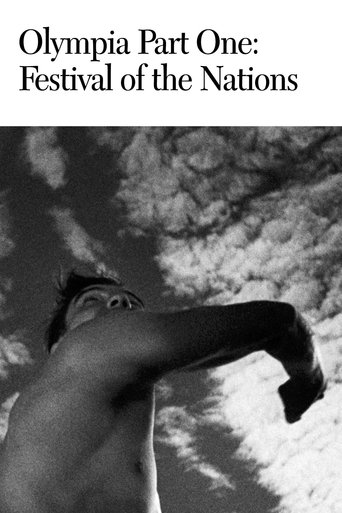
Starting with a long and lyrical overture, evoking the origins of the Olympic Games in ancient Greece, Riefenstahl covers twenty-one athletic events in the first half of this two-part love letter to the human body and spirit, culminating with the marathon, where Jesse Owens became the first track and field athlete to win four gold medals in a single Olympics.

Feisty, fiercely independent and firmly rooted in place, 90 year-old Mabel Robinson broke barriers back in the 40s when she became the first woman in Hubbards, Nova Scotia, to launch her own business—a hairdressing salon where she still provides shampoo-n-sets over 70 years later. Weaving animation and archival imagery with intimate and laugh out loud moments in the salon, the film celebrates the power of friendship, doing what you love and staying active. With no desire to retire anytime soon, Mabel gives voice to a generation who are not front and center of cinema or the pop hairstyles of the day, and subtly shifts the lens on our perception of beauty and the elderly.

The issue of artificial insemination has biological, medical, psychological, and ethical dimensions. Filmmaker Marie Mandy approaches the topic in her own unique way, involving scientists from various disciplines. The artificial womb—is it a futuristic fairy tale or scientific reality? Filmmaker Marie Mandy uses a very personal visual style to explore the latest research findings in the field of artificial insemination. She highlights the biological, ethical, and psychological issues surrounding this (r)evolution, while also questioning the value of life and the power of science.
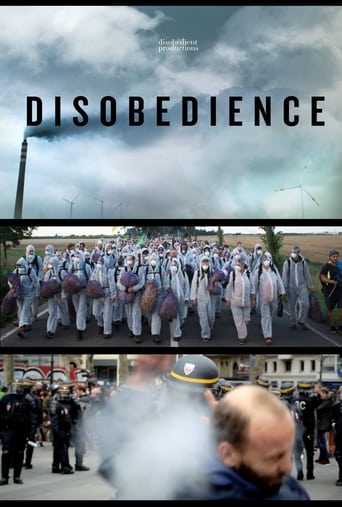
Disobedience tells the David vs. Goliath tale of front line leaders battling for a livable world. Filmed in the Philippines, Turkey, Germany, Canada, Cambodia and the United States, it weaves together these riveting stories with insights from the most renowned voices on social justice and climate. Disobedience is personal, passionate and powerful - the stakes could not be higher, nor the mission more critical.

After delivery of a parcel, on leaving a restaurant, hotel or train, or following an exchange with the customer service department of your telephone operator, the same request: to rate. On a scale from 0 to 10, embellished with colors, or by awarding pretty, playful little stars. A simple, mechanical and painless action for the rater. But behind this harmless gesture lies a brutal management system, operated directly by the customer, without their knowledge. Even more worrying: without knowing it, we are all being rated, to feed the algorithms of opaque companies that claim to be able to predict the future. The film questions this invasion of rating systems, and the consequences of this practice for our individual realities and collective freedoms.
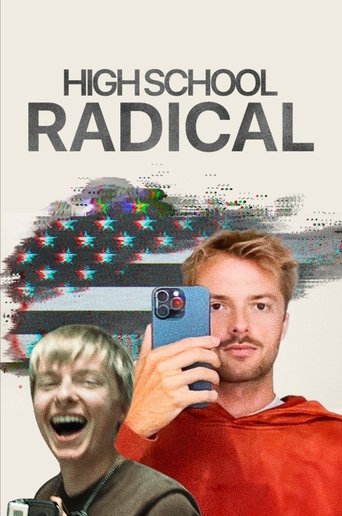
At 16, Max left with dreams and a GoPro slung over his shoulder for an exchange program at a high school in Oklahoma. Since then, Donald Trump has become president, the Capitol has been stormed, and abortion bans have gained ground. On the eve of Trump’s second term, Max goes back to see his friends to understand what their journeys reveal about the evolution of American society
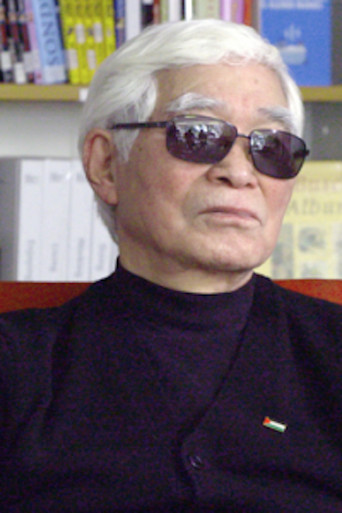
Masao Adachi, the author and director of experimental works and pinku-eiga in the 1960s, was a member of the Japanese New Left that shifted from being a filmmaker to a guerrilla fighter. In 1974, he joined the Japanese Red Army in Lebanon, which worked closely with the Popular Front for the Liberation of Palestine. Filmmaker Lutz Dammbeck met Adachi in Tokyo in 2018 and talked with him about a wide range of topics, including art, revolution, the influence of western avant-garde art and American underground; the Japanese Red Army; collaboration with secret services; the role of the Left after 1968; and the reasons for failures of leftist ideas and strategies.
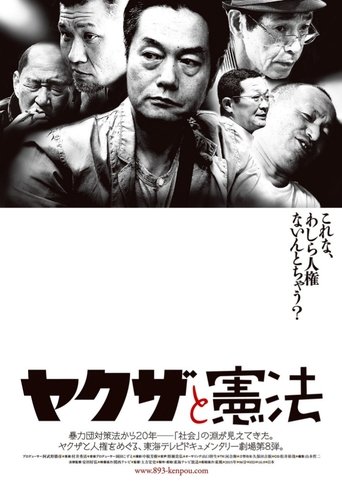
Since the enactment of the Anti-Boryokudan Act and Yakuza exclusion ordinances, the number of Yakuza members reduced to less than 60,000. In the past 3 years, about 20,000 members have left from Yakuza organizations. However, just numbers can’t tell you the reality. What are they thinking, how are they living now? The camera zooms in on the Yakuza world. Are there basic human rights for them?