

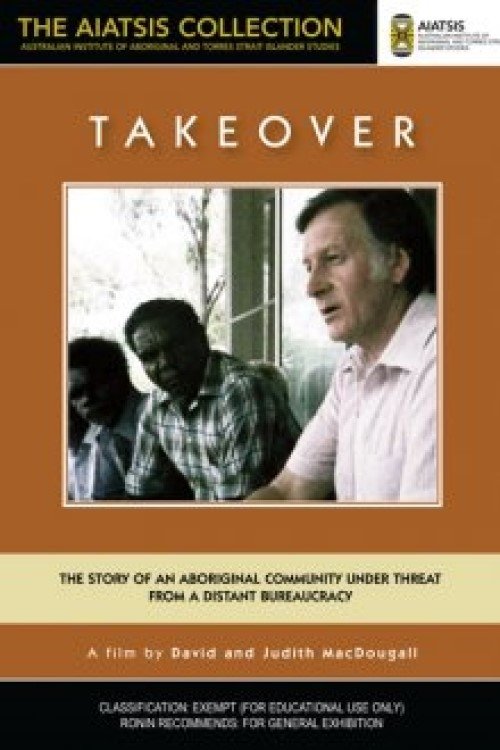
Takeover
Documentary
Overview
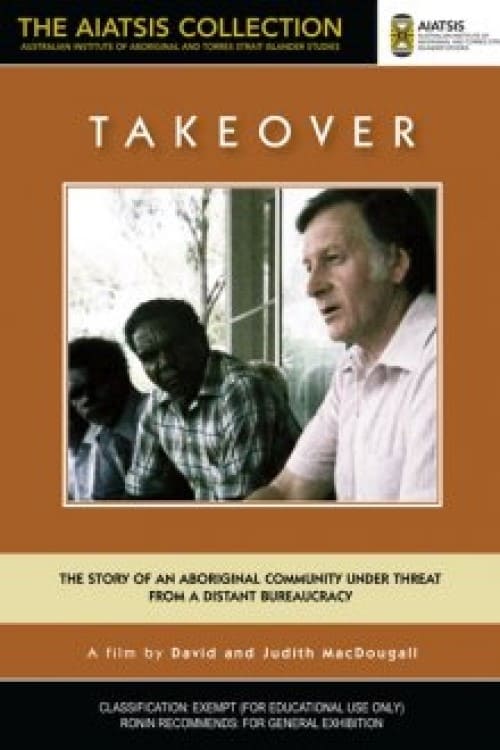
About Aborigines and Australian politics. On 13 March 1978 the Queensland Government announced its intention to take over management of the Aurukun Aboriginal Reserve from the Uniting Church. The people of Aurukun complained bitterly, believing that the Church was more sympathetic to their aims and fearing that the State was merely seeking easier access to the rich bauxite deposits on their Reserve. When the Federal Government took the side of the Aborigines the stage was set for national confrontation. Shows the situation at Aurukun during those crucial three weeks.
Top Cast




Francis Yunkaporta
Francis Yunkaporta
Narrator
Francis Yunkaporta
Narrator
Ian Viner
Ian Viner
Self
Ian Viner
Self
Neville Bonner
Neville Bonner
Self
Neville Bonner
Self
Similar Movies
Follow filmmaker Elle-Máijá Tailfeathers as she creates an intimate portrait of her community and the impacts of the substance use and overdose epidemic. Witness the change brought by community members with substance-use disorder, first responders and medical professionals as they strive for harm reduction in the Kainai First Nation.
"A documentary film which looks at the issue of British Columbia Native land claims and how the aboriginals link their culture to the land, which has been stolen by the dominant white culture of North America. In the film, the argument is presented that the lands have been taken from the Natives without any clear treaty agreements and how attempts had been made to wipe out Native culture through the Residential School system. " Produced by the Union of BC Indian Chiefs in 1975.
The world knows the image of the good Canadian. But what if there was a dark secret behind a national identity? THE GOOD CANADIAN exposes the truth behind the idea of a True North strong and free. In this unflinching and eye-opening documentary, directors Leena Minifie and David Paperny move us through the corridors of systemic inequity, from the Indian Act to residential schools, to modern-day family separation. Fusing shocking footage with detailed interviews with experts, advocates, whistleblowers and politicians, THE GOOD CANADIAN challenges national myth-making, while offering Canadians the chance to forge a new identity from the truth.
WINHANGANHA (Wiradjuri language: Remember, know, think) - is a lyrical journey of archival footage and sound, poetry and original composition. It is an examination of how archives and the legacies of collection affect First Nations people and wider Australia, told through the lens of acclaimed Wiradjuri artist, Jazz Money.
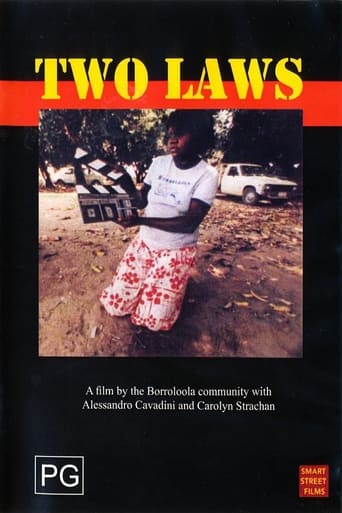
White people don't understand that there are two laws - white people have different laws from Aboriginal people. TWO LAWS is a film about history, law and life in the community of Borroloola in far North Queensland. The films offers viewers a remarkable and different way of seeing and hearing. Like the film, BACKROADS, it is one of the few productions at that time in which Aboriginal people had creative input. The impetus for TWO LAWS came from the community themselves. There was substantial collaboration with the film makers before and during the shooting period. It is one of the most outstanding films to be made during the 1980s. It is an historical analysis of what, nearly forty years later, is an increasingly contemporary question. Two Laws.
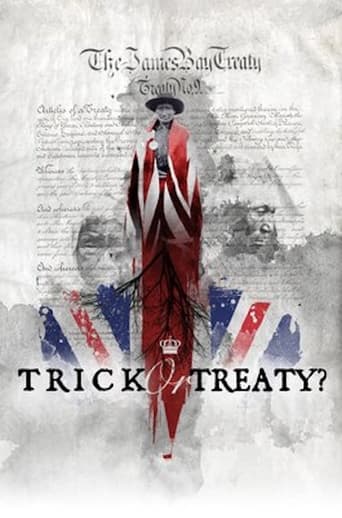
Legendary Canadian documentarian Alanis Obomsawin digs into the tangled history of Treaty 9 — the infamous 1905 agreement wherein First Nations communities relinquished sovereignty over their traditional territories — to reveal the deceptions and distortions which the document has been subjected to by successive governments seeking to deprive Canada’s First Peoples of their lands.
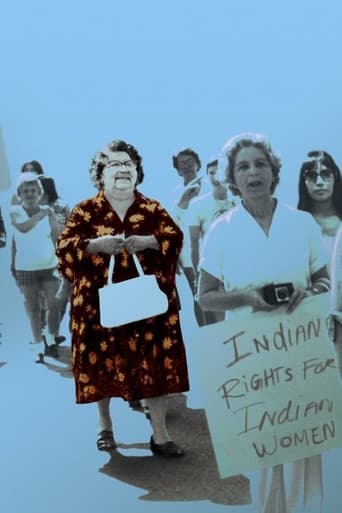
After marrying a settler, Mary Two-Axe Earley lost her legal status as a First Nations woman. Dedicating her life to activism, she campaigned to have First Nations women's rights restored and coordinated a movement that continues to this day. Kahnawake filmmaker Courtney Montour honours this inspiring leader while drawing attention to contemporary injustices that remain in this era of truth and reconciliation.
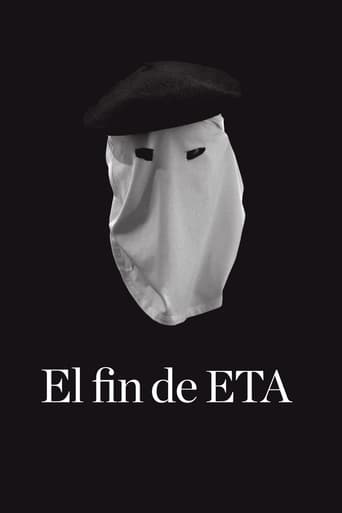
The chronicle of the process, ten long years, that led to the end of ETA (Euskadi Ta Askatasuna), a Basque terrorist gang that perpetrated robberies, kidnappings and murders in Spain and the French Basque Country for more than fifty years. Almost 1,000 people died, but others are still alive to tell the story of how the nightmare finally ended.