

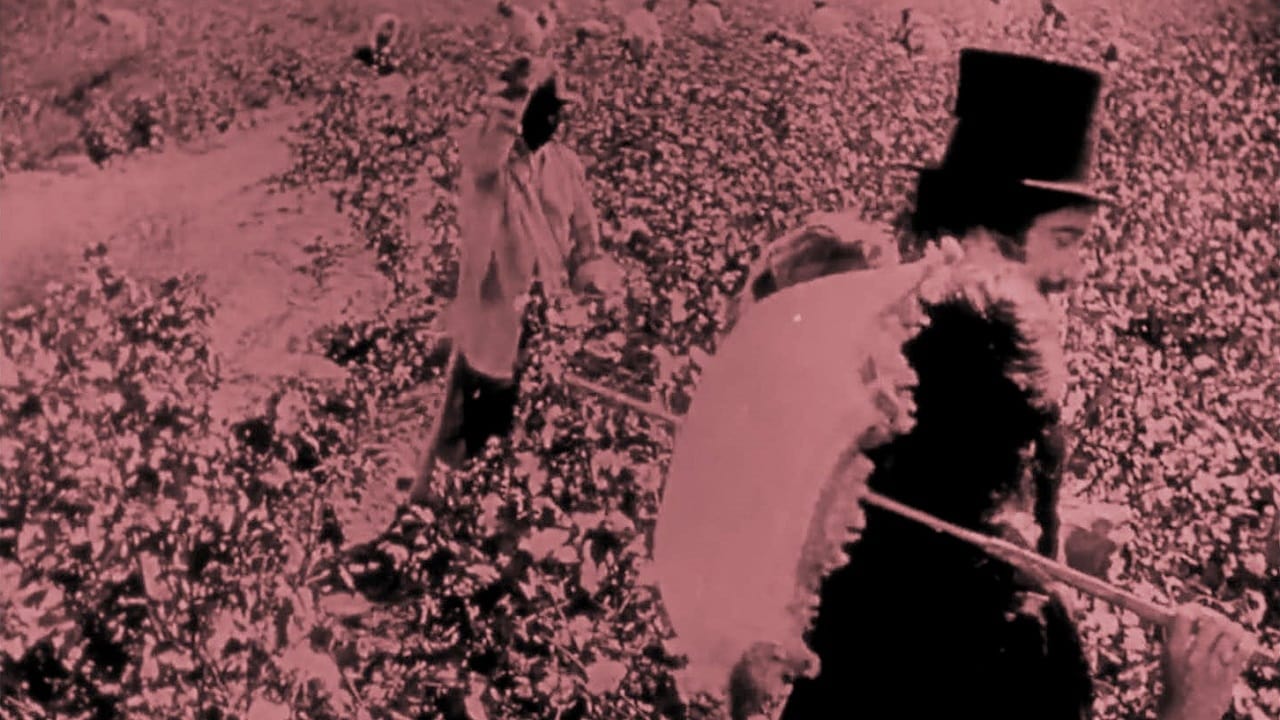
Birth of a Nation
Documentary
Overview
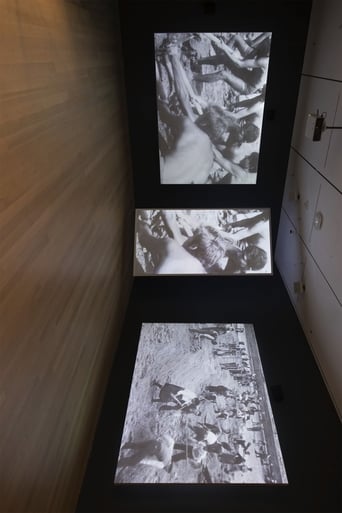
This three-channel video installation by James Benning shows three scenes from David Wark Griffith’s The Birth of a Nation (1915). The two-minute-long screen arrangement of imperceptibly moving images alludes to the beginning of racism. The three screens each show a solider in the American Civil War, black slaves picking cotton in the field, and imposing KKK.



No cast information.
Similar Movies

The decision to move to Holland doesn't sound like a wise idea. Why move to a country that could be flooded at any moment? For the last 25 years, the political climate has shifted. The public debate on migration has become harsher, more heated, and polarized. What would have been considered right-wing xenophobia back then, is now considered mainstream. Populists simplify complex realities into good and evil, victims and perpetrators: ‘us’ versus ‘them’. Their rhetoric often consists of dehumanizing words and metaphors. One of these is ‘water’. In reality, water is not an immediate threat to the average Dutch person; but it is a huge threat to the thousands trying to reach the Netherlands. People trying to survive the Mediterranean Sea in rubber boats. Trying to survive winter on the Aegean coast in primitive tents. To them, water really is deadly.

This biographical docudrama traces the life of Dr. Albert Schweitzer, from his birth in Alsace, up to the age of 30 when he made the decision to go to French Equatorial Africa and build his jungle hospital. The latter half of the film encompasses a full day in the hospital-village, following the octogenarian Samaritan in his daily rounds.
Ilya Kabakov is considered one of the most important contemporary artists worldwide. Born and raised in the Ukraine in the period between Stalin and Gorbatschow he left the country in the 80s. In his Installations and his numerous paintings Kabakov creates a world of its own, which leaves the heaviness of socialist and post-socialist life far behind. The film links Ilya Kabakovs artistic spaces with insights into Russian everyday life, which itself sometimes appears like an installation by the artist.
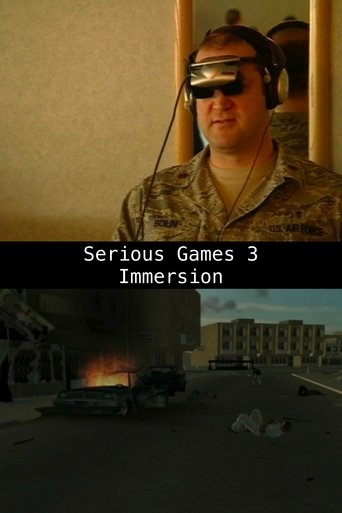
An exploration of how the U.S. military employs video game technology to train troops for war. In Immersion, Farocki presents footage of a role-playing exercise in which military psychologists demonstrate how to use the PTSD program on their colleagues, who describe traumatic wartime experiences. On a second channel, their descriptions play out as virtual renderings.
Commissioned for the Irish representation at the 55th Venice Biennale in 2013, The Enclave is an immersive, six-screen video art installation by Irish contemporary artist Richard Mosse. Partly inspired by Joseph Conrad’s modernist literary masterpiece Heart of Darkness, the visceral and moving work was filmed in the Democratic Republic of Congo using 16mm colour infra-red film, which captures otherwise invisible parts of the spectrum. The resulting imagery in Mosse’s work is hallucinatory and dream-like with the usual greens of jungle and forest replaced by shimmering violet. The Enclave depicts a complicated, strife-ridden place in a way that reflects its complexity, using a strategy of beauty and transfixion to combat the wider invisibility of a conflict that has claimed so many.
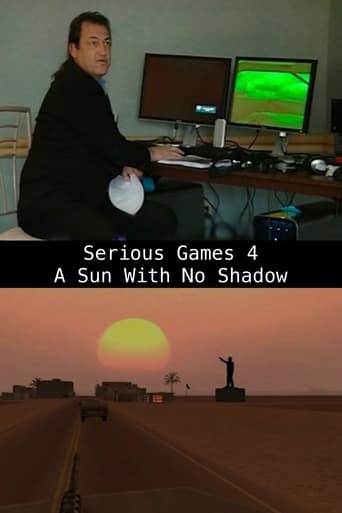
An exploration of how the U.S. military employs video game technology to train troops for war. In A Sun With No Shadow, Farocki calls attention to the subtle differences between the simulations for combat training and PTSD. With the former, the sun can be programmed to cast shadows in the virtual combat zones, while the latter, less expensive technology does not offer this feature.
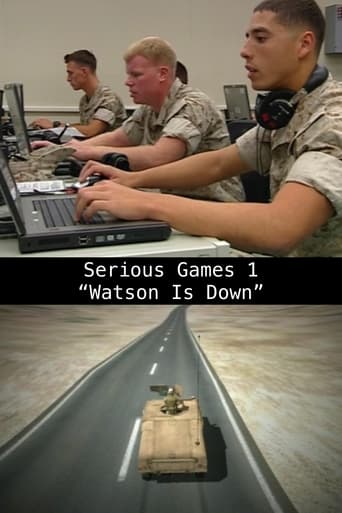
An exploration of how the U.S. military employs video game technology to train troops for war. Filmed at the United States Marine Corps Air Ground Combat Center, Watson is Down pairs footage of soldiers at computers engaging in combat-simulation training with scenes from the video games.