


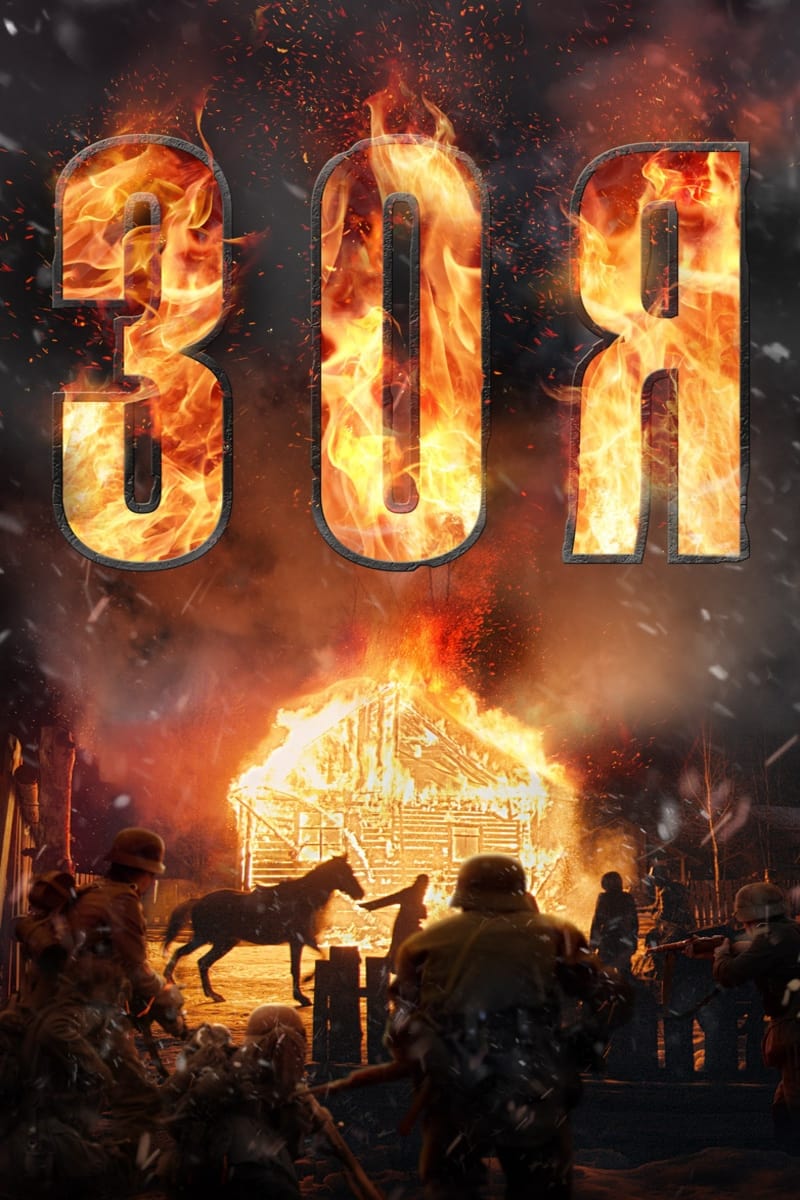
Zoya
Drama · History · War
Overview
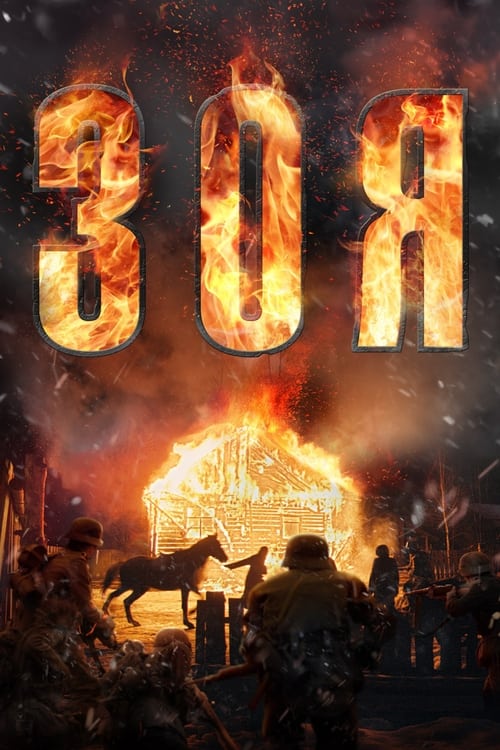
Fall of 1941. Freshly graduated from school, Zoya Kosmodemyanskaya volunteers for a partisan unit. During an assignment, her comrades are ambushed, and she is captured by the Nazis. She endures hours of grueling interrogations and horrendous torture, but defiantly refuses to divulge any information that would compromise other units’ partisan missions. She doesn’t even tell her captors her real name. Zoya’s sacrifice was not in vain; it ignited fire in the hearts of millions of people and became the symbol of selfless heroism during WWII. She is one of the most celebrated heroes of that time.
Top Cast

Anastasiya Mishina
Zoya

Anna Ukolova
Agrafena Smirnova

Wolfgang Cerny
Zommer

Dmitriy Bykovskiy-Romashov
Sviridov

Jean-Marc Birkholz
commandant

Nikita Kologrivyy
Klubkov

Evgeny Romantsov
Kraynov

Karina Razumovskaya
Praskovya Kulik

Evgeniy Sannikov
Oberleutenant

Mindaugas Papinigis
Karl Bayerlein

Olga Lapshina
Voronina

Alisa Tekucheva
Sanka







Anastasiya Mishina
Anastasiya Mishina
Zoya
Anastasiya Mishina
Zoya
Anna Ukolova
Anna Ukolova
Agrafena Smirnova
Anna Ukolova
Agrafena Smirnova
Wolfgang Cerny
Wolfgang Cerny
Zommer
Wolfgang Cerny
Zommer
Dmitriy Bykovskiy-Romashov
Dmitriy Bykovskiy-Romashov
Sviridov
Dmitriy Bykovskiy-Romashov
Sviridov
Jean-Marc Birkholz
Jean-Marc Birkholz
commandant
Jean-Marc Birkholz
commandant
Nikita Kologrivyy
Nikita Kologrivyy
Klubkov
Nikita Kologrivyy
Klubkov
Evgeny Romantsov
Evgeny Romantsov
Kraynov
Evgeny Romantsov
Kraynov
Karina Razumovskaya
Karina Razumovskaya
Praskovya Kulik
Karina Razumovskaya
Praskovya Kulik
Evgeniy Sannikov
Evgeniy Sannikov
Oberleutenant
Evgeniy Sannikov
Oberleutenant
Mindaugas Papinigis
Mindaugas Papinigis
Karl Bayerlein
Mindaugas Papinigis
Karl Bayerlein
Similar Movies
Although released anonymously, as was the custom with all films produced by the Italian Navy, La Nave Bianca is the first feature-length effort directed by Roberto Rossellini; it is also very much the work of its co-writer and supervisor Francesco De Robertis. The film combines a documentary look at the Italian Navy during World War II with newsreel combat footage and a scripted love story performed by non-professional actors.
A young man from the banks of the Ibar River goes to the revolutionary war. It turns out to be one of the key moments that will later leave marks on his life. The war conflict runs along with his intimate, internal conflicts of his own. He feels the need to think as a human being despite the horrors surrounding him. Such is the deeply embedded need of this man - the need for love, understanding and justice.
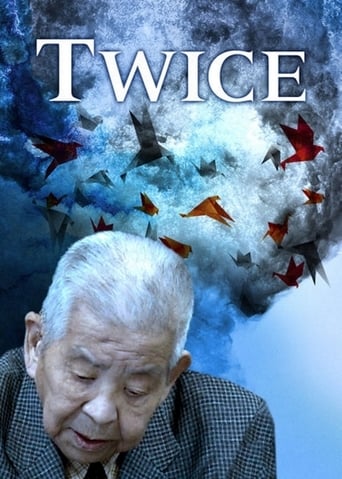
Tsutomu Yamaguchi is a hibakusha. A survivor of both atomic bomb blasts in 1945. First at Hiroshima, then again at Nagasaki. Now nearing 90, Yamaguchi finally speaks out. Breaking taboos of shame and sorrow, he responds to a call to fight for a world without nuclear weapons by telling his story, so that no one else will ever have to tell one like it again. Twice reconstructs Yamaguchi’s experiences in 1945 Japan, interviews him on the after-effects of exposure and documents the last five years of the late-blooming activist’s life.
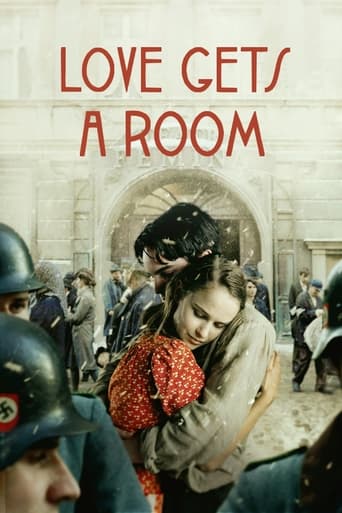
January 1942, in Nazi-occupied Poland during World War II. Thousands of Jews have been confined to the Warsaw ghetto for more than a year. Outside, life goes on; inside, they struggle to survive another day. Still, on a cold winter night, a group of Jewish actors manage to stage a lively musical comedy.