

Tale of Army Brutality
Drama · War
Overview
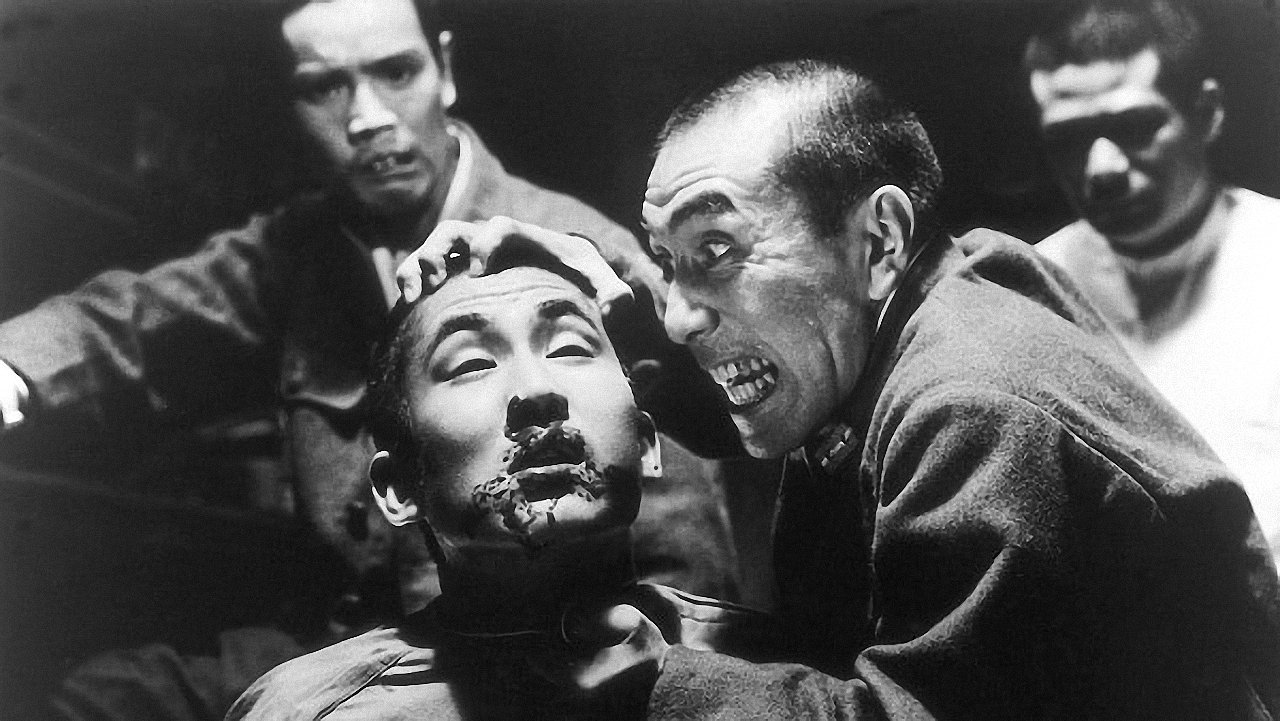
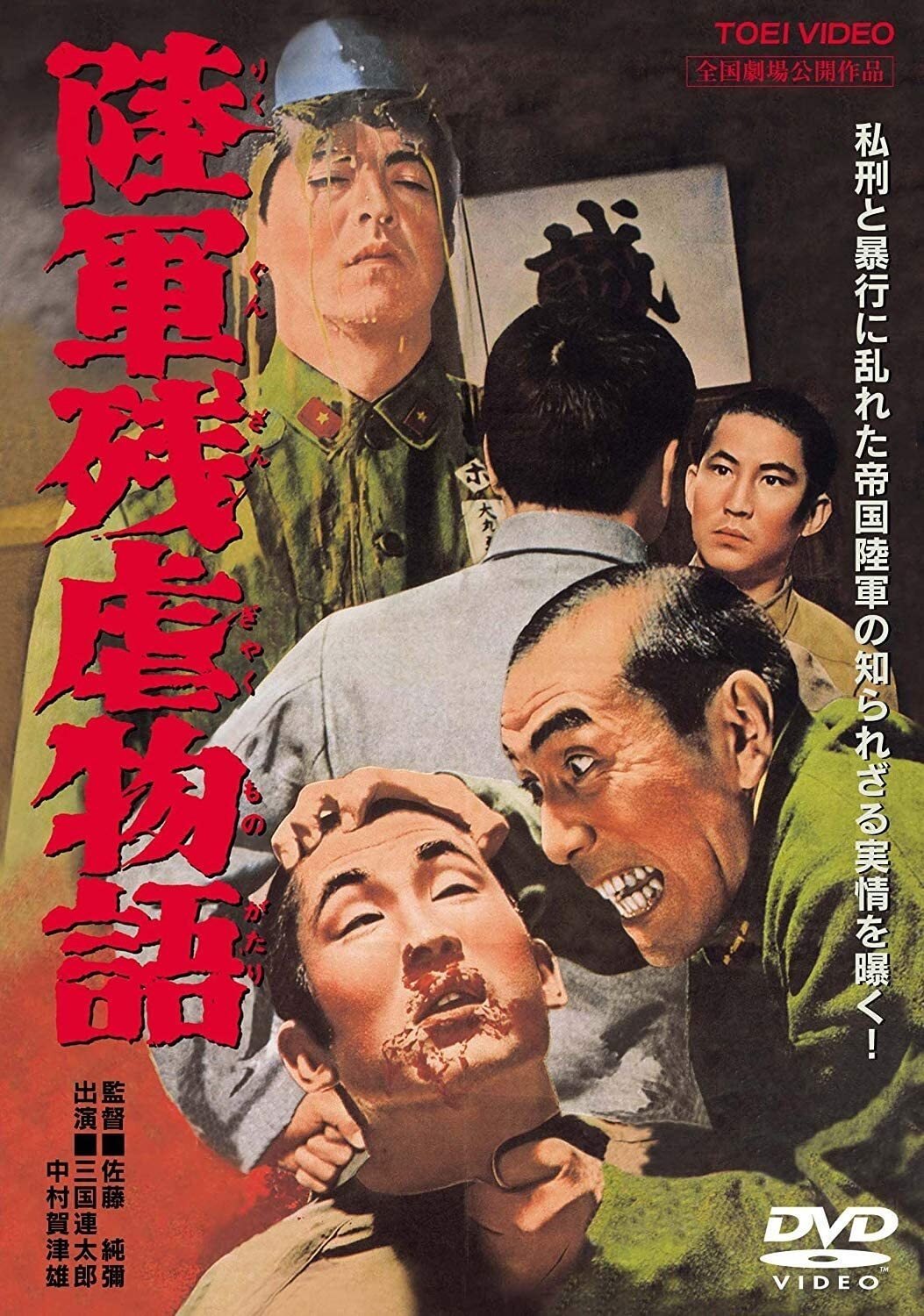
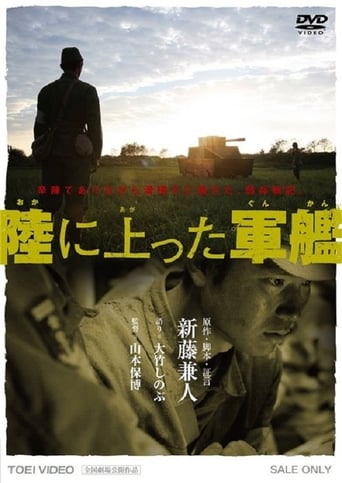
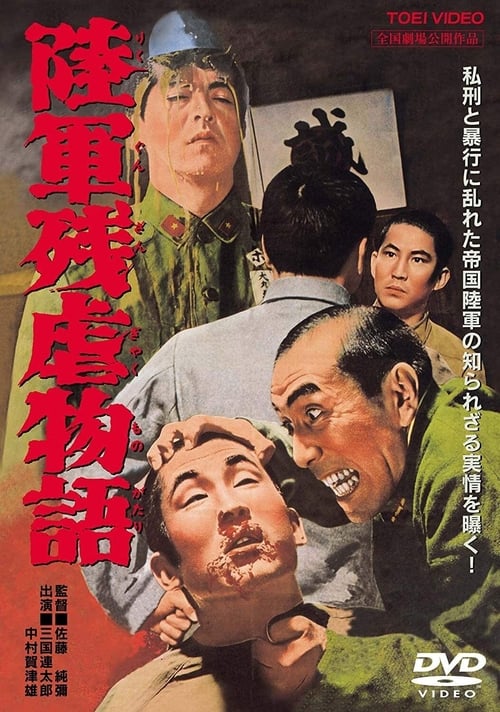
Director Jun'ya Satô's debut film focuses on the inhuman training of recruits, the brutal drill system that reigned in the Japanese army during World War II, where in the first two years of training, ordinary people were turned into inhuman killers. For his first film, the director was awarded the Blue Ribbon Awards in the Debutant of the Year nomination.
Top Cast












Rentaro Mikuni
Rentaro Mikuni
Yahichi Inumaru
Rentaro Mikuni
Yahichi Inumaru
Katsuo Nakamura
Katsuo Nakamura
Naokichi Suzuki
Katsuo Nakamura
Naokichi Suzuki

Shinjirō Ehara
Shinjirō Ehara
Tadayoshi Yazaki
Shinjirō Ehara
Tadayoshi Yazaki
Kō Nishimura
Kō Nishimura
Kameoka, Zenji
Kō Nishimura
Kameoka, Zenji

Mitsuo Andō
Mitsuo Andō
Mitsuo Andō

Kaneko Iwasaki
Kaneko Iwasaki
Ume, Yahichi's wife
Kaneko Iwasaki
Ume, Yahichi's wife
Yoshi Katō
Yoshi Katō
Seikichi, Yahichi's father
Yoshi Katō
Seikichi, Yahichi's father

Michirō Minami
Michirō Minami
Oshikawa
Michirō Minami
Oshikawa

Shoji Nakayama
Shoji Nakayama
Shoji Nakayama
Akemi Nara
Akemi Nara
Akemi Nara
Similar Movies
Huw Morgan, the academically inclined youngest son in a proud family of Welsh coal miners, witnesses the tumultuous events of his young life during a period of rapid social change. At the dawn of the 20th-century, a miners' strike divides the Morgans: the sons demand improvements, and the father doesn't want to rock the boat.
At an Austrian boys' boarding school in the early 1900s, shy, intelligent Törless observes the sadistic behavior of his fellow students, doing nothing to help a victimized classmate—until the torture goes too far. Adapted from Robert Musil's acclaimed novel, Young Törless launched the New German Cinema movement and garnered the 1966 Cannes Film Festival International Critics' Prize for first-time director Volker Schlöndorff.
Based on a real-life story, this drama focuses on a small group of Allied soldiers in Burma who are held captive by the Japanese. Capt. Ernest Gordon, Lt. Jim Reardon and Maj. Ian Campbell are among the military officers kept imprisoned and routinely beaten and deprived of food. While Campbell wants to rebel and attempt an escape, Gordon tries to take a more stoic approach, an attitude that proves to be surprisingly resonant.
Stockholm, in the 1950s. Erik is expelled from the local school for getting into one brawl too many. To protect Erik from his violent stepfather’s reaction to his expulsion, Erik's mother arranges for Erik to spend a year at Stjärnsberg Boarding School, the only school willing to accept him. This is Erik's last chance to graduate to Upper School and he promises his mother, for his and her sake, to do all he can to stay out of trouble.
At the end of the Spanish civil war, Fando, a boy of about ten, tries to make sense of war and his father's arrest. His mother is religious, sympathetic to the Fascists; his father is accused of being a Red. Fando discovers that his mother may have aided in his father's arrest. Sometimes we witness Fando imagining explanations for what's going on; sometimes we see him at play, alone or with his friend Thérèse. Oedipal fantasies and a lad's natural curiosity about sex and death mix with his search for his mother's nature and his father's fate. Will Fando survive the search?