

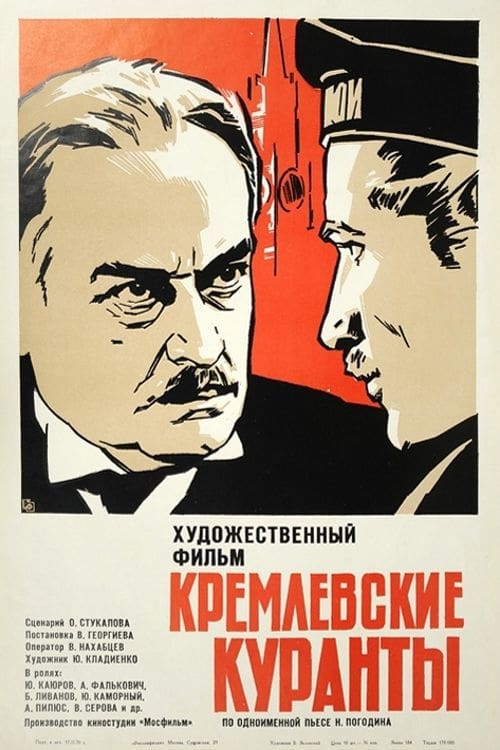
The Kremlin Chimes
Drama · History
Overview
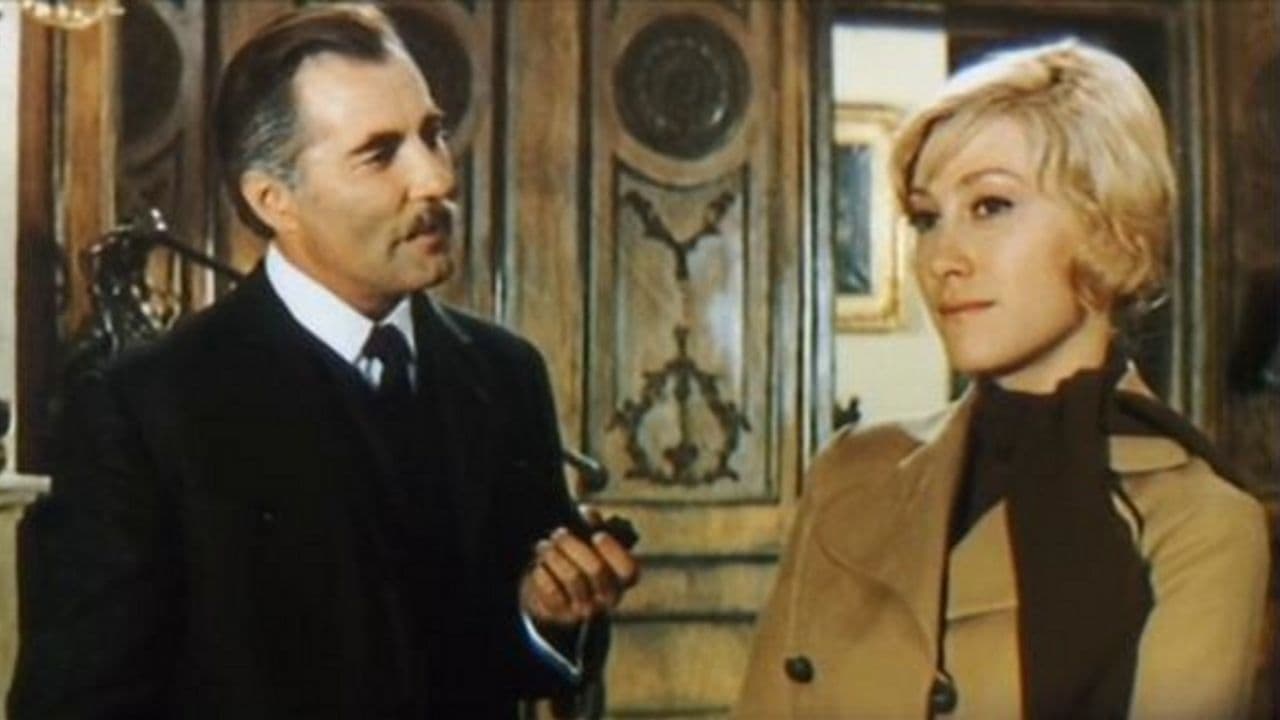
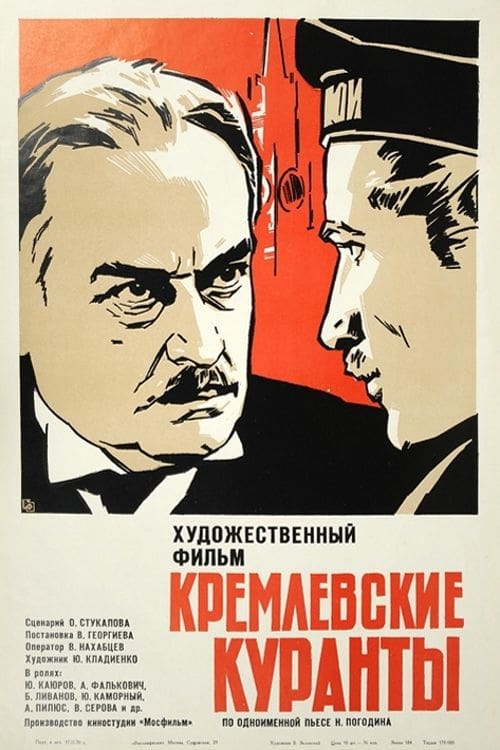
A story about a role of Vladimir Lenin in the electrification of Russia after Civil War.









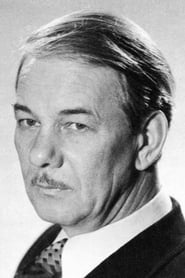
Yuriy Kayurov
Yuriy Kayurov
V. I. Lenin
Yuriy Kayurov
V. I. Lenin
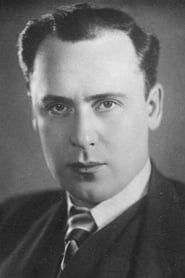
Boris Livanov
Boris Livanov
Anton Ivanovich Zabelin
Boris Livanov
Anton Ivanovich Zabelin

Yuriy Kamorniy
Yuriy Kamorniy
Rybakov
Yuriy Kamorniy
Rybakov

Antonina Pilyus
Antonina Pilyus
Masha
Antonina Pilyus
Masha
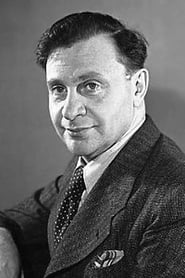
Mark Prudkin
Mark Prudkin
Nikolskiy
Mark Prudkin
Nikolskiy

Valentina Serova
Valentina Serova
Lidiya Mikhaylovna Zabelina
Valentina Serova
Lidiya Mikhaylovna Zabelina
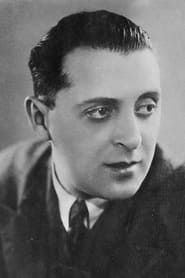
Boris Petker
Boris Petker
Chasovshik
Boris Petker
Chasovshik

Vsevolod Sanayev
Vsevolod Sanayev
Stayy rabochiy
Vsevolod Sanayev
Stayy rabochiy
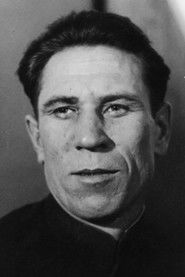
Arkadi Trusov
Arkadi Trusov
Rabochiy
Arkadi Trusov
Rabochiy

Gennadiy Yukhtin
Gennadiy Yukhtin
Gennadiy Yukhtin
Similar Movies
Vladimir Ilyich Ulyanov, better known as Lenin, is remembered as the instigator of the October Revolution of 1917 and, therefore, as one of the men who changed the shape of the world at that time and forever, but perhaps the actual events happened in a way different from that narrated in the history books…
In this short film directed in the style of Andrei Tarkovsky, eternity and the downfall of the Soviet empire are explored in a deeply symbolic and poetic way. The film follows a protagonist as they traverse a desolate landscape, reflecting on the transient nature of life and the inevitability of death. Through a series of dreamlike sequences, the audience is presented with a powerful meditation on the idea of eternity, and how it can be seen in the rise and fall of empires. The film culminates in a powerful scene of the protagonist standing atop a hill, looking out at the ruins of the Soviet empire, and contemplating the eternal cycle of life and death.

The story of two homeless brothers and their ambitious dreams of becoming race car drivers. Amidst a harsh reality where they are invisible to society, they embark on a journey of personal development that tests the strength of their love for their dreams, challenging what the world expects of them and showcasing the love of hope and unity.
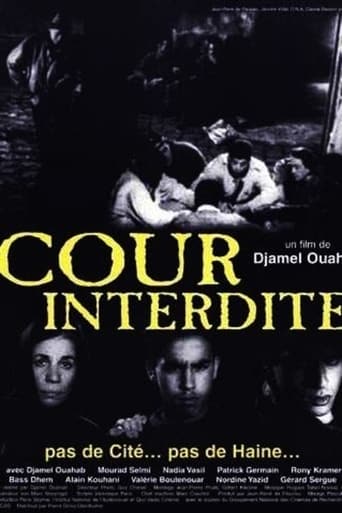
Cour interdite is about drugs, naïve dreams, and the demise of values. A young Arab from the Paris suburbs, where poverty, unemployment and drugs are very much the reality, Djamel Ouahab saw many people around him dying, which led him to this project that took seven years to complete. The director plays a drug dealer who takes care of his family, protects his mother, and tries to shield his little brother from the drugs around him. He also has to help an addicted friend to quit his habit. Just when we think that he might be successful, reality hits him in the face. The message is that you can't escape drugs with drug money. Cour interdite chronicles the drug dealer's descent into hell. It is a realistic film with poetic dimensions. Ouahab tries to show the world of drug addicts but also the human side of the dealer.

After the events of 1905, the proletariat slowly retreated with battle. The Lenin headquarters of the leadership of the revolution was moved to Finland. There Lenin and Krupskaya live illegally in safe houses. Vladimir Ilyich works on his articles, occasionally his associates visit him, sometimes he goes to the city for meetings with his party comrades — Gorky, Kalinin, Krasin, and others. By all possible means, Lenin directs the activities of the Bolsheviks in Russia...
Directed in 1980 and released in 2013. On the issue of addiction in Iran in the 1980s. Mohsen's father is going to pass away soon due to an illness, however, Mohsen himself has been missing for 6 months. A BSc medicine student, he has become a drug addict and lost himself in the slums. Setting out to help him out of his conditions, and deliver his mother's care to him, his father starts searching for him. The movie is embedded in the social conditions of the 70s AD Iran, has a 70s Iranian chivalric tincture, religious color-as was the climate of the Iranian society at the time- and is blended with historic state propaganda. For the audience of that time, this movie would have received a fair score, as it touches on religious notions. However, the issue it addresses is far more complicated and sophisticated at this age, and its propaganda outlook can no longer attract significant commercial or critical attention.