

To Kill a Child
Drama
Overview
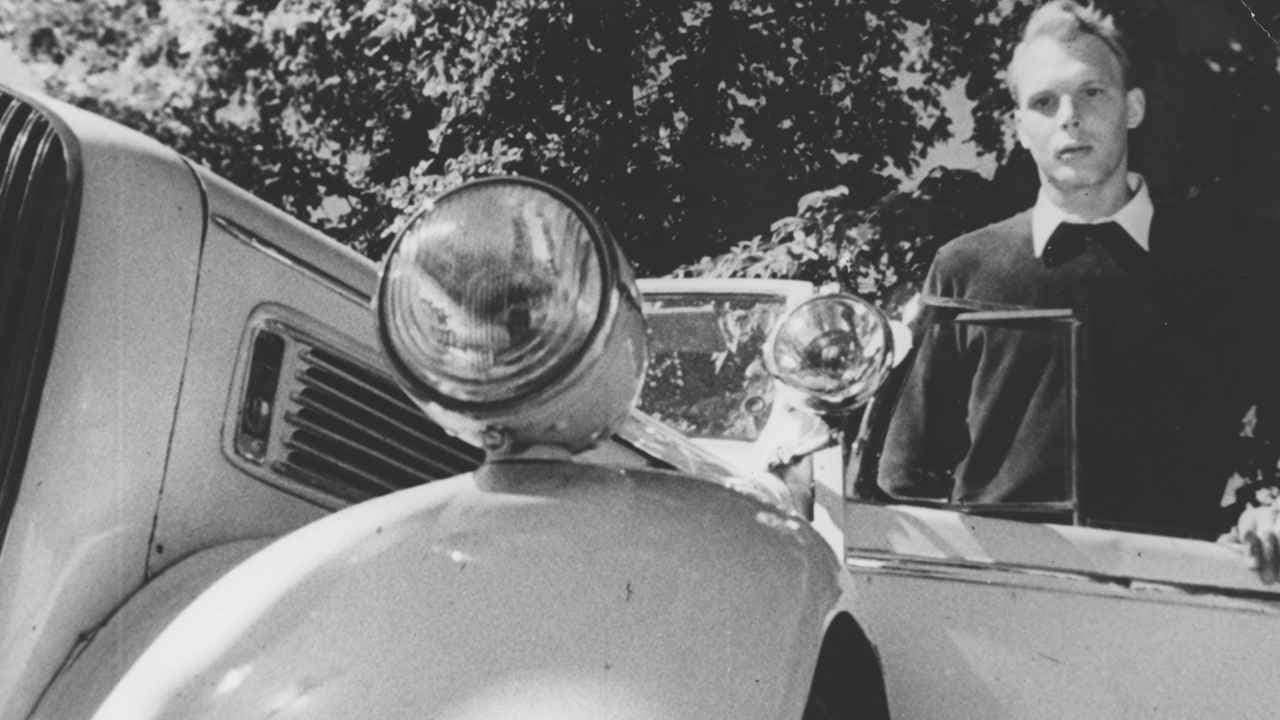
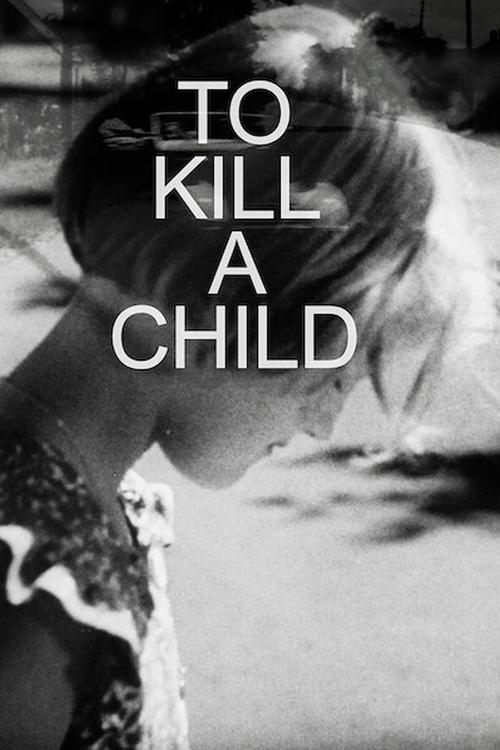
In a Swedish village, situated in a rural idyll, a father, mother and little daughter are preparing breakfast on a Sunday morning. The family is looking forward to the boat trip that is to follow. The little girl's thoughts are already completely on the water. But there is no sugar in the house, so the mother sends her little daughter to the neighbor across the street to quickly get some. Two villages further on, a young man is filling up his car with gas so that he can drive to the Baltic Sea with his girlfriend. In their convertible, the young people feel blithe and free on the country road and race towards the village where the little girl is just crossing the street with the sugar to return home.




Gunnar Sjöberg
Gunnar Sjöberg
Self - Narrator (voice)
Gunnar Sjöberg
Self - Narrator (voice)
Karl-Erik Forsgårdh
Karl-Erik Forsgårdh
Car Driver
Karl-Erik Forsgårdh
Car Driver
Marie-Anne Condé
Marie-Anne Condé
Woman in the Car
Marie-Anne Condé
Woman in the Car
Georg Årlin
Georg Årlin
Child's Father
Georg Årlin
Child's Father
Sissi Kaiser
Sissi Kaiser
Child's Mother
Sissi Kaiser
Child's Mother
Kerstin Thörn
Kerstin Thörn
Child
Kerstin Thörn
Child
Sten Larsson
Sten Larsson
Gas Station Attendant
Sten Larsson
Gas Station Attendant
Similar Movies
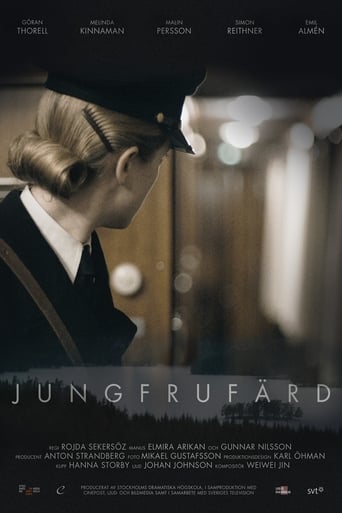
The year is 1941 in Sweden and Astrid seeks independence by trying to become a train conductor. On the train she meets an older passenger Dora, which she feels attracted to. Astrid also faces a more dark and hostile world on board as she discovers that the staff has put in system to reject unwanted passengers such as Romans and Jews.
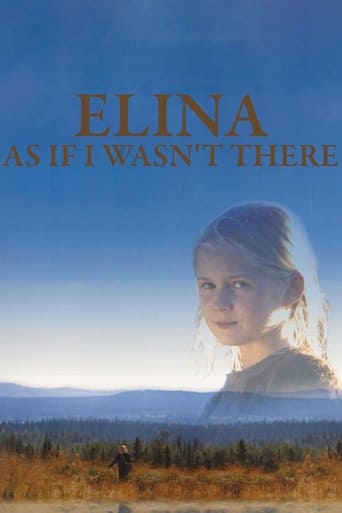
In rural Sweden of the early 1950s, little Elina goes to school again after recovering from tuberculosis, the same illness that has killed her father a few years earlier. Elina's family belongs to Finnish-speaking Finns frowned upon by a staunch schoolmistress who starts hounding Elina for questioning her authority. Elina's mother, sister, and a liberal young male teacher all try to mediate the ensuing battle of wills between Elina and Miss Holm. Elina finds consolation in wandering out on the dangerous marshlands to have imaginary conversations with her dead father. Written by Markku Kuoppamäki

An English-German filmmaking couple retreat to Fårö for the summer to each write screenplays for their upcoming films in an act of pilgrimage to the place that inspired Ingmar Bergman. As the summer and their screenplays advance, the lines between reality and fiction start to blur against the backdrop of the Island's wild landscape.

Duct tape, electrical cables, trigger, explosives. Sebbe never planned to build a bomb. It just happened. Sebbe is 15 years old and lives with his mother in an apartment that is too narrow. He does his best. He never strikes back. Sebbe loves his mother because he knows nothing else. In the junkyard the dream is alive, and in the hands of Sebbe, dead objects come to life. Here he has the power to create. Here he is free - but alone. His isolation grows as his world shrinks, until one day he is completely isolated with no other than his mother. And when she falls, everything falls.
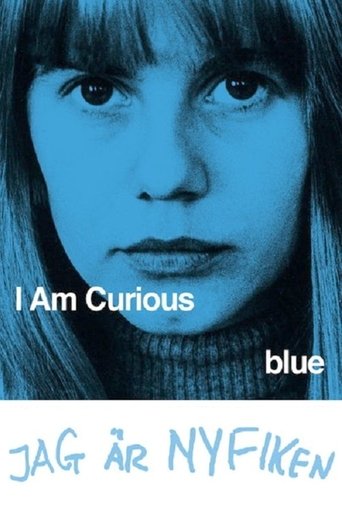
The same movie with the same characters, cast and crew as I am Curious (Yellow), but with some different scenes and a different political slant. The political focus in Blue is personal relationships, religion, prisons and sex. Blue omits much of the class consciousness and non-violence interviews of the first version. Yellow and Blue are the colors of the Swedish flag.
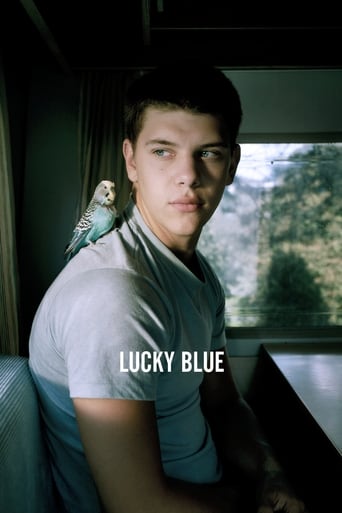
Olle, an introverted, well-mannered boy with an air of innocence and sincerity about him has been camping with his father at the same camping ground with several other people for years now. A sort of tradition that ends in a karaoke party. Then one summer, a family friend brings her reticent 'city boy' nephew, Kevin, and his pet budgerigar. Olle accidentally releases the bird and what follows is a discovery of friendship and love between the guy who has grown up in a loving environment and simply accepts love for what it is and the guy who's apparently been burned too many times in his own circle to feel comfortable with it.

Because of the power of love, the last year of Franz Kafka's life becomes his happiest. The well-known writer has never before been able to allow himself to experience intimacy, he suffers from tuberculosis and is dependent on his overbearing family. In the summer of 1923, he met Dora Diamant in the seaside resort Graal-Müritz on the Baltic Sea coast, where he is convalescing and she is working in a Jewish Volksheim. He is a man of world, the 14 years younger woman is from the deep East, he can write, she can dance. She has both feet firmly on the ground, he is always hovering a little above it. She embraces the indicative, he gets tangled up in the conjunctive. But the worldly wise Dora accepts him as he is. And he accepts her. Together they go to Berlin and when Franz's health deteriorates rapidly, to a sanatorium in Austria. They are granted a single year together until Franz Kafka's health deteriorates incurable. However their year together allows them to feel the glory of life.

Katarina is 20 years old. With a troubled past in a dreary suburb, her life seems to be already set in stone - until she discovers music. Everything changes when she hears a performance of Mozart’s 'Requiem' at the Gothenburg Concert Hall that sends her reeling and opens up a beautiful new world. She feels that she has to change her life and get as far away from her ugly reality as possible. But the path she has to follow proves to be a treacherous one, filled with lies, betrayal and a dangerous liaison with the married conductor Adam. Yet Katarina is ready to do anything to gain her new identity.