



Documentary · Music
Overview
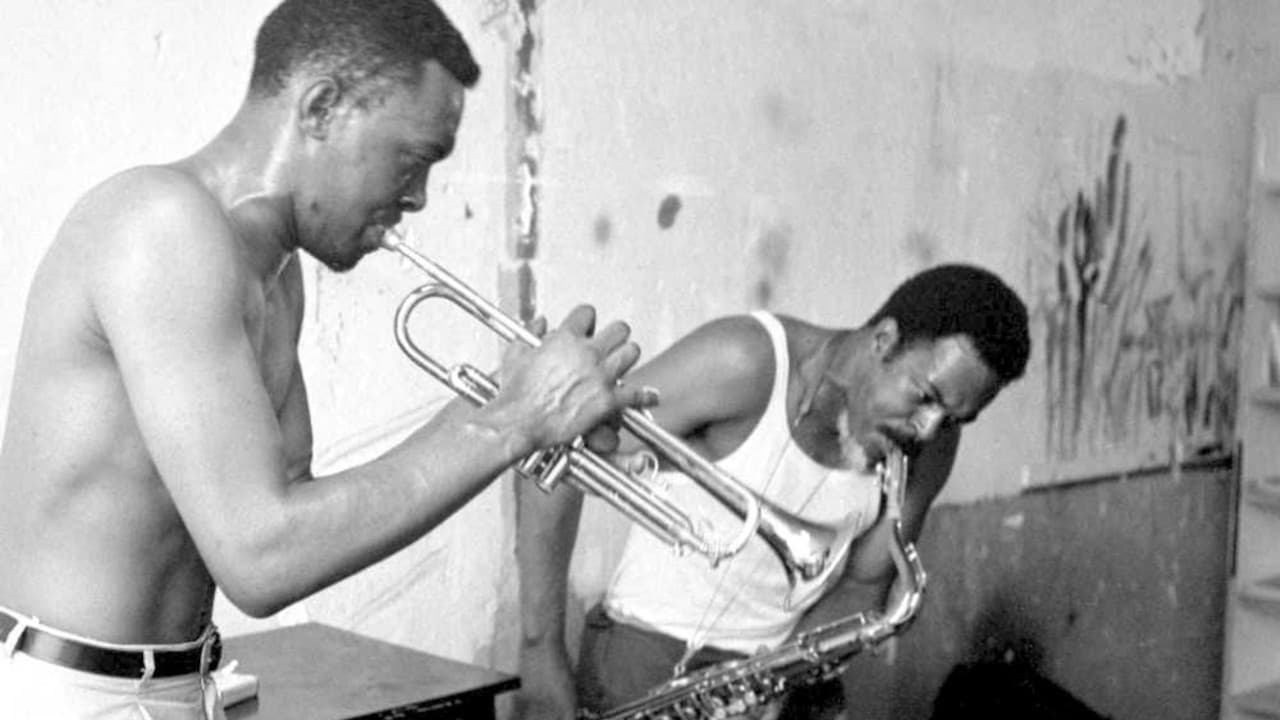
Although the free jazz movement of the 1960s and '70s was much maligned in some jazz circles, its pioneers - brilliant talents like Ornette Coleman, Cecil Taylor, Sun Ra, Albert Ayler, and John Coltrane - are today acknowledged as central to the evolution of jazz as America's most innovative art form. FIRE MUSIC showcases the architects of a movement whose radical brand of improvisation pushed harmonic and rhythmic boundaries, and produced landmark albums like Coleman's Free Jazz: A Collective Inspiration and Coltrane's Ascension. A rich trove of archival footage conjures the 1960s jazz scene along with incisive reflections by critic Gary Giddins and a number of the movement's key players.








No cast information.
Similar Movies
Stop for Bud is Jørgen Leth's first film and the first in his long collaboration with Ole John. […] they wanted to "blow up cinematic conventions and invent cinematic language from scratch". The jazz pianist Bud Powell moves around Copenhagen -- through King's Garden, along the quay at Kalkbrænderihavnen, across a waste dump. […] Bud is alone, accompanied only by his music. […] Image and sound are two different things -- that's Leth's and John's principle. Dexter Gordon, the narrator, tells stories about Powell's famous left hand. In an obituary for Powell, dated 3 August 1966, Leth wrote: "He quite willingly, or better still, unresistingly, mechanically, let himself be directed. The film attempts to depict his strange duality about his surroundings. His touch on the keys was like he was burning his fingers -- that's what it looked like, and that's how it sounded. But outside his playing, and often right in the middle of it, too, he was simply gone, not there."
Tenor saxophone master Sonny Rollins has long been hailed as one of the most important artists in jazz history, and still, today, he is viewed as the greatest living jazz improviser. In 1986, filmmaker Robert Mugge produced Saxophone Colossus, a feature-length portrait of Rollins, named after one of his most celebrated albums.
"What would the world be like without Beethoven?" That’s the provocative question posed by this music documentary from Deutsche Welle. To answer it, the film explores how Ludwig van Beethoven's innovations continue to have an impact far beyond the boundaries of classical music, 250 years after his birth.