

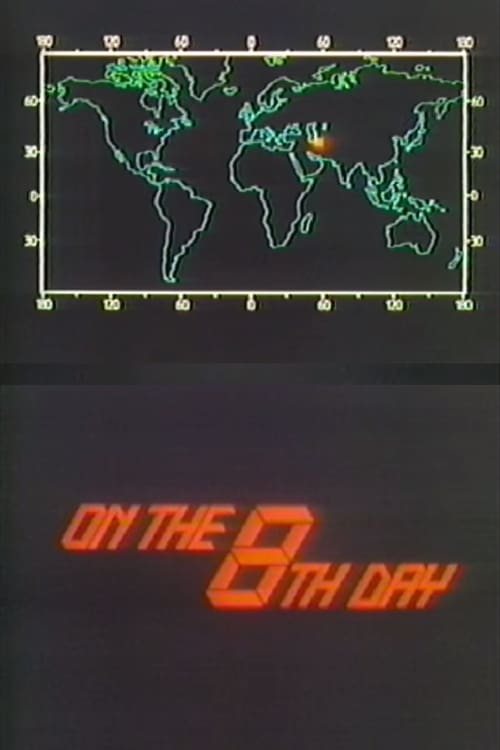
On the 8th Day
Documentary
Overview
A documentary exploring the possible ecological and atmospheric consequences of nuclear war, particularly as they would be expressed in a "nuclear winter."







John Hedges
John Hedges
Narrator (voice)
John Hedges
Narrator (voice)

Carl Sagan
Carl Sagan
Self
Carl Sagan
Self

Paul R. Ehrlich
Paul R. Ehrlich
Self
Paul R. Ehrlich
Self
Yuri Izrael
Yuri Izrael
Self
Yuri Izrael
Self
Similar Movies
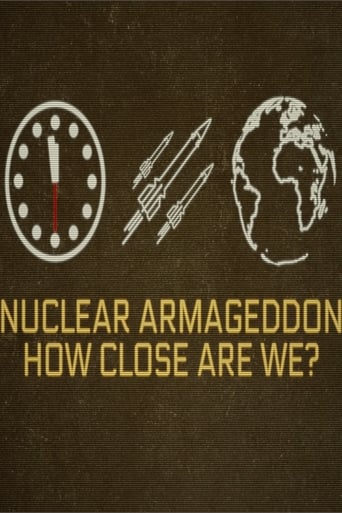
With the Doomsday Clock the closest it's ever been to midnight, Jane Corbin investigates the proliferation of nuclear weapons across the globe. She visits Los Alamos, home to the United States’ nuclear weapons development facility and the historic home of Oppenheimer’s Manhattan Project. In Scotland, she reveals the strategy behind Britain’s nuclear deterrent, and speaks to campaigners in Suffolk fighting against US weapons they fear will be based on UK soil. Jane also discovers how many of the global agreements and safeguards that have constrained the spread of nuclear weapons since the 1970s are breaking down. This is a story told by the scientists, investigators and diplomats who set the clock and have fought to ensure that the ultimate deterrent has not been used in over 70 years.
Project Iceworm was the code name for a top-secret United States Army program during the Cold War to build a network of mobile nuclear missile launch sites under the Greenland ice sheet. The ultimate objective of placing medium-range missiles under the ice — close enough to strike targets within the Soviet Union — was kept secret from the Danish government. To study the feasibility of working under the ice, a highly publicized "cover" project, known as Camp Century.
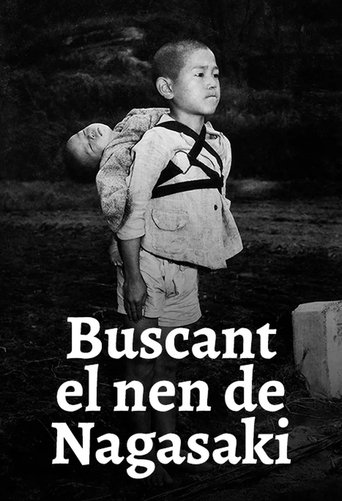
October 1945. A young Japanese boy in the devastated city of Nagasaki, two months after the atomic bomb, carries on his back the lifeless body of his younger brother. An American military photographer, Joe O'Donnell, took a picture of the boy standing stoically near a cremation pit. No one knows the subject's name, but the photo has become an iconic image of the human tragedy of nuclear war. This documentary follows the continuing efforts to deepen understanding of the photograph, while exploring the fate of thousands of atomic-bomb orphans and their struggles to survive the aftermath of World War II.

After a nuclear holocaust tears the world apart, mankind is forced to the harshness of not only the oppression of others who are much more powerful, but the dead earth which seems to be getting worse with every passing moment. But a savior has risen from the ashes, a man who will defeat those who would torment the weak and make the world a livable place once more. A man named Kenshiro...
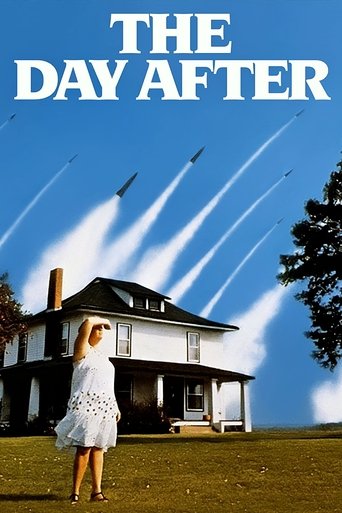
In the mid-1980s, the U.S. is poised on the brink of nuclear war. This shadow looms over the residents of a small town in Kansas as they continue their daily lives. Dr. Russell Oakes maintains his busy schedule at the hospital, Denise Dahlberg prepares for her upcoming wedding, and Stephen Klein is deep in his graduate studies. When the unthinkable happens and the bombs come down, the town's residents are thrust into the horrors of nuclear winter.
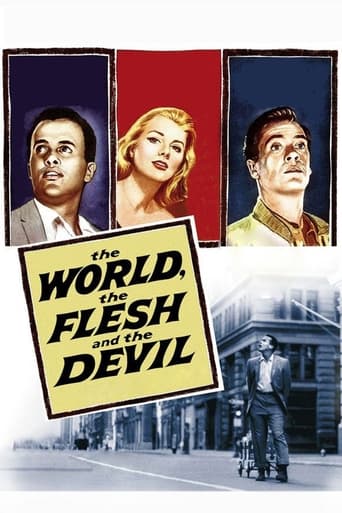
Ralph Burton is a miner who is trapped for several days as a result of a cave-in. When he finally manages to dig himself out, he realizes that all of mankind seems to have been destroyed in a nuclear holocaust. He travels to New York City only to find it deserted. Making a life for himself there, he is flabbergasted to eventually find Sarah Crandall, who also managed to survive. Together, they form a close friendship until the arrival of Benson Thacker who has managed to pilot his small boat into the city's harbor. At this point, tensions rise between the three, particularly between Thacker, who is white, and Burton, who is black.
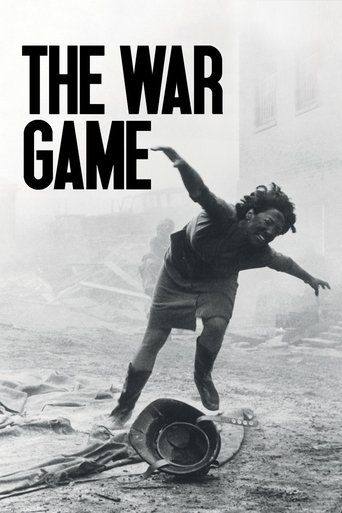
A docudrama depicting a hypothetical nuclear attack on Britain. After backing the film's development, the BBC refused to air it, publicly stating "the effect of the film has been judged by the BBC to be too horrifying for the medium of broadcasting." It debuted in theaters in 1966 and went on to great acclaim, but remained unseen on British television until 1985.