

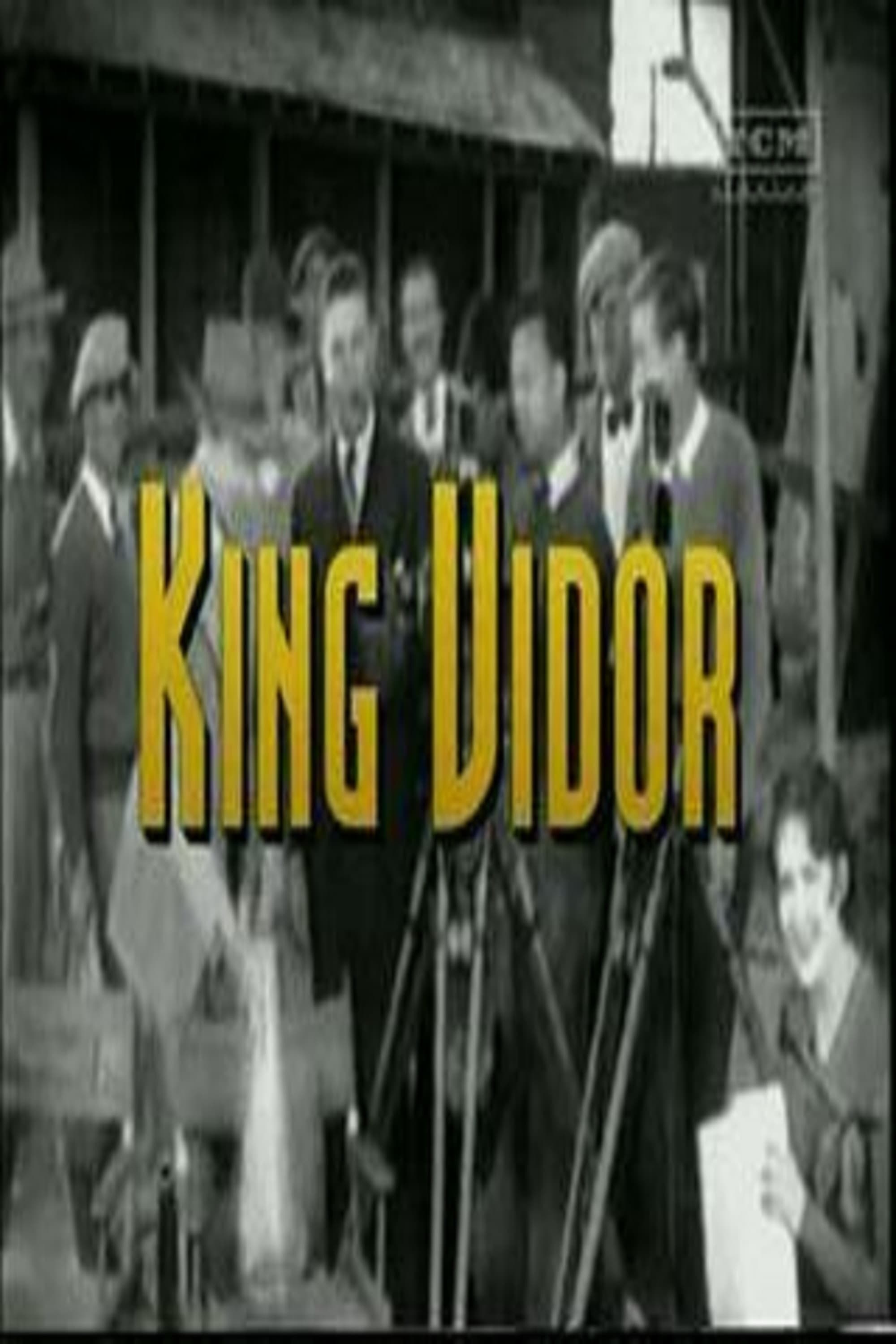
The Men Who Made the Movies: King Vidor
Documentary
Overview
Overview of director King Vidor's filmography.
Top Cast
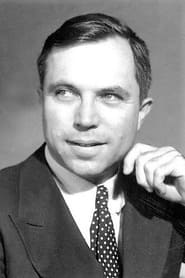
King Vidor
Self
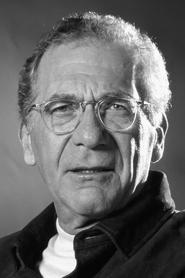
Sydney Pollack
Self - Narrator (voice)

Bette Davis
Self (archive footage)
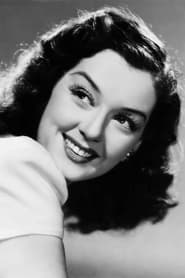
Rosalind Russell
Self (archive footage)
Patricia Neal
Self (archive footage)
Barbara Stanwyck
Self (archive footage)
John Gilbert
Self (archive footage)
Gary Cooper
Self (archive footage)
Gregory Peck
Self (archive footage)
Wallace Beery
Self (archive footage)
Robert Donat
Self (archive footage)






King Vidor
King Vidor
Self
King Vidor
Self
Sydney Pollack
Sydney Pollack
Self - Narrator (voice)
Sydney Pollack
Self - Narrator (voice)
Bette Davis
Bette Davis
Self (archive footage)
Bette Davis
Self (archive footage)
Rosalind Russell
Rosalind Russell
Self (archive footage)
Rosalind Russell
Self (archive footage)
Patricia Neal
Patricia Neal
Self (archive footage)
Patricia Neal
Self (archive footage)
Barbara Stanwyck
Barbara Stanwyck
Self (archive footage)
Barbara Stanwyck
Self (archive footage)
John Gilbert
John Gilbert
Self (archive footage)
John Gilbert
Self (archive footage)
Gary Cooper
Gary Cooper
Self (archive footage)
Gary Cooper
Self (archive footage)
Gregory Peck
Gregory Peck
Self (archive footage)
Gregory Peck
Self (archive footage)
Wallace Beery
Wallace Beery
Self (archive footage)
Wallace Beery
Self (archive footage)
Similar Movies
In 1967, experimental filmmaker Jorgen Leth created a striking short film, The Perfect Human, starring a man and women sitting in a box while a narrator poses questions about their relationship and humanity. Years later, Danish director Lars von Trier made a deal with Leth to remake his film five times, each under a different set of circumstances and with von Trier's strictly prescribed rules. As Leth completes each challenge, von Trier creates increasingly further elaborate stipulations.
The remarkable life and career of the legendary Dick Vitale, ESPN's voice of college basketball for more than four decades, and an inspiration as he battles cancer, a disease he's been fighting on behalf of others for years as well. The film features more than 40 original interviews including Magic Johnson, Mike Krzyzewski, Charles Barkley, John Calipari, Robin Roberts, Chris Berman and Mike Tirico, among many leading voices from college basketball, sports broadcasting, and beyond, "Dickie V" is a fun, unforgettable, moving, inspirational ride through an incredible life still being lived, and a poignant tribute to a man still spreading love and joy wherever he goes.
He was the first Black American drafted in the NFL, the only man to play 7 positions in the NFL. In college, his popularity enabled him to racially integrate the town of Bloomington, Indiana. He even integrated the local theater with the twist of a screwdriver. So why does no one know his name?
A critique of liquid love through sarcasm and crude humor. With the desire that the viewer empathize with the protagonists and reflect on the ephemerality of sexual-affective relationships in modern society. At the end of the short film, the transformation of people into mere consumer goods will be clear, which, once they have been used, are discarded
Randy Moss has long been an enigma known for his brilliance on the football field and his problems off it. Sometimes there's even been an intersection of those two qualities. "Rand University" gets to that crossing by going back to where he came from - Rand, West Virginia - and exploring what almost derailed him before he ever became nationally known for his extraordinary abilities as a wide receiver.
In 1985, at the tender age of 13, Mat Hoffman entered into the BMX circuit as an amateur, and by 16 he had risen to the professional level. Throughout his storied career, Hoffman has ignored conventional limitations, instead, focusing his efforts on the purity of the sport and the pursuit of “what’s next.” His motivations stem purely from his own ambitions, and even without endorsements, cameras, fame and fans, Hoffman would still be working to push the boundaries of gravity. Academy Award nominee Spike Jonze and extreme sport fanatic Johnny Knoxville, along with director Jeff Tremaine, will showcase the inner workings and exploits of the man who gave birth to “Big Air.”
Natural. Rock star. Outsider. In the 80s, race car driver Tim Richmond lived his life the way he raced cars – wide open. Born into a wealthy family, Richmond was the antithesis of the Southern, blue-collar, dirt-track racers who dominated NASCAR. He also was a flamboyant showman who basked in the attention of the media and fans – especially female admirers. Nevertheless, it was Richmond’s on-track performances that ended up drawing comparisons to racing legends. And in 1986, when he won seven NASCAR races and finished third in the Winston Cup series points race, some believed he was on the verge of stardom. But soon his freewheeling lifestyle caught up to him. He unexpectedly withdrew from the NASCAR racing circuit, reportedly suffering from double pneumonia. In reality he had AIDS. Richmond returned to the track in 1987, but he was gone from the sport by the next year as his health deteriorated. He spent his final days as a recluse, dying on August 13, 1989, at the age of 34.
In the fall of 1993, in his prime and at the summit of the sports world, Michael Jordan walked away from pro basketball. After leading the Dream Team to an Olympic gold medal in 1992 and taking the Bulls to their third consecutive NBA championship the following year, Jordan was jolted by the murder of his father. Was it the brutal loss of such an anchor in his life that caused the world’s most famous athlete to rekindle a childhood ambition by playing baseball? Or some feeling that he had nothing left to prove or conquer in basketball? Or something deeper and perhaps not yet understood?