

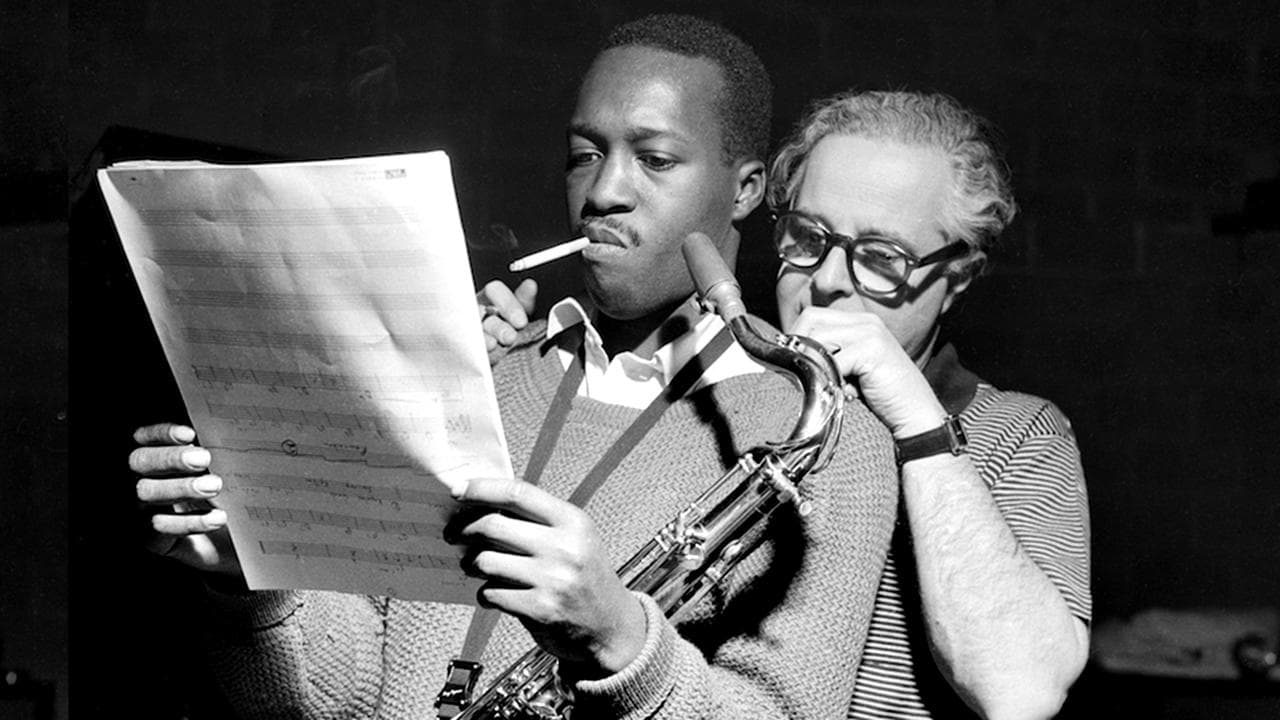

It Must Schwing: The Blue Note Story
Documentary
Overview
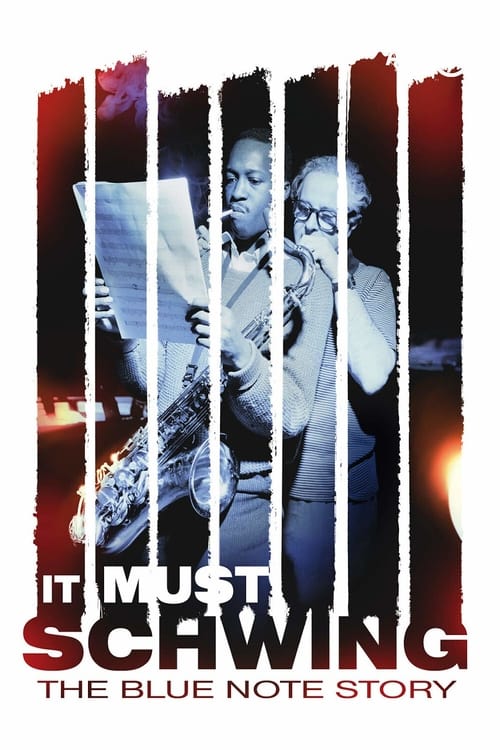
A documentary about the legendary jazz label Blue Note Records and its German founders Alfred Lion and Francis Wolff. As jews they had to flee Germany and the Hitler regime in the late 1930s. In New York they wrote music history with their record label Blue Note Records.







Alfred Lion
Alfred Lion
Self
Alfred Lion
Self
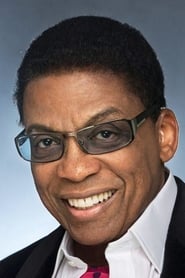
Herbie Hancock
Herbie Hancock
Self
Herbie Hancock
Self
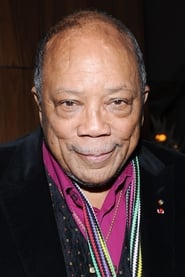
Quincy Jones
Quincy Jones
Self
Quincy Jones
Self
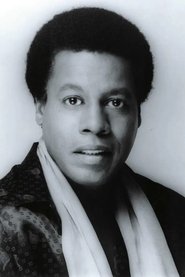
Wayne Shorter
Wayne Shorter
Self
Wayne Shorter
Self
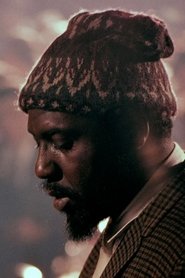
Thelonious Monk
Thelonious Monk
Self
Thelonious Monk
Self
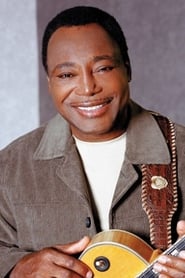
George Benson
George Benson
Self
George Benson
Self

Sonny Rollins
Sonny Rollins
Self
Sonny Rollins
Self
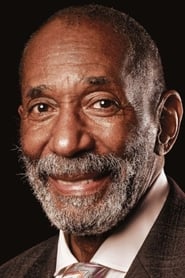
Ron Carter
Ron Carter
Self
Ron Carter
Self
Horace Silver
Horace Silver
Self
Horace Silver
Self
Lou Donaldson
Lou Donaldson
Self
Lou Donaldson
Self
Similar Movies
Max Devereaux and Suko Pyramid documentary about the making of their first three albums together as a duo and the story of their inspiring, international collaboration. Produced entirely remotely, featuring never-before-seen photos, videos and audio as well as interviews with close collaborators from all over the world.
"What would the world be like without Beethoven?" That’s the provocative question posed by this music documentary from Deutsche Welle. To answer it, the film explores how Ludwig van Beethoven's innovations continue to have an impact far beyond the boundaries of classical music, 250 years after his birth.
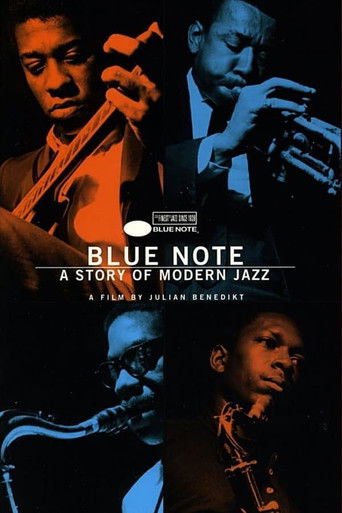
"It must schwing!" was the motto of Alfred Lion and Francis Wolff, two German Jewish immigrants who in 1939 set up Blue Note Records, the jazz label that was home to such greats as Miles Davis, John Coltrane, Herbie Hancock, Thelonious Monk, Art Blakey, Dexter Gordon and Sonny Rollins. Blue Note, the most successful movie ever made about jazz, is a testimony to the passion and vision of these two men and certainly swings like the propulsive sounds that made their label so famous.
A chronological look at the life and career of jazz musician, composer, and performer Dave Brubeck (1920-2012 ), presented through contemporary interviews, archival footage of interviews and performances, and commentary by family, fellow musicians, and aficionados. Emphases include his mother's influence, his wife's invention of college tours, his skill as an accompanist, the great quartet (with Desmond, Morello, and Wright), his ability to find musical ideas everywhere, his orchestral compositions, his religious conversion, and his unflagging sweet nature.
Tenor saxophone master Sonny Rollins has long been hailed as one of the most important artists in jazz history, and still, today, he is viewed as the greatest living jazz improviser. In 1986, filmmaker Robert Mugge produced Saxophone Colossus, a feature-length portrait of Rollins, named after one of his most celebrated albums.
Stop for Bud is Jørgen Leth's first film and the first in his long collaboration with Ole John. […] they wanted to "blow up cinematic conventions and invent cinematic language from scratch". The jazz pianist Bud Powell moves around Copenhagen -- through King's Garden, along the quay at Kalkbrænderihavnen, across a waste dump. […] Bud is alone, accompanied only by his music. […] Image and sound are two different things -- that's Leth's and John's principle. Dexter Gordon, the narrator, tells stories about Powell's famous left hand. In an obituary for Powell, dated 3 August 1966, Leth wrote: "He quite willingly, or better still, unresistingly, mechanically, let himself be directed. The film attempts to depict his strange duality about his surroundings. His touch on the keys was like he was burning his fingers -- that's what it looked like, and that's how it sounded. But outside his playing, and often right in the middle of it, too, he was simply gone, not there."
Documentary about jazz great Chet Baker that intercuts footage from the 1950s, when he was part of West Coast Cool, and from his last years. We see the young Baker, he of the beautiful face, in California and in Italy, where he appeared in at least one movie and at least one jail cell (for drug possession). And, we see the aged Baker, detached, indifferent, his face a ruin. Includes interviews with his children and ex-wife, women companions, and musicians.
Tenor saxophonist Jimmy McGary was a major presence in the Cincinnati music scene from the 1950s until his death in the early ’90s. With music rooted in Bebop with a progressive slant, the Jazz legend was a session player for King Records and released his first album as a bandleader — The First Time (with a quartet that included pianist Pat Kelly) — in 1979. McGary’s spirit and legacy have lived on well after his passing and well beyond Cincinnati, as evidenced in this new documentary film.