

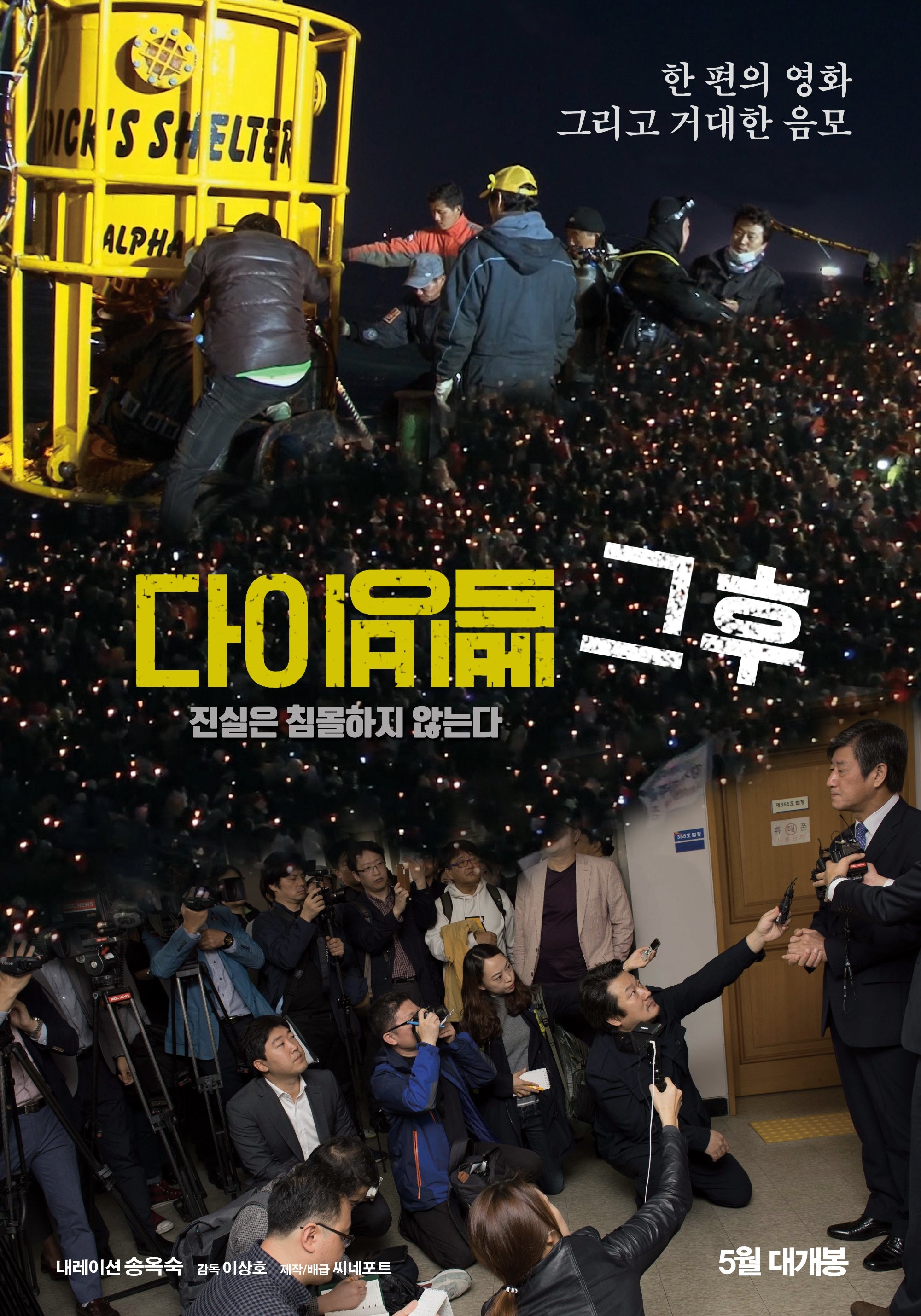
After Diving Bell
Documentary
Overview
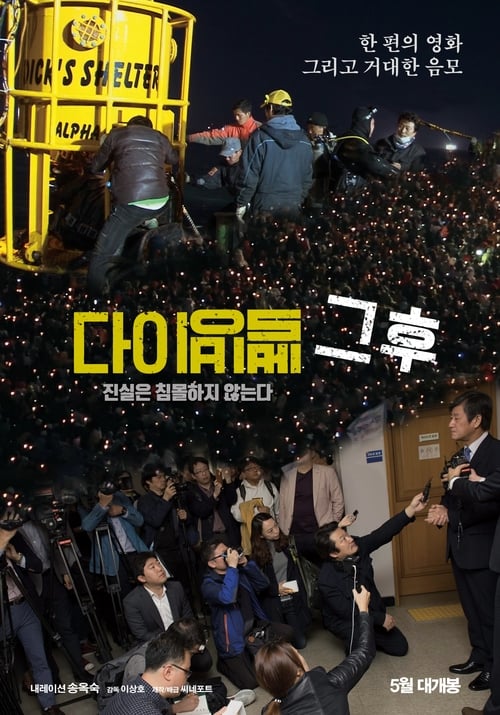
A documentary that reports on the the rescue failure of the Sewol incident. In the days of media control, Park Geun-hye and her government sabotaged the screening of "Diving Bell" at the Busan International Film Festival.
Top Cast

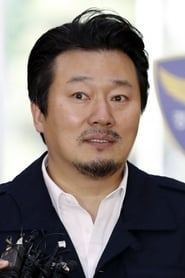
Lee Sang-ho
Lee Sang-ho
Self
Lee Sang-ho
Self

Lee Jong-in
Lee Jong-in
Self
Lee Jong-in
Self

Park Geun-hye
Park Geun-hye
Self (archive footage)
Park Geun-hye
Self (archive footage)

Sohn Suk-hee
Sohn Suk-hee
Self (archive footage)
Sohn Suk-hee
Self (archive footage)

Song Ok-suk
Song Ok-suk
Narrator
Song Ok-suk
Narrator

Chung Ji-young
Chung Ji-young
Self
Chung Ji-young
Self

Jun In-kwon
Jun In-kwon
Self
Jun In-kwon
Self
Kim Jho Gwang-soo
Kim Jho Gwang-soo
Self
Kim Jho Gwang-soo
Self

Lee Myung-bak
Lee Myung-bak
Self (archive footage)
Lee Myung-bak
Self (archive footage)

Kim Ki-chun
Kim Ki-chun
Self (archive footage)
Kim Ki-chun
Self (archive footage)
Similar Movies
A year has passed since the attacks on the Nord Stream gas pipelines, and it is still unclear what actually happened at the bottom of the Baltic Sea at that time. ARD, Süddeutsche Zeitung, and DIE ZEIT have joined forces for a large-scale investigation and set out to find the alleged perpetrators. An investigation into one of the most spectacular criminal cases of our time, an attack of historic proportions.
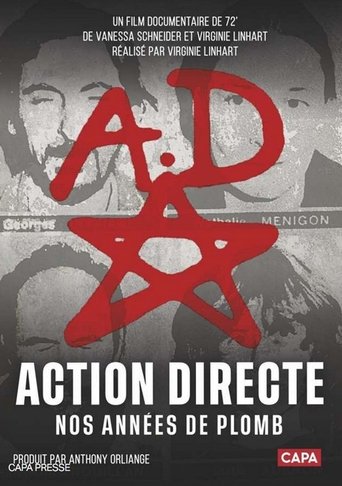
Between 1979 and 1987, a far-left group wreaked havoc across France. Robberies, bombings, assassinations. They struck hard and disappeared in a cloud of explosives, leaflets scattered in the wind, and relentless ideological demands. Their name? Action Directe. More than 80 attacks, 26 wounded, and 12 dead in less than ten years. Stunned French citizens discovered posters plastered everywhere showing portraits of these young women and men who looked like everyone else and whom nothing seemed to be able to stop. A long and intense manhunt began, culminating in the arrest of the group's leadership.

This documentary profiles economist and writer Marilyn Waring. In extensive interviews, Waring details her feminist approach to finances and challenges commonly accepted truths about the global economy. The filmmakers detail Waring's early rise to political prominence and her successful protests against nuclear arms. Waring also speaks candidly about wartime economies, suggesting that government policies tend to marginalize the fiscal contributions of women.
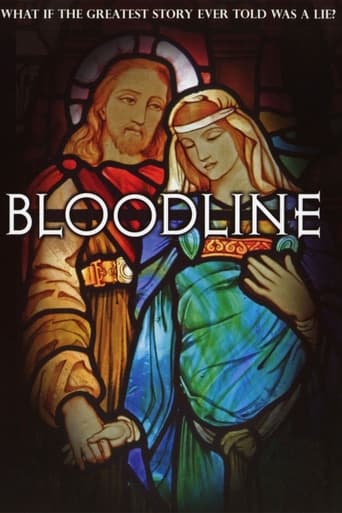
One man's journey into the world of the so-called 'Bloodline' conspiracy, at the heart of Dan Brown's The Da Vinci Code, where a secret society, the Priory of Sion, claims to have guarded evidence of the marriage of Mary Magdalene and Jesus Christ, their children and their descendants down through the centuries.
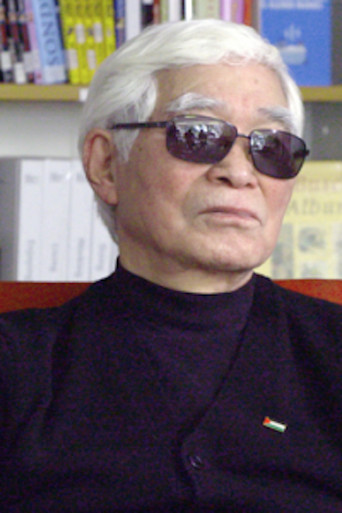
Masao Adachi, the author and director of experimental works and pinku-eiga in the 1960s, was a member of the Japanese New Left that shifted from being a filmmaker to a guerrilla fighter. In 1974, he joined the Japanese Red Army in Lebanon, which worked closely with the Popular Front for the Liberation of Palestine. Filmmaker Lutz Dammbeck met Adachi in Tokyo in 2018 and talked with him about a wide range of topics, including art, revolution, the influence of western avant-garde art and American underground; the Japanese Red Army; collaboration with secret services; the role of the Left after 1968; and the reasons for failures of leftist ideas and strategies.
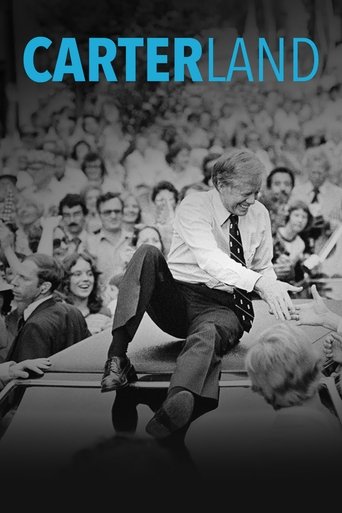
In their feature film debut, CARTERLAND, the Pattiz Brothers examine the tragic, yet inspiring story of America's most misunderstood president. While leading the nation through a series of unprecedented crises, Jimmy Carter also confronted climate change and championed social justice at home and abroad. This groundbreaking film draws on archival footage, experts, and insiders to reveal how Carter's selfless leadership and moral integrity ultimately cost him the presidency.
"Africa Light" - as white local citizens call Namibia. The name suggests romance, the beauty of nature and promises a life without any problems in a country where the difference between rich and poor could hardly be greater. Namibia does not give that impression of it. If you look at its surface it seems like Africa in its most innocent and civilized form. It is a country that is so inviting to dream by its spectacular landscape, stunning scenery and fascinating wildlife. It has a very strong tourism structure and the government gets a lot of money with its magical attraction. But despite its grandiose splendor it is an endless gray zone as well. It oscillates between tradition and modernity, between the cattle in the country and the slums in the city. It shuttles from colonial times, land property reform to minimum wage for everyone. It fluctuates between socialism and cold calculated market economy.