

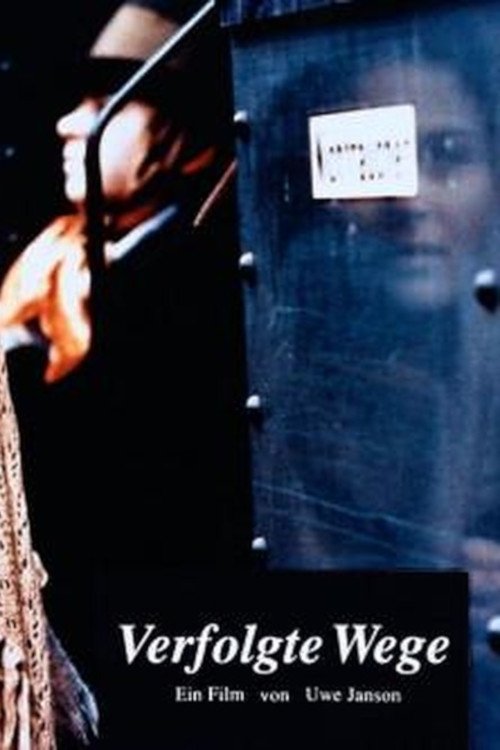
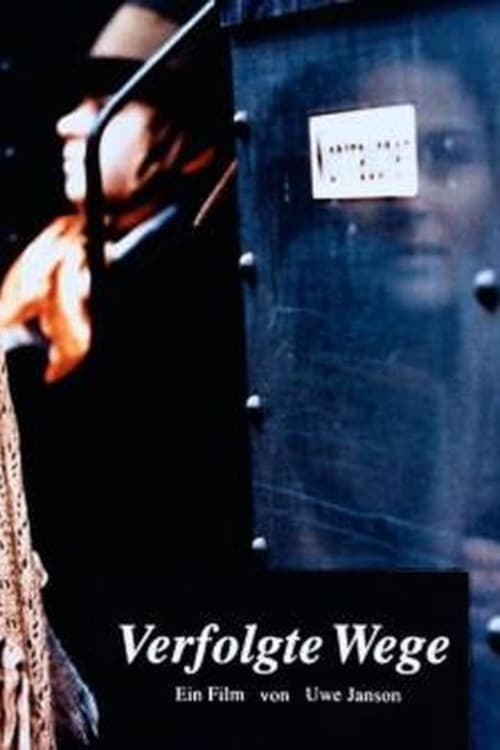
Verfolgte Wege
Drama · History
Overview
Post-war Germany in 1946 while people are struggling to make ends meet, the film follows Hermann, a war veteran who finds employment at a train station. As he falls in love with an agricultural worker and starts comitting thefts, his fragile psyche seems to fall more and more out of balance.



Peter Cieslinski
Peter Cieslinski
Hermann
Peter Cieslinski
Hermann

Barbara Auer
Barbara Auer
Marie
Barbara Auer
Marie
Helen De Lon
Helen De Lon
Lotte
Helen De Lon
Lotte
Michael Dick
Michael Dick
Karl
Michael Dick
Karl
Adolf Laimböck
Adolf Laimböck
Friedrich
Adolf Laimböck
Friedrich

Julia Lindig
Julia Lindig
Lisa
Julia Lindig
Lisa
Tilo Prückner
Tilo Prückner
Heindl
Tilo Prückner
Heindl
Ernst Strachwitz
Ernst Strachwitz
Leo
Ernst Strachwitz
Leo
Michaela Wolko
Michaela Wolko
Carla
Michaela Wolko
Carla
Heiner Stadelmann
Heiner Stadelmann
Dr. Stamm
Heiner Stadelmann
Dr. Stamm
Similar Movies
The residents of Ho Chi Minh City face modernization amid widespread poverty. A retired American Marine arrives on a search for his daughter, whom he abandoned at the end of the Vietnam War. Elsewhere, a cyclo driver falls for a troubled prostitute and schemes to raise money so he can spend time with her. Additionally, a young women begins harvesting lotuses for a writer suffering from leprosy, and a child trinket seller loses his traveling case.
Ken, a WWII GI, returns home after he's paralyzed in battle. Residing in the paraplegic ward of a veteran's hospital and embittered by his condition, he refuses to see his fiancée and sinks into a solitary world of hatred and hostility. Head physician, Dr. Brock cajoles the withdrawn Ken into the life of the ward, where fellow patients Norm, Leo and Angel begin to pull him out of his spiritual dilemma.
West Germany underwent a period of rapid and extraordinary growth after the Second World War with rising wages and living standards. This economic miracle is often credited to Economics Minister Ludwig Erhard and the hard work of ordinary Germans. But on closer inspection, some hard truths and injustices from the Nazi era casts a shadow on this postwar rosy picture.
Post-war Germany 1945: Two rival gangs of uprooted boys fight each other in the ruins of Berlin, whose business is the black market out of necessity in order to survive. Their respective leaders are Gerhard and Dietrich. A pretty young circus artist named Corona comes to the destroyed city with a traveling circus. She immediately caught the boys' attention. When the latter notice that the circus director is abusing the girl, the two gangs join forces and plot an act of revenge against the tyrant. But with the hustle and bustle caused by this, Corona falls from the trapeze and is seriously injured. When the circus moves on, the boys organize a doctor for the sick artist who has been left behind. Their collectively concern for the blonde beauty makes them forget their enmity. This welds the troops closer together and sets the course for a common, meaningful future.
Germany in the autumn of 1957: Lola, a seductive cabaret singer-prostitute exults in her power as a temptress of men, but she wants out—she wants money, property, and love. Pitting a corrupt building contractor against the new straight-arrow building commissioner, Lola launches an outrageous plan to elevate herself in a world where everything, and everyone, is for sale. Shot in childlike candy colors, Fassbinder’s homage to Josef von Sternberg’s classic The Blue Angel stands as a satiric tribute to capitalism.