

The Glass Room
Drama
Overview
Liesel Landauer and her friend Hana are linked by a lifelong relationship and an exceptional house built by the architect Von Abt for Liesel and her husband Viktor in Czechoslovakia in the early 1930s.







Hanna Alström
Hanna Alström
Liesel Landauer
Hanna Alström
Liesel Landauer
Karel Roden
Karel Roden
Rainer von Abt
Karel Roden
Rainer von Abt

Carice van Houten
Carice van Houten
Hana
Carice van Houten
Hana

Claes Bang
Claes Bang
Viktor Landauer
Claes Bang
Viktor Landauer
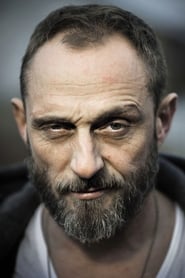
Roland Møller
Roland Møller
Stahl
Roland Møller
Stahl

Alexandra Borbély
Alexandra Borbély
Kata
Alexandra Borbély
Kata

Karel Dobrý
Karel Dobrý
Láník
Karel Dobrý
Láník
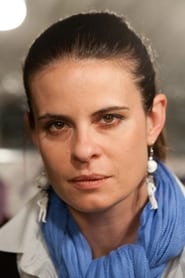
Zuzana Fialová
Zuzana Fialová
Láníková
Zuzana Fialová
Láníková

Brian Caspe
Brian Caspe
Gestapo Officer
Brian Caspe
Gestapo Officer
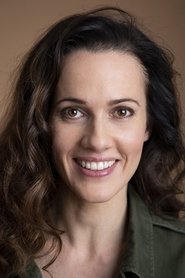
Petra Bučková
Petra Bučková
Neighbour
Petra Bučková
Neighbour
Similar Movies
On the Italian coast, writer Paul Decker has grown unhappy in his marriage and executes what appears to be a perfect murder of his wife. While Paul is believed to be writing a book in France, his stepdaughter, Candy, suspects him of murdering her mother, as well as her father years before. With the police unwilling to investigate any further, Candy sets out to confirm her suspicions and take Paul down herself.
In 1961, Sally Bishop and her husband vacation to Northern Italy, where they get stranded at a remote villa run by the enigmatic Vova, who presides over a household of beautiful, deathless women and their caretaker. As Sally becomes entangled in their world of seduction, violence and illusion, she begins to lose her grip on time and self as her own dark transformation unfolds.
This film is about what the routine of everyday life can do to the human mind and psyche. It also reflects on the importance of the choices we make and how limited these choices are in the first place. The plot evolves around a family of four. They live in the suburbs, in a strange villa that appears, through a complex game of mirrors, to be more like a piece of installation art than a real house. The main character, who hardly appears on screen, is the son, a man in his thirties. Suffering from asthma and eczema since childhood, he uses his condition to manipulate his parents and his sister. Thus the existence of the terrorized family turns into an endless ritual of attempting to satisfy his whims, and always on the alert for yet another one of his “health crises”. Las Meninas resembles the scattered pieces of a puzzle. It is up to the viewer to assemble them in order to form his very own picture – something that makes the film itself personal and unique.
Hugh Whitemore adapted Bruce Chatwin's novel for this tale of a New York antique dealer who travels to Prague to buy the porcelain collection of the late Baron Utz, only to become embroiled in the wreckage of the dead man's unusual life history after he discovers that the collection is missing.
The film consists of a series of tightly interlinked vignettes, the most sustained of which details the story of a man and a woman who are passionately in love. Their attempts to consummate their passion are constantly thwarted, by their families, by the Church and bourgeois society in general.
Art film producer Jeremy Prokosch, unhappy with the work of his director, hires Fritz Lang (as himself) to direct an adaptation of The Odyssey, but when it seems that the legendary filmmaker is making a picture destined to bomb, he brings in a screenwriter to energise the script. The professional intersects with the personal when a rift develops between the writer and his wife.