


Wild Flowers
Comedy
Overview
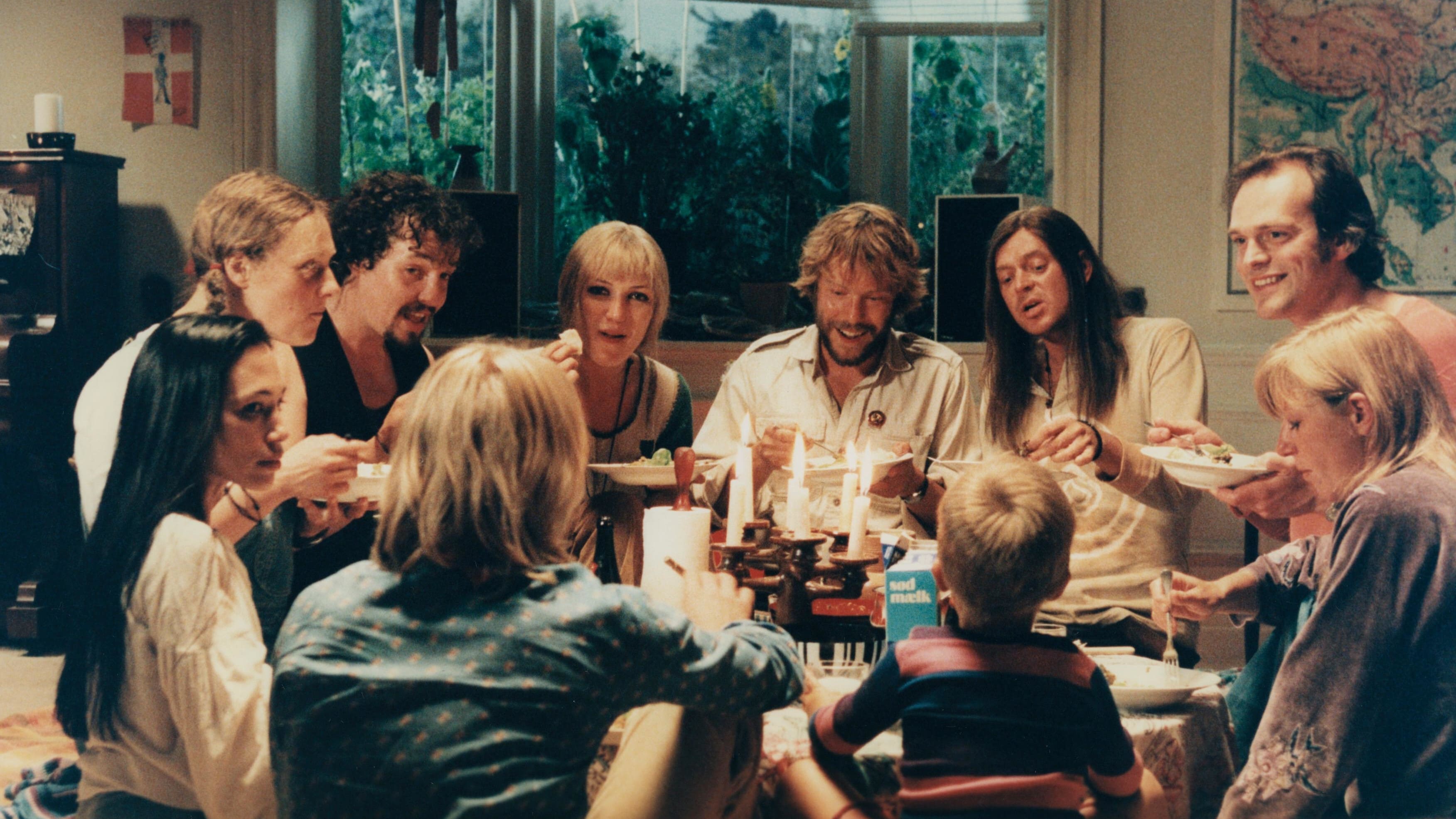
Denmark in the 70's. The teenager Christoffer's parents Nisse and Maria have decided to move into a commune because they want to try the alternative lifestyle. But Christoffer doesn't like it and has trouble adapting. In school the others tease him because he lives in a commune. As a plan from the elders in the commune he starts in a Maoist group to learn about the real ways of the society. He doesn't like it but when his new girlfriend starts to see what he does as cool he goes into it. But at the same time the police start to suspect him to be the terrorist who blows up telephone booths around Copenhagen.














Ditte Gråbøl
Ditte Gråbøl
Maria
Ditte Gråbøl
Maria

Andrea Vagn Jensen
Andrea Vagn Jensen
Tine
Andrea Vagn Jensen
Tine

Mira Wanting
Mira Wanting
Julie
Mira Wanting
Julie

Peter Frödin
Peter Frödin
Palle
Peter Frödin
Palle

Niels Olsen
Niels Olsen
Nisse
Niels Olsen
Nisse
Sixten Tobias Kai Nielsen
Sixten Tobias Kai Nielsen
Christoffer
Sixten Tobias Kai Nielsen
Christoffer

Søren Sætter-Lassen
Søren Sætter-Lassen
Svend Erik
Søren Sætter-Lassen
Svend Erik

Dea Fog
Dea Fog
Ingerlaise
Dea Fog
Ingerlaise

Anders Nyborg
Anders Nyborg
Aksel
Anders Nyborg
Aksel
Jens Wiberg Lindrup
Jens Wiberg Lindrup
Tønnes
Jens Wiberg Lindrup
Tønnes
Similar Movies
Bus driver Stan Butler agrees to marry Suzy, much to the anguish of Mum, her son-in-law, Arthur, and daughter Olive. How, they wonder, will they ever manage without Stan's money coming in? Then Arthur is sacked, and Stan agrees to delay the wedding. Meanwhile, he hits on an idea: Arthur should learn to drive a bus. Somehow he does just that, and even gets a job. Stan then blackmails the Depot Manager into giving him the job of driver on the new money-making Special Tours Bus. A great idea ...if only the inspector hadn't taken Stan on his trial run to the Windsor Safari Park
Harold Fine is a self-described square - a 35-year-old Los Angeles lawyer who's not looking forward to middle age nor his upcoming wedding. His life changes when he falls in love with Nancy, a free-spirited, innocent, and beautiful young hippie. After Harold and his family enjoy some of her "groovy" brownies, he decides to "drop out" with her and become a hippie too. But can he return to his old life when he discovers that the hippie lifestyle is just a little too independent and irresponsible for his tastes?
Pelopidas and his wife, Pelagia, receive a visit from their fiery daughter, Dora, who announces that she is separating from her husband, Haris. Before they have time to recover from the shock, their other daughter, Yuli, bursts in and announces that she is also getting divorced. The reason for all this is the new fashion of mini skirts, as women demand the freedom to choose how they dress, but men do not accept the mini. The youngest daughter follows her sisters' example and breaks off her engagement, as does their voluptuous aunt, who also leaves her husband. Pelopidas, trying to reason with his daughters, also asks for a divorce from Pelagia, who leads him by the nose.
Having been married for seven years, a tourist office director and his well-known television presenter wife, Alekos and Efi Fotiou go through a crucial phase. Dedicated to their careers, they rarely meet, and when thy actually achieve it they always end up quarreling. The only family they have, their uncles, suggest they have a baby. She finds it a good idea, but Alekos thinks that they won't be able to raise a baby properly. This dispute brings them one step closer to divorce, which now seems the only solution, especially when Efi starts to believe that Alekos is flirting with Tzouli, and Alekos suspects that his wife is having an affair with Dimitris. When it is finally proved that none of this is true, and, actually, Tzouli is planning to marry Dimitris and Efi's aunt Dimitris' uncle, they all get reasonable, the couple gets over its crisis and they live happily ever after, together with their newborn child.
In a French nightclub, choreographed song and dance routines are performed, rather than a streamlined narrative. They tell the story of Parisian culture and politics from the 1920s—1980s. A disparate, anachronistic series of characters, including an ordinary waiter, a Nazi collaborator, resistance fighters, and 1960s student protestors gather to celebrate and satirize 20th century France's icons, demons, and social changes.
Set in the 1970s, Tom Spader is an attorney who is determined to end what he has dubbed "the colored man's losing streak." When his winning of a high-profile case thrusts him into the limelight, he decides to move his wife and their two kids out of their mixed lower-middle-class town and into the posh enclave of Greenwich, Connecticut.
Charlotte Castang is a working-class 13-year-old girl, who lives in a drab, run-down neighbourhood, and is ready to become an adult. Her mother died giving birth to her, and she lives with her crass brother and a father whose attention is elsewhere. Her only friend is Lulu, a sick 10-year-old she regards as a pest. Charlotte is antisocial, bored and dreams of a better life. Her life improves when she meets Clara Bauman, a pianist prodigy.
Halvard Sanz believes in the principle according to which we always meet people who really interest us twice. It’s written in the tables of how the world works, right next to the law of series and the constant speed of light. Halvard therefore believes that he’ll be able to find Pollux again. She’s the woman of his dreams, but he didn’t get the time to tell her so. Dizzy as a bee, he’ll charge head first into the plate glass window of life.