

The Opera House
Documentary
Overview
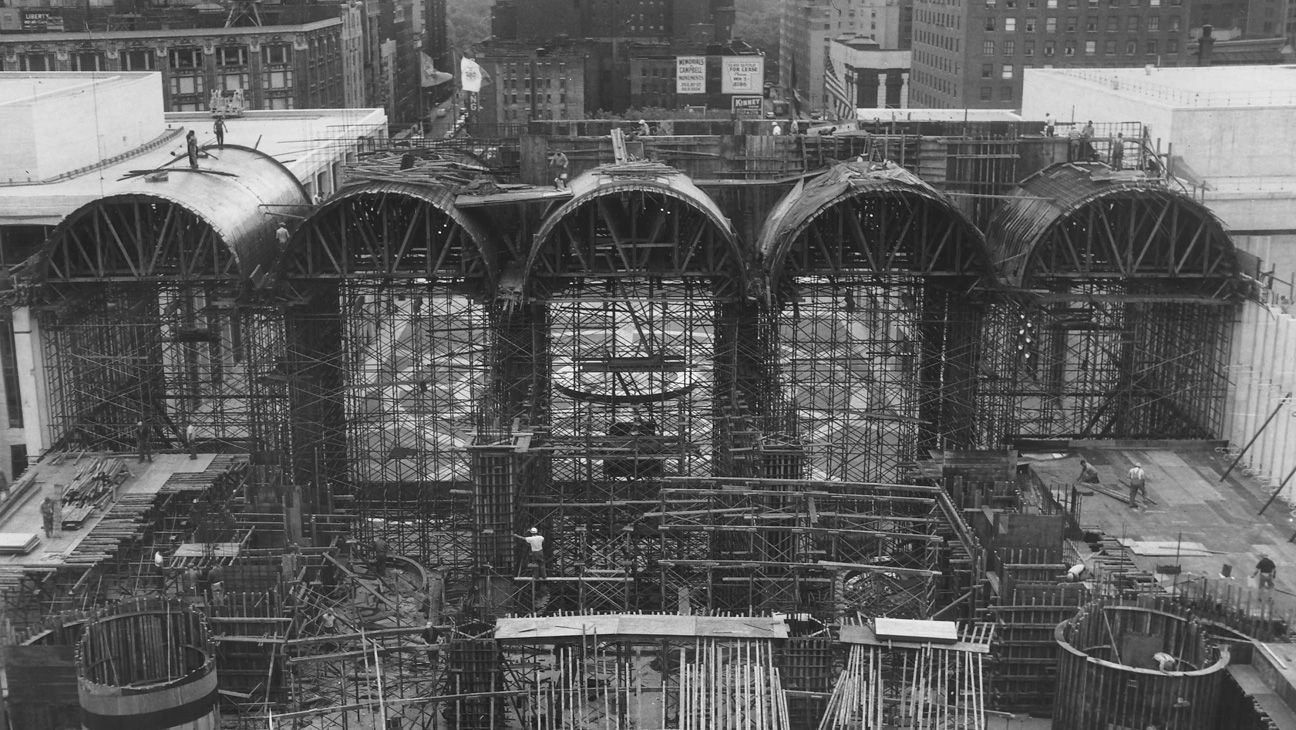
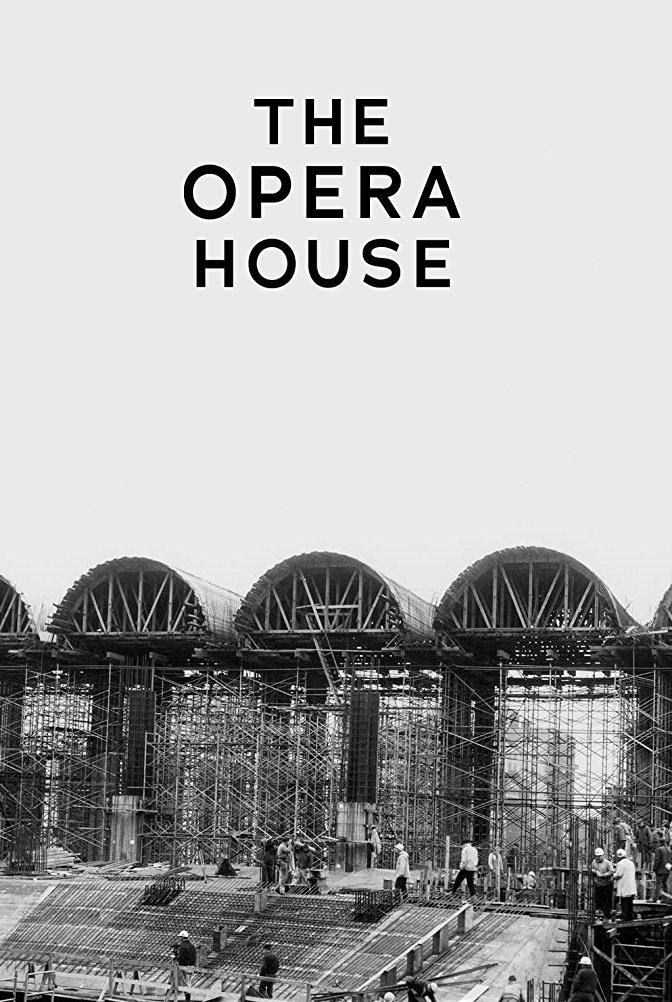
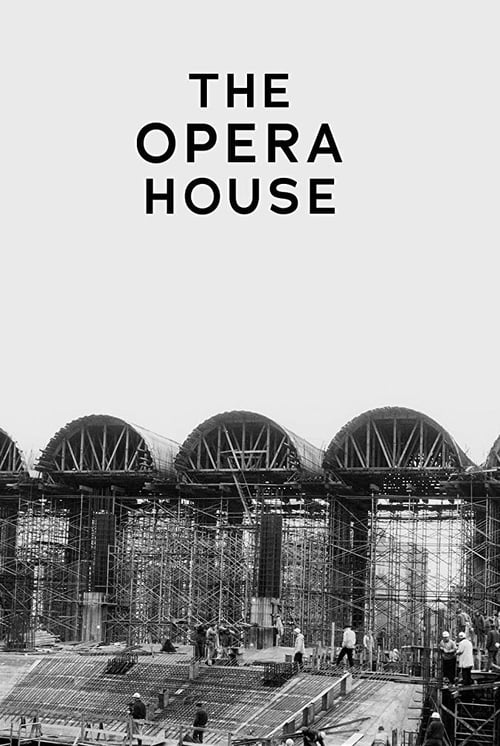
In this documentary, award-winning filmmaker Susan Froemke explores the creation of the Metropolitan Opera’s storied home of the last five decades. Drawing on rarely seen archival footage, stills, and recent interviews, The Opera House looks at an important period of the Met’s history and delves into some of the untold stories of the artists, architects, and politicians who shaped the cultural life of New York City in the ’50s and ’60s. Among the notable figures in the film are famed soprano Leontyne Price, who opened the new Met in 1966 in Samuel Barber’s Antony and Cleopatra; Rudolf Bing, the Met’s imperious General Manager who engineered the move from the old house to the new one; Robert Moses, the unstoppable city planner who bulldozed an entire neighborhood to make room for Lincoln Center; and Wallace Harrison, whose quest for architectural glory was never fully realized.
Top Cast
Leontyne Price
Self - Interviewee
Humphrey Burton
Self - BBC Arts Reporter
Justino Díaz
Self (archive footage)
Rudolf Bing
Self (archive footage)
Wallace Harrison
Self (archive footage)
Franco Zeffirelli
Self (archive footage)
Samuel Barber
Self (archive footage)
Robert Moses
Self (archive footage)
Hilary Ballon
Self (archive footage)
Rosalind Elias
Self (archive footage)
Kyna Leski
Self (archive footage)


Leontyne Price
Leontyne Price
Self - Interviewee
Leontyne Price
Self - Interviewee
Humphrey Burton
Humphrey Burton
Self - BBC Arts Reporter
Humphrey Burton
Self - BBC Arts Reporter
Justino Díaz
Justino Díaz
Self (archive footage)
Justino Díaz
Self (archive footage)
Rudolf Bing
Rudolf Bing
Self (archive footage)
Rudolf Bing
Self (archive footage)
Wallace Harrison
Wallace Harrison
Self (archive footage)
Wallace Harrison
Self (archive footage)
Franco Zeffirelli
Franco Zeffirelli
Self (archive footage)
Franco Zeffirelli
Self (archive footage)
Samuel Barber
Samuel Barber
Self (archive footage)
Samuel Barber
Self (archive footage)
Robert Moses
Robert Moses
Self (archive footage)
Robert Moses
Self (archive footage)
Hilary Ballon
Hilary Ballon
Self (archive footage)
Hilary Ballon
Self (archive footage)
Rosalind Elias
Rosalind Elias
Self (archive footage)
Rosalind Elias
Self (archive footage)
Similar Movies
This short film tells about a young, but already well-known flutist Denis Bourikov. A winner of international competitions and a scholar of the "New Names" program, in his fourteen years he traveled the world, gave solo concerts, performed in the residences of the Pope of Rome and the Patriarch of Moscow and All Russia. James Galway, one of the best flutists of the world, said about him: "Denis, without a doubt, is the most capable young musician. I believe he has a great future". Tracing the creative path of this gifted flutist, the film tries to reveal his complex inner world.
37-year-old Italian-American widow Loretta Castorini believes she is unlucky in love, and so accepts a marriage proposal from her boyfriend Johnny, even though she doesn't love him. When she meets his estranged younger brother Ronny, an emotional and passionate man, she finds herself drawn to him. She tries to resist, but Ronny, who blames his brother for the loss of his hand, has no scruples about aggressively pursuing her while Johnny is out of the country. As Loretta falls for Ronny, she learns that she's not the only one in her family with a secret romance.
Diana Damrau and Vittorio Grigolo are opera’s classic lovers in Gounod’s lush Shakespeare adaptation. Director Bartlett Sher’s “brilliant and inspired new production … is a revelation” (Huffington Post), and has already won acclaim for its vivid 18th-century milieu and stunning costumes during runs at Salzburg and La Scala. Emmanuel Villaume conducts the sumptuous score.
The legendary Plácido Domingo brings another new baritone role to the Met under the baton of his longtime collaborator James Levine. Liudmyla Monastyrska is Abigaille, the warrior woman determined to rule empires, and Jamie Barton is the heroic Fenena. Dmitri Belosselskiy is the stentorian voice of the oppressed Hebrew people.
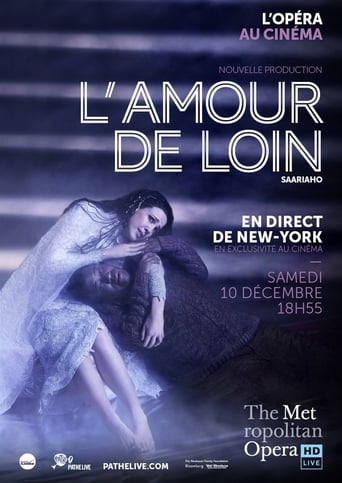
Robert Lepage’s dreamlike production, with its thousands of twinkling LED lights stretching across the stage to represent the sea, encapsulates the mystic feeling of L’Amour de Loin, Saariaho’s haunting opera of distant love. Eric Owens is Jaufré Rudel, a troubadour in 12th century France who has become tired of his hedonistic life and longs for an idealized love. Enter the Pilgrim (Tamara Mumford) who tells him his perfect love does, in fact, exist, far across the sea. She is Clémence, Countess of Tripoli (Susanna Phillips). The magic of the characters’ inner lives as they explore the meaning of love, longing, life, and death is heightened by Saariaho’s hypnotic and bewitching score, conducted by Susanna Mälkki.
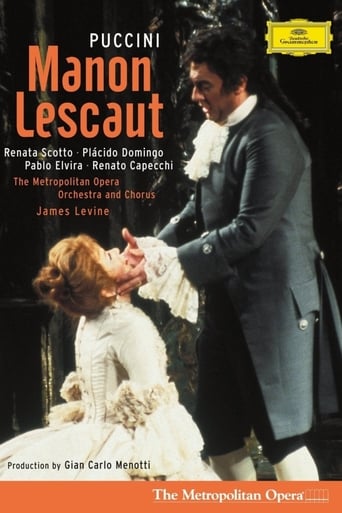
All the throbbing eroticism—and ultimate heartbreak—of Puccini’s youthful score is unleashed by James Levine and his top-flight cast. Plácido Domingo is Des Grieux, the handsome, headstrong young aristocrat who falls head over heels for the enticing, impetuous Manon Lescaut (Renata Scotto). Manon returns his love, but her obsession with luxury ruins them both. Gian Carlo Menotti’s opulent production, with sets and costumes by Desmond Heeley, superbly captures the colorful world of 18th century France.
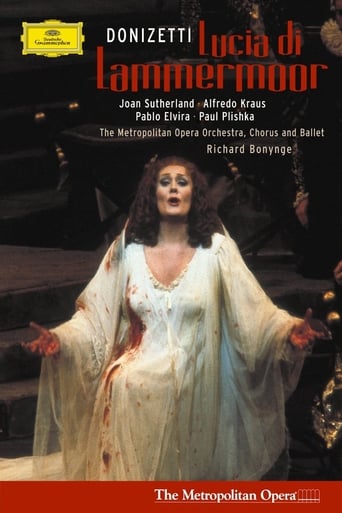
This telecast offers a rare opportunity to see the legendary Joan Sutherland in the role that first catapulted her to international stardom. She drove audiences wild by the way her opulent voice caressed the music’s long phrases and sprinted effortlessly through the fiendish runs, trills, embellishments and stratospheric high notes. One of the glories of the operatic world, her portrayal of Donizetti’s hapless heroine is a multifaceted and moving characterization. The incomparable tenor Alfredo Kraus is Edgardo, the man Lucia loves but cannot have. (Performance taped November 13, 1982. Broadcasted September 28, 1983.)
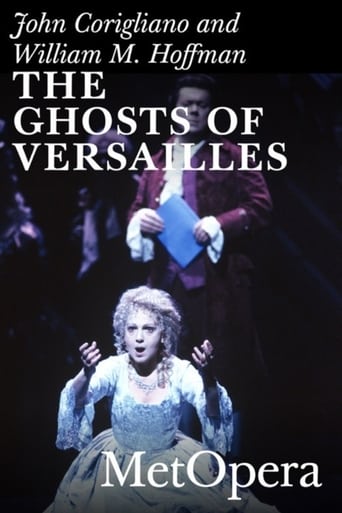
What happened to Figaro and his friends after the events told in Rossini’s and Mozart’s operas? One possible sequel is told in John Corigliano’s “grand opera buffa” The Ghosts of Versailles—an uproariously funny and deeply moving work inspired by Beaumarchais’s third Figaro play, La Mère Coupable, and commissioned by the Met to celebrate its 100th anniversary. This telecast captures its world premiere run, conducted by James Levine. Håkan Hagegård is Beaumarchais, Figaro’s creator, who is deeply in love with Marie Antoinette (Teresa Stratas in a heart-searing performance) and determined to rewrite history and save her from the guillotine. A young Renée Fleming, at the beginning of her international career, sings the unfaithful Rosina. Gino Quilico is the wily Figaro who tries to take matters in his own hands, and Marilyn Horne stops the show as the exotic entertainer Samira.
The Queen of the Night enlists a handsome prince named Tamino to rescue her beautiful kidnapped daughter, Princess Pamina. Aided by the lovelorn bird hunter Papageno and a magical flute that holds the power to change the hearts of men, young Tamino embarks on a quest for true love, leading to the evil Sarastro's temple where Pamina is held captive.
"La Bohème" is one of Giacomo Puccini's most popular and timeless works and the second-most performed opera at New York's Metropolitan Opera. This production, directed by the legendary Franco Zeffirelli, features José Carreras, Teresa Stratas, Renata Scotto and Richard Stilwell. The opera is replete with extraordinary visual beauty as it presents the tragic story of young bohemians struggling to make it in the world.
Christine Goerke has wowed audiences as Turandot, the icy princess at the heart of Puccini’s grand final masterpiece. In this performance from the 2019–20 Live in HD season, Goerke stars alongside tenor Yusif Eyvazov (as Calàf) and soprano Eleonora Buratto (as Liù) in Franco Zeffirelli’s classic staging, which dazzles with its opulent visions of mythic China. Met Music Director Yannick Nézet-Séguin is on the podium, drawing a vivid array of musical colors from the incomparable Met Orchestra and Chorus.