

Realized Dreams
Documentary
Overview
A film promoting orphan's cause.

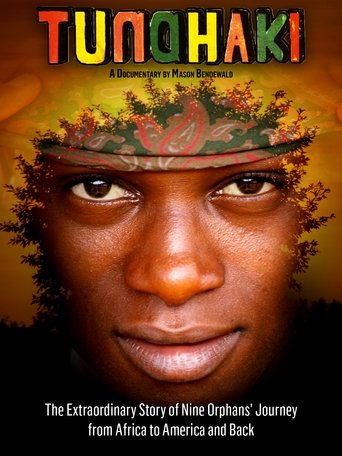
No cast information.
Similar Movies
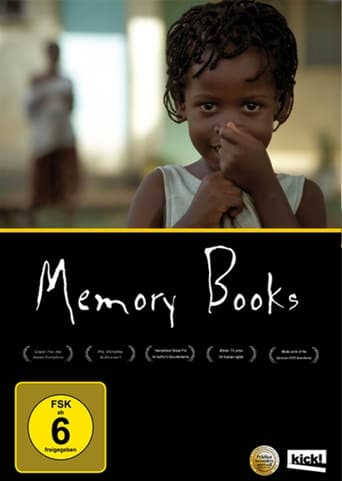
In Uganda, AIDS-infected mothers have begun writing what they call Memory Books for their children. Aware of the illness, it is a way for the family to come to terms with the inevitable death that it faces. Hopelessness and desperation are confronted through the collaborative effort of remembering and recording, a process that inspires unexpected strength and even solace in the face of death.
Nearly 250,000 South Korean children were adopted to the West as “orphans” in the 60 years following the Korean War. Some to loving homes. Others to tragic ends. Raised in places where they looked like nobody else, many were told to forget their past and be grateful. But the innate desire to understand where you came from has led many Korean adoptees to search for their roots. In the process, they discover lies in their past and families they never knew existed. In this documentary series, correspondent Wei Du travels around the world to meet Korean adoptees and accompany a few on their journey to reclaim who they are. Together, they reveal how an “orphan rescue” mission separated families and erased the roots of hundreds of thousands.
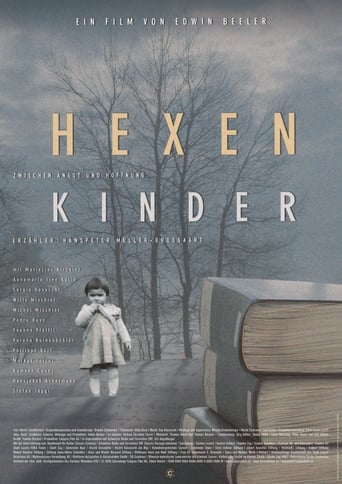
The movie recalls children who suffered mental and physical harm both during the last century, particularly in religious orphanages, and during the time of early modernperiod witch-hunts. It shows that the mindsets and behavioural patterns of both time periods are more alike than one might think.
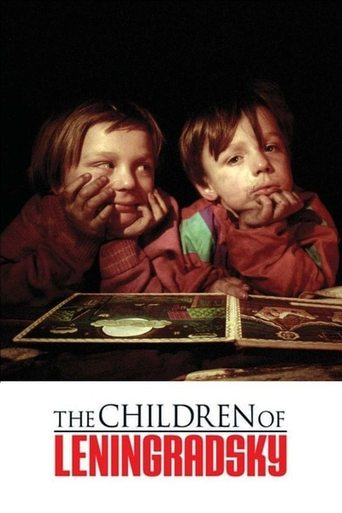
Since the fall of the Iron Curtain an estimated four million children have found themselves living on the streets in the former countries of the Soviet Union. In the streets of Moscow alone there are over 30,000 surviving in this manner at the present time. The makers of the documentary film concentrated on a community of homeless children living hand to mouth in the Moscow train station Leningradsky. Eight-year-old Sasha, eleven-year-old Kristina, thirteen-year-old Misha and ten-year-old Andrej all dream of living in a communal home. They spend winter nights trying to stay warm by huddling together on hot water pipes and most of their days are spent begging. Andrej has found himself here because of disagreements with his family. Kristina was driven into this way of life by the hatred of her stepmother and twelve-year-old Roma by the regular beatings he received from his constantly drunk father. "When it is worst, we try to make money for food by prostitution," admits ...
Miao Miao, her brother Xiaolong and Xin Liao are some of the happy kids who live in the Sun Villages created by Mrs. Zhang Shuqin. But in reality they have a heavy past and present to cope with. As the other young dwellers there, they are the offspring of people sentenced to death. This documentary shows the lives and daily routine of these children and their benefactor over two years. Many of the people sentenced to death leave behind young orphans whom are not taken care of at all by social services, even when their families or relatives cannot afford to do it. Also, these vulnerable children are generally despised and rejected by the rest of the community – and are not eligible for adoption. One woman, Mrs. Zhang Shuqin, has decided to turn the children’s destiny into her life’s struggle. She has set up ten orphanages to raise them. In these orphanages, called Sun Villages, everybody works hard to offer the 'children of shame' a more positive future.
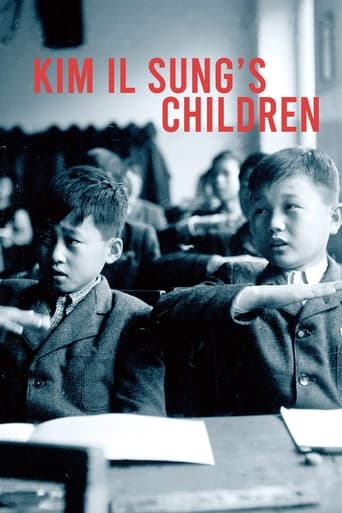
From 1950 to 1953, one hundred thousand children were orphaned by the Korean War. With no resources to mend the wounds, the two sides, North and South, took different paths to find homes and families for the war orphans. While the children of South Korea were sent to Europe and the United States through ‘International Adoption’, the children of North Korea were distributed across Eastern Europe through a method called ‘Commissioned Education’. As a result, more than five thousand children from the North had to spend nearly a decade living in foreign lands across Eastern Europe. This story is a record of their lives, which used to be kept hidden from the rest of the world. There is a key to understanding how North Korea's closed political structure began and how the ‘Juche ideology’ was formed in this documentary movie. Understanding North Korea in the 1950s is an important way to understand North Korea at present.