



The Grammar of Happiness
Documentary
Overview
The Grammar Of Happiness follows the story of Daniel Everett among the extraordinary 'nonconvertible' Amazonian Pirah tribe, a group of indigenous hunter- gatherers whose culture and outlook on life has taken the world of linguistics by storm. As a young ambitious missionary three decades ago, Dan, a red-bearded towering American, decamped to the Amazon rain forest to save indigenous souls. His assignment was to translate the book of Mark into the tongue of the Pirah, a people whose puzzling speech seemed unrelated to any other on Earth. What he learned during his time with the Pirah led him to question the very foundations of his own deep beliefs. As a 'born again' atheist, Dan divorced his devout Christian wife and became estranged from his children. Having lost faith and family, his new life is dominated by the desire to leave behind his legacy. Everett's most controversial claim is that the Pirah language lacks 'recursion' - the ability to build an infinite number of sentences.
Top Cast






Daniel Everett
Daniel Everett
himself
Daniel Everett
himself
Similar Movies
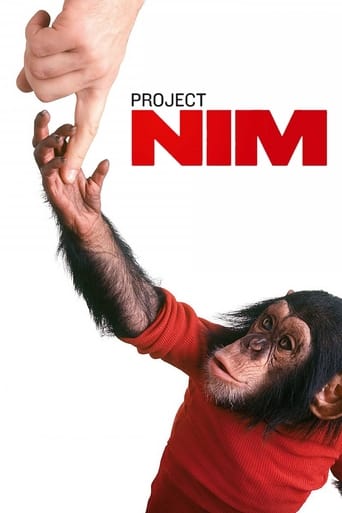
From the team behind Man on Wire comes the story of Nim, the chimpanzee who in the 1970s became the focus of a landmark experiment which aimed to show that an ape could learn to communicate with language if raised and nurtured like a human child. Following Nim's extraordinary journey through human society, and the enduring impact he makes on the people he meets along the way, the film is an unflinching and unsentimental biography of an animal we tried to make human. What we learn about his true nature - and indeed our own - is comic, revealing and profoundly unsettling.
Rich in humor and regional color, this sometimes hilarious film uses the prism of language to reveal our attitudes about the way other people speak. From Boston Brahmins to Black Louisiana teenagers, from Texas cowboys to New York professionals, American Tongues elicits funny, perceptive, sometimes shocking, and always telling comments on American English in all its diversity. (PBS)
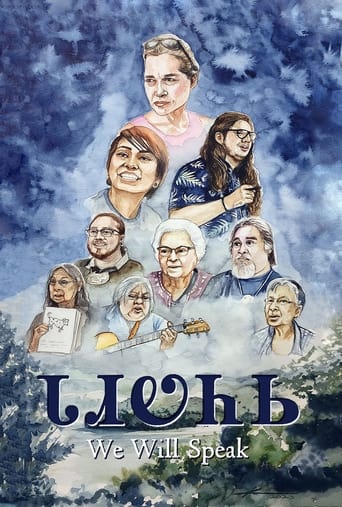
The Cherokee language is deeply tied to Cherokee identity; yet generations of assimilation efforts by the U.S. government and anti-Indigenous stigmas have forced the Tri-Council of Cherokee tribes to declare a State of Emergency for the language in 2019. While there are 430,000 Cherokee citizens in the three federally recognized tribes, fewer than an estimated 2,000 fluent speakers remain—the majority of whom are elderly. The covid pandemic has unfortunately hastened the course. Language activists, artists, and the youth must now lead the charge of urgent radical revitalization efforts to help save the language from the brink of extinction.
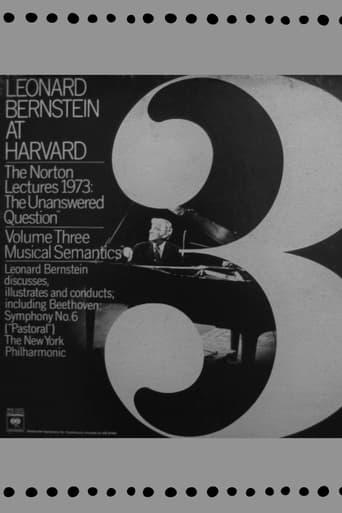
This series comprised six lectures on music, which cumulatively took the title of a work by Charles Ives, The Unanswered Question. Bernstein drew analogies to other disciplines, such as poetry, aesthetics, and especially linguistics, hoping to make these lectures accessible to an audience with limited or no musical experience, while maintaining an intelligent level of discourse:Semantics is the study of meaning in language, and Bernstein's third lecture, "musical semantics", accordingly, is Bernstein's first attempt to explain meaning in music. Although Bernstein defines musical semantics as "meaning, both musical and extramusical" this lecture focuses exclusively on the "musical" version of meaning.

This series comprised six lectures on music, which cumulatively took the title of a work by Charles Ives, The Unanswered Question. Bernstein drew analogies to other disciplines, such as poetry, aesthetics, and especially linguistics, hoping to make these lectures accessible to an audience with limited or no musical experience, while maintaining an intelligent level of discourse: Bernstein provides two distinct meanings of the term ambiguity. The first is "doubtful or uncertain" and the second, "capable of being understood in two or more possible senses"

We all have a dream... Nelson's dream is to learn how to read. He works at a traffic light in Maputo selling car products to people who stop. Every week a teacher joins him and all the others like him to teach them. With the hope of learning, Nelson never misses a class. It is with the hope of better days that Nelson lives.

Nelly Arcan published her autobiographical novel *Folle* in 2004. She took her own life in 2009. She died because she was made to feel crazy. Because she was made to feel like a woman. Because when you’re a woman, madness lurks in every slightly too intense expression of emotion, in every behavior that deviates from prevailing patriarchal norms. We’re all crazy at some point. And the stigma stems from everyone’s discourse. Do you feel like you use the word “crazy” a lot?

Linguist Indrek Park has been working with Native American languages for over ten years. The film sees him recording the language of the Mandan tribe, who live in the prairies of North Dakota, on the banks of the Missouri River. The job involves a lot of responsibility, and he is running out of time – his language guide, the 84-year-old Edwin Benson, is the last native speaker of Mandan.

This series comprised six lectures on music, which cumulatively took the title of a work by Charles Ives, The Unanswered Question. Bernstein drew analogies to other disciplines, such as poetry, aesthetics, and especially linguistics, hoping to make these lectures accessible to an audience with limited or no musical experience, while maintaining an intelligent level of discourse: Lecture 5 picks up at the early twentieth century with an oncoming crisis in Western Music. As these lectures have traced the gradual increase and oversaturation of ambiguity, Bernstein now designates a point in history that took ambiguity too far.