

Rigoletto
Drama · Music · Romance
Overview
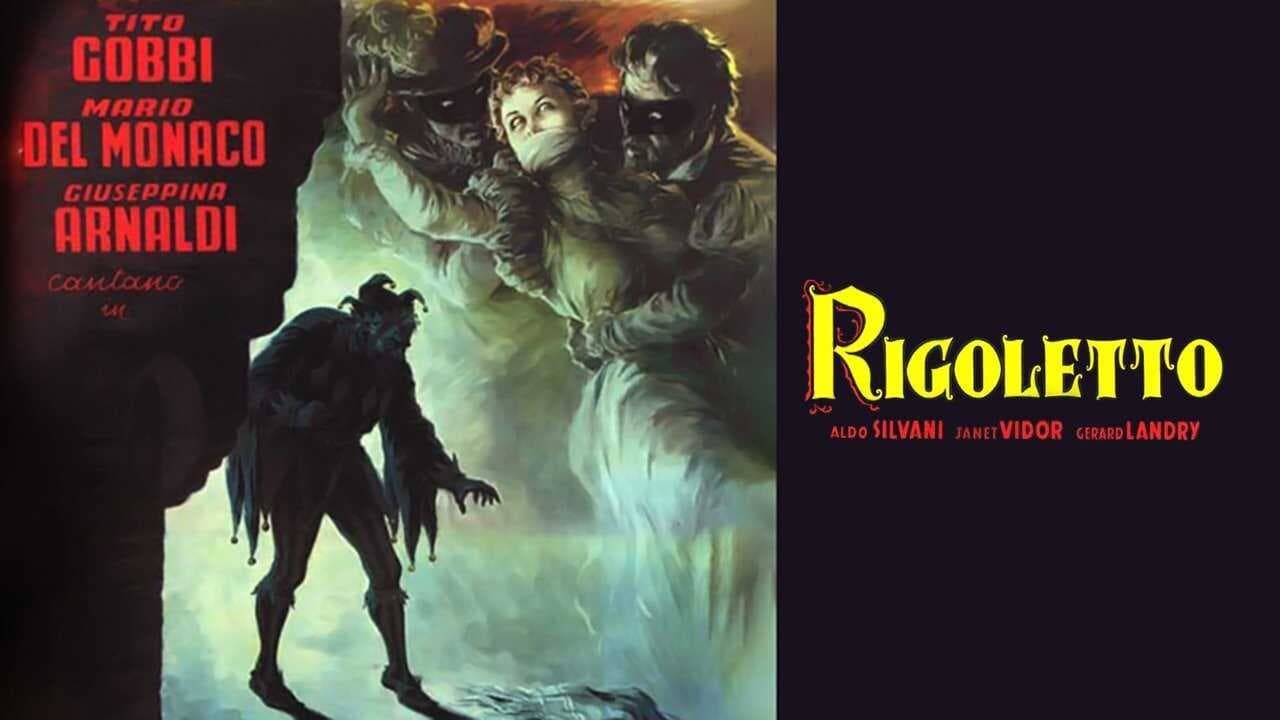
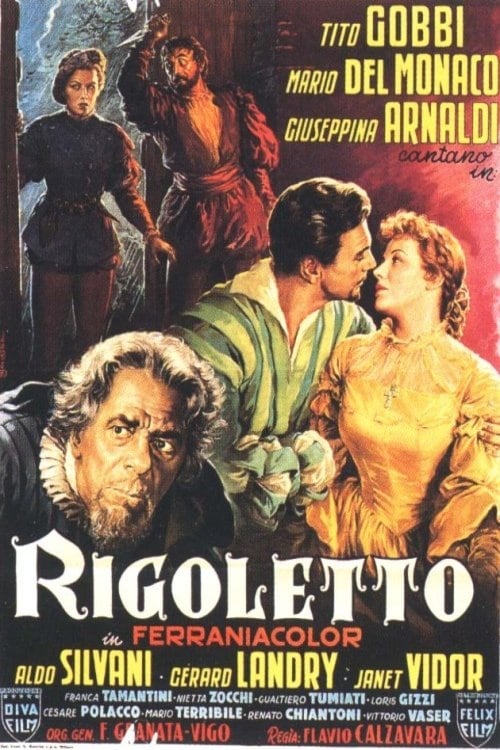
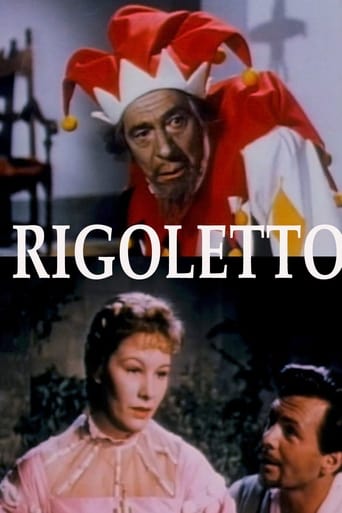
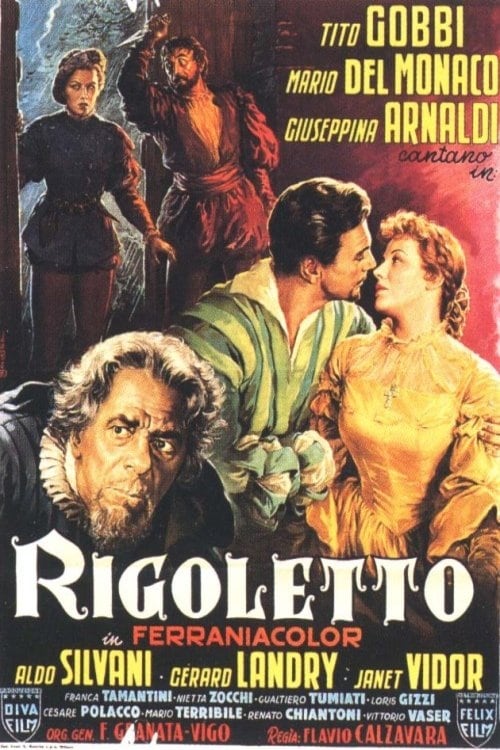
This tragic story revolves around the licentious Duke of Mantua, his hunch-backed court jester Rigoletto, and Rigoletto's beautiful daughter Gilda. The opera's original title, La maledizione (The Curse), refers to the curse placed on both the Duke and Rigoletto by a courtier whose daughter had been seduced by the Duke with Rigoletto's encouragement. The curse comes to fruition when Gilda likewise falls in love with the Duke and eventually sacrifices her life to save him from the assassins hired by her father.

Tito Gobbi
Tito Gobbi
Rigoletto
Tito Gobbi
Rigoletto
Marcella Govoni
Marcella Govoni
Gilda
Marcella Govoni
Gilda
Lina Pagliughi
Lina Pagliughi
Gilda (voice)
Lina Pagliughi
Gilda (voice)
Mario Filippeschi
Mario Filippeschi
Duke of Mantua
Mario Filippeschi
Duke of Mantua
Giulio Neri
Giulio Neri
Sparafucile
Giulio Neri
Sparafucile
Giuseppe Varni
Giuseppe Varni
Count of Ceprano
Giuseppe Varni
Count of Ceprano
Marcello Giorda
Marcello Giorda
Monterone
Marcello Giorda
Monterone
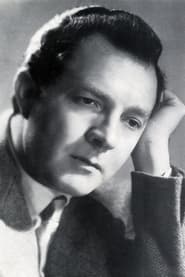
Roberto Bruni
Roberto Bruni
Borsa
Roberto Bruni
Borsa
Virgilio Gottardi
Virgilio Gottardi
Marcello
Virgilio Gottardi
Marcello
Anna Maria Canali
Anna Maria Canali
Maddalena (ca Anna Maria Canale)
Anna Maria Canali
Maddalena (ca Anna Maria Canale)
Similar Movies
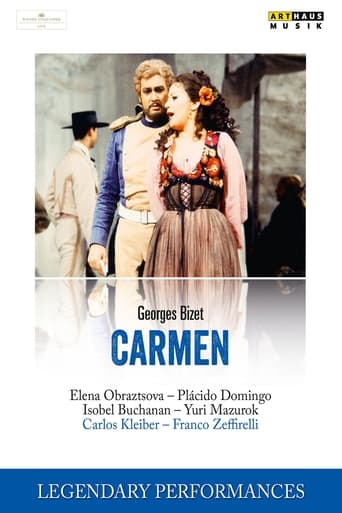
CARMEN is the classic tale of forbidden passion between a young man and a spoken-for woman, Carmen. From ORF and TDK Music, this release features a live performance of Georges Bizet's 19th century operatic masterwork Carmen. Directed by Academy Award-nominated filmmaker Franco Zeffirelli, the production was shot on December 9, 1978, at the Wiener Straatsoper. Starring Elena Obraztsova in the titular role, the orchestra is conducted by Carlos Kleiber.
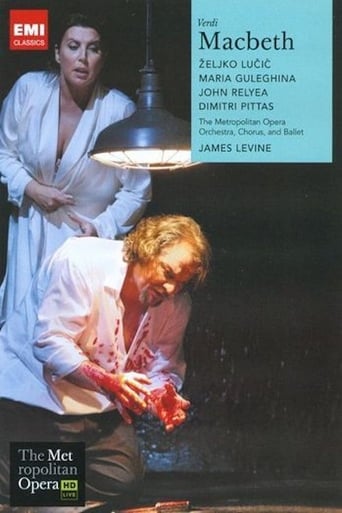
Verdi’s admiration for Shakespeare led to such masterpieces as Othello and Falstaff, and if the earlier Macbeth isn’t on their exalted level it’s still a powerfully dramatic opera that hews closely to the original’s story line. The MET’s production retains the dark aura of the opera while updating it to a vaguely post-modern context. So the witches are bag ladies in various stages of decrepitude, with children in tow. The Banquet Scene features lowered chandeliers, a plethora of chairs, and a slew of extras dressed in tuxedos and party gowns. Macbeth sports a leather coat, the soldiers are in drab brown uniforms and seem to have fingers on their triggers even when they’re supposed to be in non-threatening situations. Director Adrian Noble also has Lady Macbeth do an inordinate amount of writhing around and singing from a lying-down position, adding to the feeling that a less interventionist directorial hand might have generated more impact.
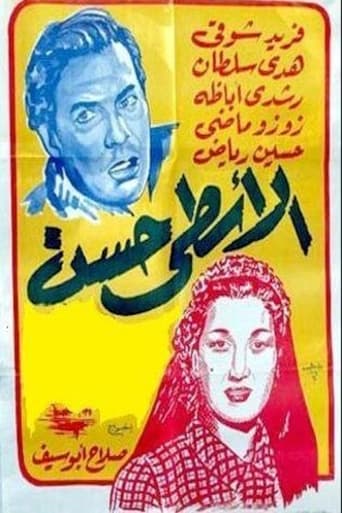
Hassan, a worker in a lathe workshop, is dissatisfied with his livelihood and his harsh financial conditions. One high society woman comes to him in the workshop where he works. She admires him and invites him to her villa to complete and install the decoration. Hassan becomes involved in a forbidden relationship with her and abandons his home.
Can the darkest moments of life also lift our souls? Drawing on his own experience in a Siberian prison in the company of misfits, murderers and theives, Dostoevsky was inspired to write his novel Notes from a Dead House, telling his brother at the time: ‘Believe me, there were among them deep, strong, beautiful natures, and it often gave me great joy to find gold under a rough exterior.’ In Janáček’s hands, Dostoevsky’s inspiration and the raw material drawn from an appalling world of incarceration find an even more powerful form of expression in his last opera, From the House of the Dead. Unfettered by conventional story-telling, Janáček wrote his own libretto, freely weaving together a series of stories of everyday prison life and of the fates of individual convicts.