


A Lullaby Under the Nuclear Sky
Documentary
Overview
Personal documentary from director Kana Tomoko, who has covered environmental issues and people suffering misfortune in films like Beautiful Islands. This film documents the pregnancy she discovered immediately after the March 11, 2011 earthquake and follows her experiences until the baby's birth. In the aftermath of the Tohoku earthquake and tsunami, Kana was 4 kilometers from the Fukushima Daiichi Nuclear Power Plant documenting the people who were forced to evacuate because of the nuclear power plant accident. Then, she discovers that she is pregnant. Her first pregnancy at the age of forty takes her by surprise, and she worries about the impact of radiation on her unborn child.



No cast information.
Similar Movies
Documentary created to demystify climate change and nuclear energy. While the threat of climate change is now widely accepted in the community, the potential for a host of nuclear power stations in Australia has raised questions about the best strategy for the country to move to a low-carbon economy. This animated documentary takes viewers on a tour through the science of climate change and the nuclear fuel chain and the remarkable energy revolution that is under way.
The film features a meeting led by Dave Taylor, the shelter manager, discussing the protocols and responsibilities for staff members involved in managing a public shelter. Key participants, including operations deputy Harvey Johnson and health leader Mrs. Carter, outline their roles in ensuring a smooth entry for occupants during an emergency. The meeting emphasizes the importance of organization, communication, and the distribution of supplies. Staff members are encouraged to familiarize themselves with each other's duties and prepare for potential scenarios, including managing newcomers and ensuring safety and sanitation within the shelter.
The documentary presents the results of research on nuclear waste management in the U.S., Russia, Germany and France. The authors Eric Noualhat Guéret and Laure were accompanied by the independent French laboratory technicians radiation control, CRIIRAD. They have detected and measured radiation in many places like the U.S. Columbia River or the French plutonium factory called reprocessing plant at La Hague.
"Gerboise bleue", the first French atomic test carried out on February 13, 1960 in the Algerian Sahara, is the starting point of France's nuclear power. These are powerful radioactive aerial shots carried out in areas belonging to the French army. Underground tests will follow, even after the independence of Algeria. From 1960 to 1978, 30,000 people were exposed in the Sahara. The French army was recognized recognized nine irradiations. No complaint against the army or the Atomic Energy Commission has resulted. Three requests for a commission of inquiry were rejected by the National Defense Commission. For the first time, the last survivors bear witness to their fight for the recognition of their illnesses, and revealed to themselves in what conditions the shootings took place. The director goes to the zero point of "Gerboise Bleue", forbidden access for 47 years by the Algerian authorities

The smallest of sparks can lead to the largest of explosions. Such is the case of the Atomic Bomb and the minds who have conceived of the deadliest force the world has ever known. This new documentary Atomic: The History of the A-Bomb follows this weapon of mass destruction from inception to detonation.

"Historically accurate, narratively captivating, The New American Century is one of the best films about the facts behind the 9/11 attacks". Webster G. Tarpley "The New American Century is a stunning film. It should be seen as widely as possible, in cinemas, bars, clubs, at meetings and, of course, through the internet. I'm sure the film will continue to be a source of debate and political education for many years." Ken Loach. Massimo Mazzucco’s Inganno Globale (soon in English as "Global Deceit") presented all the major inconsistencies in the 9/11 official version, i.e. World Trade Center’s demolition, no Boeing at the Pentagon, etc., that lent credibility to the accusation by the so-called "9/11 Truth Movement" of the attacks having been an inside job. The New American Century presents the historical, philosophical, economical and political background, some of which is practically unknown to the general public, that seems to support such accusation by the 9/11 Truth Movement.
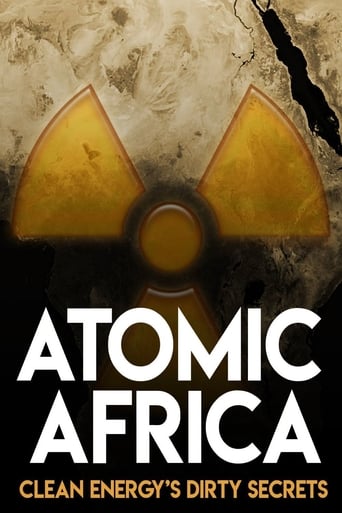
Africa's development is being held back by poor infrastructure and undersized power plants. Countries like Uganda can only produce only 1/4 of the energy needed, leading to daily power cuts with disastrous economic impacts. It's a golden opportunity for nuclear giants who lobby aggressively for more power plants in Africa. But how safe are these new reactors? And what do they mean for the locals?