

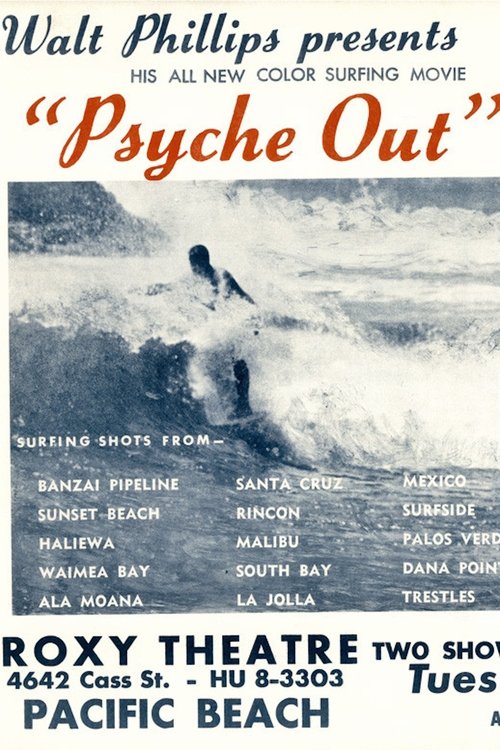
Psyche Out
Overview
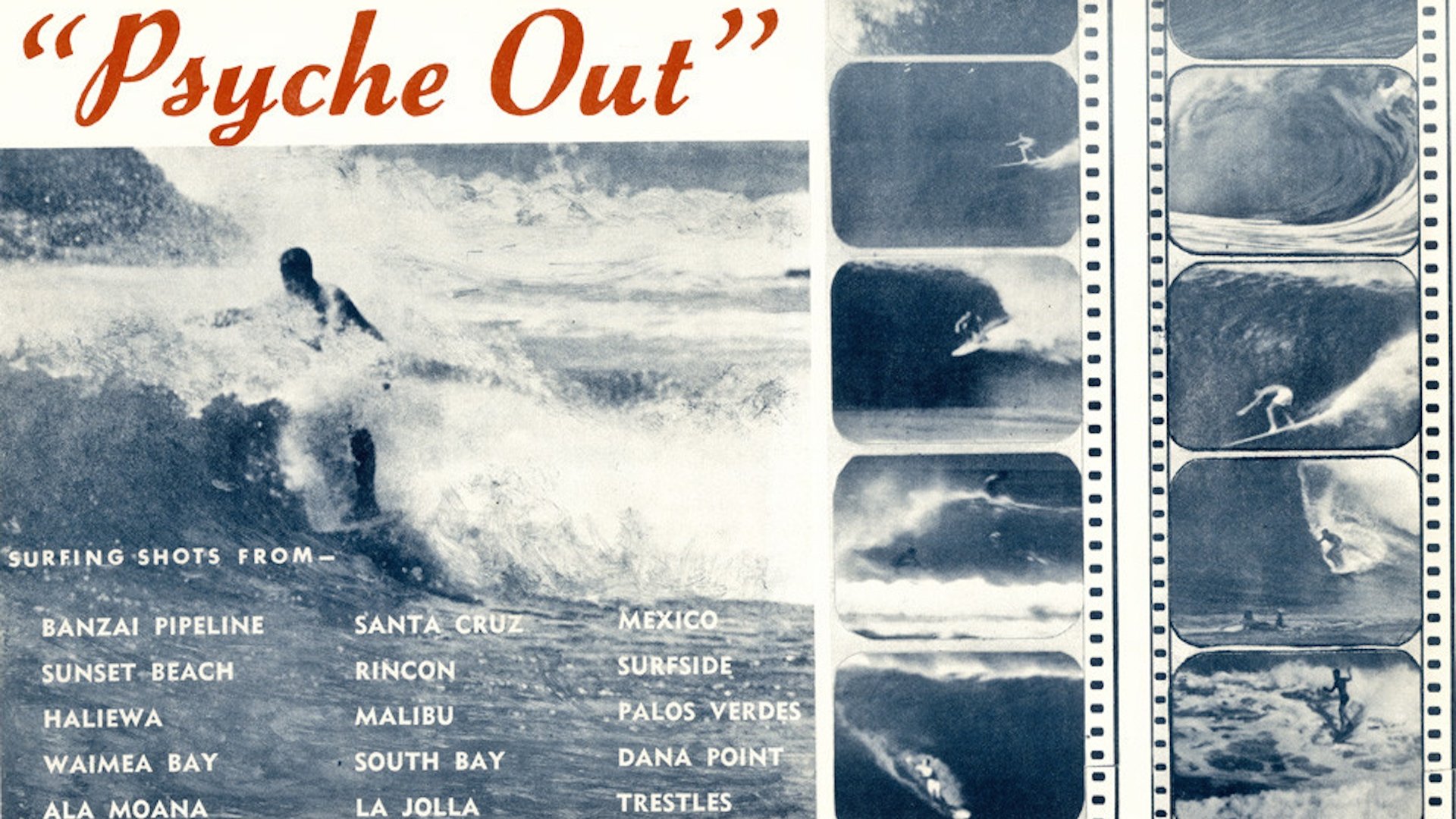
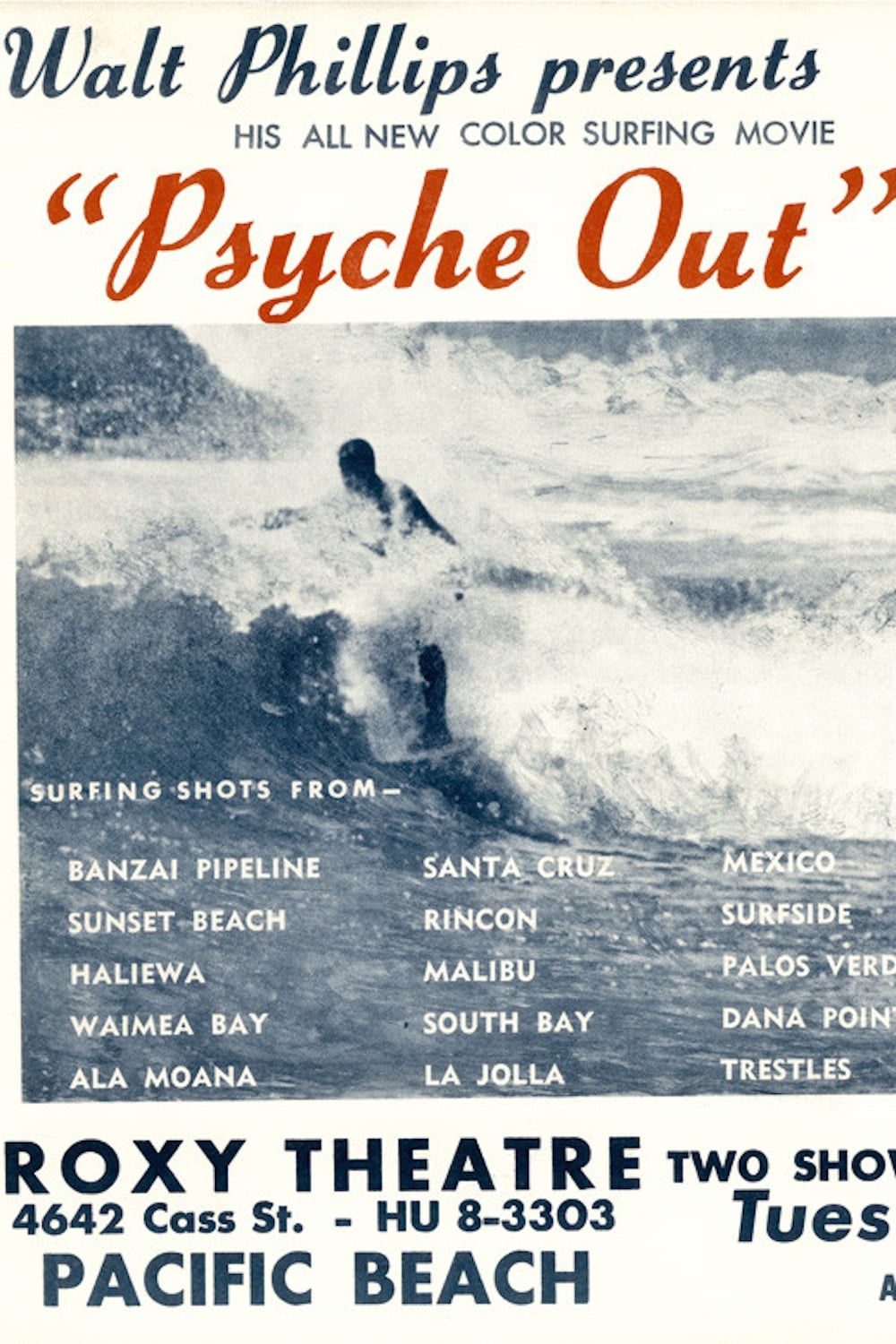
The opening moments of "Psyche Out" introduce a young boy who craves the adventures achieved in the surf. The boy -- or at least his dreams -- seem like they could provide a recurring framing device for Walt Phillips' third film (following "Sunset Surf Craze" and "Surf Mania"), but that's the last we see of the boy or hear of ambitions. "Psyche Out" contains less poetic musing, travelogue, comic relief or similar stuff characteristic of surf films of the time, in favor of surf action at Malibu, Point Zero, Rincon and Steamer Lane. This is to the benefit of the film.






Lance Carson
Lance Carson
Himself
Lance Carson
Himself
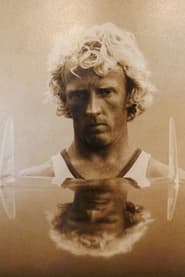
Skip Frye
Skip Frye
Himself
Skip Frye
Himself
Michael Hynson
Michael Hynson
Himself
Michael Hynson
Himself
Mike Doyle
Mike Doyle
Himself
Mike Doyle
Himself
Kemp Aaberg
Kemp Aaberg
Himself
Kemp Aaberg
Himself
Johnny Fain
Johnny Fain
Himself
Johnny Fain
Himself
Similar Movies

A documentary about Edie Sedgwick featuring photos of her and clips from Factory Girl, narrated by her real-life friends and loved ones, including her brother Jonathan, cousin John Sedgwick, roommate Danny Fields, artists Richie Berlin and Gerard Malanga, photographer Nat Finkelstein, designer Betsey Johnson, and others.

Several key words emerge from Hugo Pratt's work, inseparable from his life: travel, adventure, erudition, esotericism, mystery, poetry, melancholy... and of course, Corto Maltese, his hero and alter ego, who established him as one of the greatest names in comic books. Born in Italy in 1927 and dying in Switzerland sixty-eight years later, Hugo Pratt, born without an H and with only one T, grew up in the shadow of a fascist father who took him at a very young age to Ethiopia, which was occupied by Mussolini's forces. The teenager developed a fascination for the wide-open spaces of Africa, soon followed by an irresistible attraction to the Indian world. This was the starting point for a life of travel, success, conquests, rare failures, and marked by his veneration for the American cartoonist Milton Caniff, his absolute master.
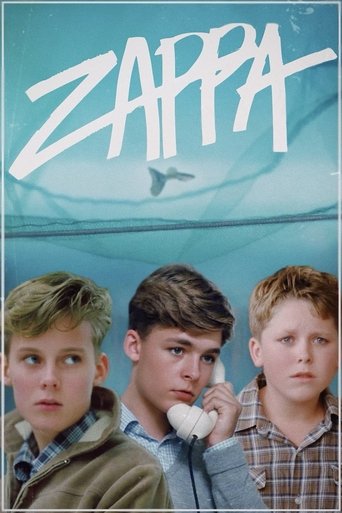
Denmark, 1961. Bjørn, a middle-class boy in his early teens, wants to be accepted by Steen, a bullying peer of his with wealthy but freezingly cold parents. Bjørn's other good friend is Mulle, a cheerful and more childish working-class boy. All three seem friends at first, but gradually Steen starts pushing Mulle away while pulling the impressionable Bjørn with him towards more and more violence.
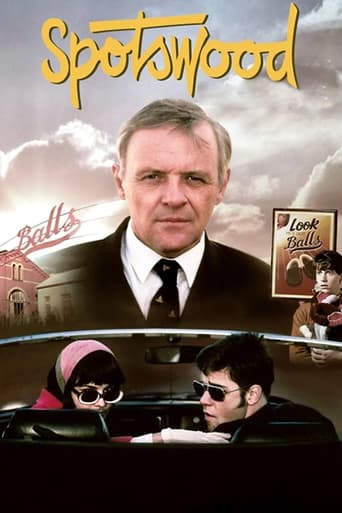
Wallace is an efficiency expert, managing the high-profile downsizing of a major auto parts factory. But when he is hired to evaluate a small moccasin factory which seems from another era, Wallace has to reconsider the rapid modernization he advocates, as he is confronted by the human faces such plans hurt.
Eighteen years in the making, two-headed cow started off as a black and white film that followed Dexter Romweber and his drummer Crow on a rock and roll tour along the same route as General Sherman. The film was not finished due to many circumstances, but the filmmakers were able to resume the film seventeen years later. After major TV appearances, a stint on a major label, bouts of depression and drug addiction, the film took on a different tone and poignancy.
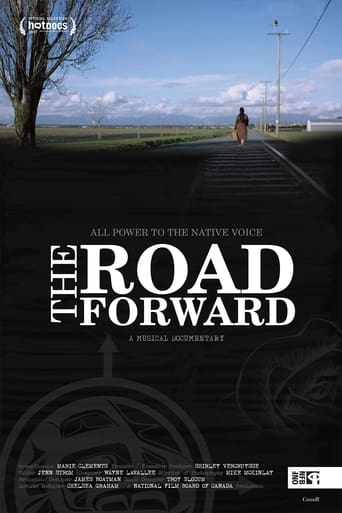
The Road Forward is an electrifying musical documentary that connects a pivotal moment in Canada’s civil rights history—the beginnings of Indian Nationalism in the 1930s—with the powerful momentum of First Nations activism today. Interviews and musical sequences describe how a tiny movement, the Native Brotherhood and Sisterhood, grew to become a successful voice for change across the country. Visually stunning, The Road Forward seamlessly connects past and present through superbly produced story-songs with soaring vocals, blues, rock, and traditional beats.