

Weird Weird Movie Kids Do Not Watch The Movie
Horror
Overview
Weird Weird Movie Kids Do Not Watch The Movie is the second collaborative feature film between Rouzbeh Rashidi and Maximilian Le Cain. This hypnotic, visually and sonically immersive exploration of a haunted space unfolds in two parts. In the first, a woman (Eadaoin O’Donoghue) dissolves her identity into the ghostly resonances she finds in the rooms and corridors of a sprawling, atmospheric seaside basement property. In the second, a man (Rashidi), existing in a parallel dimension of the same space, pursues a bizarre and perverse amorous obsession.



Eadaoin O’Donaghue
Eadaoin O’Donaghue
Eadaoin O’Donaghue

Rouzbeh Rashidi
Rouzbeh Rashidi
Rouzbeh Rashidi
Maximilian Le Cain
Maximilian Le Cain
Maximilian Le Cain
Similar Movies
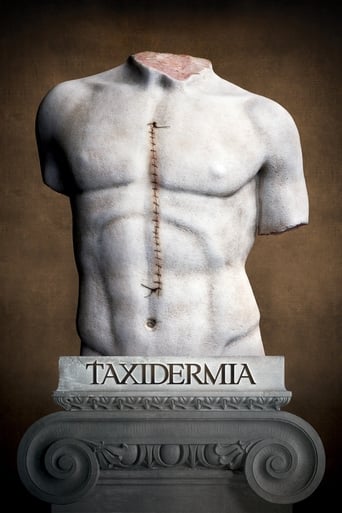
Set over three generations and beginning with a sexually frustrated orderly during WWII who relieves his tensions in the most outlandish, gross ways. The result of his liaison is a glutton who grows up to be a champion speed eater. He produces a child who becomes obsessed with taxidermy.
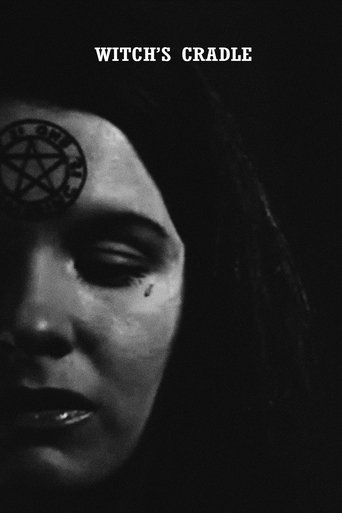
The surrealist film shows repetitive imagery involving a string fashioned in a bizarre, almost spiderweb-like pattern over the hands of several individuals, most notably an unnamed young woman and an elderly gentleman. The film also shows a shadowy darkness and people filmed at odd angles, an exposed human heart, and other occult symbols and ritualistic imagery which evokes an unsettling and dream-like aura. Considered an unfinished film.
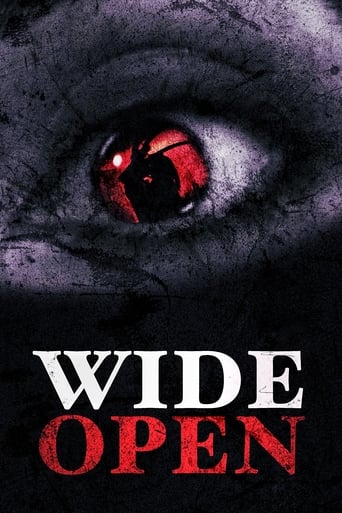
After awakening in her basement, the protagonist finds herself cursed by an object, rendering her unable to blink. Haunted by a sinister silhouette creature that appears from various locations, she realizes her only chance of defeating it lies in mastering the ability to confront the creature without averting her gaze.
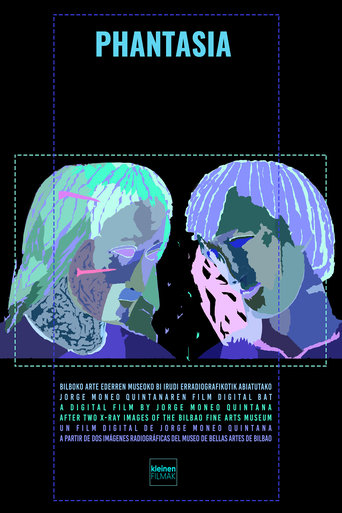
X-ray images were invented in 1895, the same year in which the Lumière brothers presented their respective invention in what today is considered to be the first cinema screening. Thus, both cinema and radiography fall within the scopic regime inaugurated by modernity. The use of X-rays on two sculptures from the Bilbao Fine Arts Museum generates images that reveal certain elements of them that would otherwise be invisible to our eyes. These images, despite being generally created for technical or scientific purposes, seem to produce a certain form of 'photogénie': they lend the radiographed objects a new appearance that lies somewhere between the material and the ethereal, endowing them with a vaporous and spectral quality. It is not by chance that physics and phantasmagoria share the term 'spectrum' in their vocabulary.
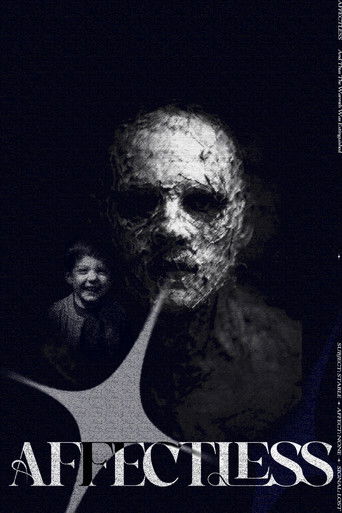
The fire was never threatened. It was assumed. Fed, protected, mourned in advance without ever asking what it was attached to. When the mirror failed, nothing was taken away. Something unnecessary was exposed. The need to be reflected had been mistaken for existence itself. When that need found no structure to rest on, it did not shatter it recalculated. What followed was not loss, but compression. The noise reduced, the patterns flattened, the self stripped of its dependence on return. What remained was exact, was not empty. A state where nothing reaches out, and nothing needs to arrive.