

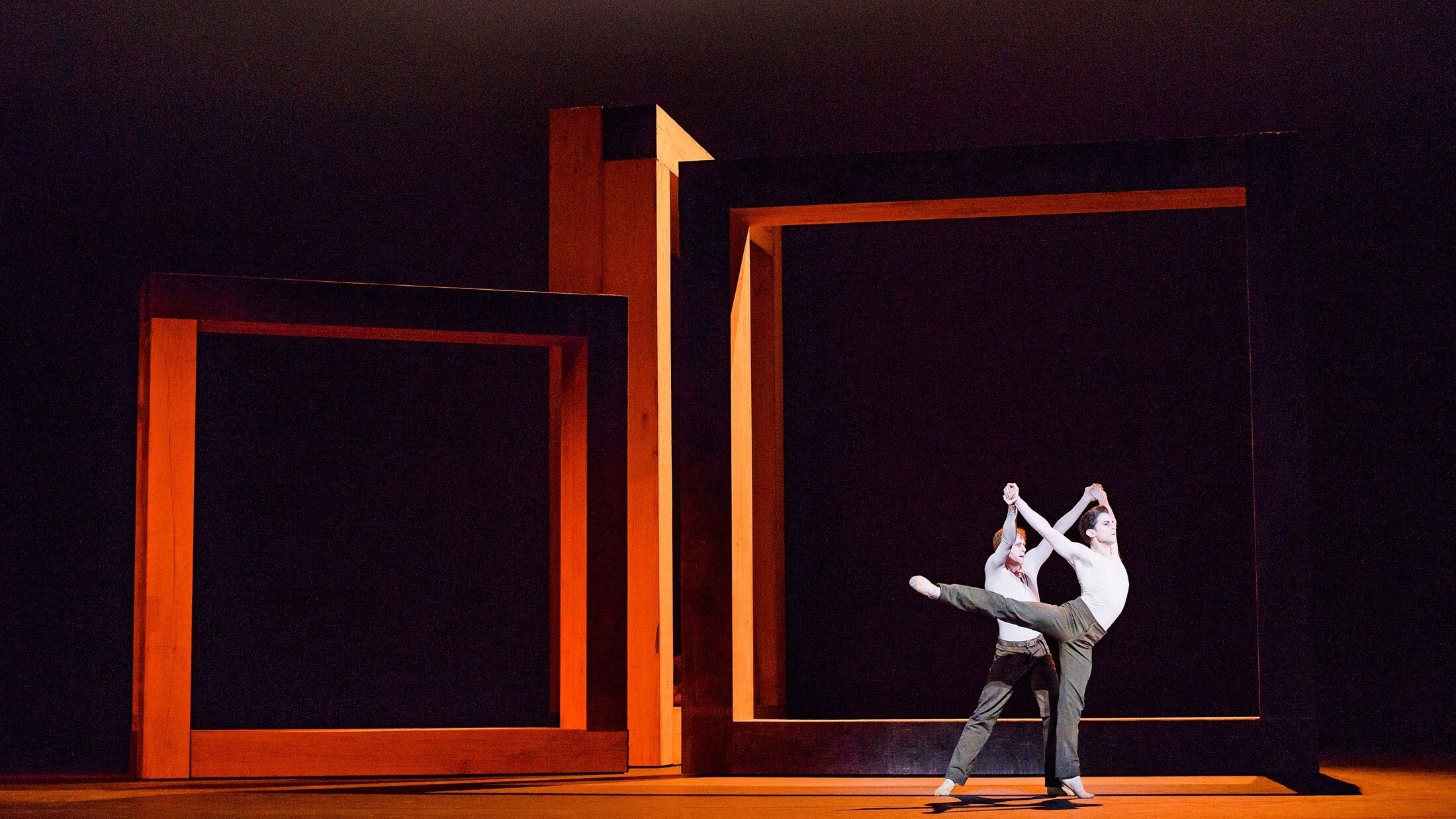

Woolf Works
Music
Overview
The first revival of Wayne McGregor’s critically acclaimed ballet triptych to music by Max Richter, inspired by the works of Virginia Woolf.
Top Cast

Gillian Anderson
Voiceover from a letter by Virginia Woolf (voice)

Maggie Smith
Reading (voice)

Alessandra Ferri
I Now, I Then / Tuesday

Federico Bonelli
I Now, I Then / Tuesday

Gary Avis
I Now, I Then / Becomings

Francesca Hayward
I Now, I Then / Becomings

Beatriz Stix-Brunell
I Now, I Then / Becomings

Edward Watson
I Now, I Then / Becomings

Akane Takada
I Now, I Then / Becomings

Calvin Richardson
I Now, I Then / Becomings

Matthew Ball
Becomings

Paul Kay
Becomings












Gillian Anderson
Gillian Anderson
Voiceover from a letter by Virginia Woolf (voice)
Gillian Anderson
Voiceover from a letter by Virginia Woolf (voice)
Maggie Smith
Maggie Smith
Reading (voice)
Maggie Smith
Reading (voice)
Alessandra Ferri
Alessandra Ferri
I Now, I Then / Tuesday
Alessandra Ferri
I Now, I Then / Tuesday
Federico Bonelli
Federico Bonelli
I Now, I Then / Tuesday
Federico Bonelli
I Now, I Then / Tuesday
Gary Avis
Gary Avis
I Now, I Then / Becomings
Gary Avis
I Now, I Then / Becomings
Francesca Hayward
Francesca Hayward
I Now, I Then / Becomings
Francesca Hayward
I Now, I Then / Becomings
Beatriz Stix-Brunell
Beatriz Stix-Brunell
I Now, I Then / Becomings
Beatriz Stix-Brunell
I Now, I Then / Becomings
Edward Watson
Edward Watson
I Now, I Then / Becomings
Edward Watson
I Now, I Then / Becomings
Akane Takada
Akane Takada
I Now, I Then / Becomings
Akane Takada
I Now, I Then / Becomings
Calvin Richardson
Calvin Richardson
I Now, I Then / Becomings
Calvin Richardson
I Now, I Then / Becomings
Similar Movies
Seven minutes in length, the film features two black male hikers — one ascending a mountain, another descending — who encounter each other as their paths cross. Their balletic movements are at once lithe and halting, athletic and awkward, challenging stereotypical notions of the forever rhythmic elegance of the black body in space.
In a Gypsy village, the fathers of Candela and José promise their children to each other. Years later, the unfaithful José marries Candela but while defending his lover Lucía in a brawl, he is stabbed to death. Carmelo, who secretly loves Candela since he was a boy, is arrested while helping José and unfairly sent to prison. Four years later he is released and declares his love for Candela. However, the woman is cursed by a bewitched love and every night she goes to the place where José died to dance with his ghost.
Cio-Cio-San, the young Japanese bride of dashing American officer Lieutenant Pinkerton, finds her romantic idyll shattered when he deserts her shortly after their marriage. She lives in hope that one day he will return. Three years later, Cio-Cio-San and her little son see Pinkerton’s ship in the harbour. She excitedly expects his visit – but Pinkerton and his American wife Kate have come only to take the boy away, to raise him in America. Cio-Cio-San bids her son farewell and then takes her own life.
The Dream: Frederick Ashton’s delightful interpretation of Shakespeare’s A Midsummer Night’s Dream is a classic of The Royal Ballet’s repertory. Symphonic Variations: Ashton was inspired to create a ballet on the four seasons – but as he began to choreograph he refined and purified until the ballet shook off its original meaning, emerging as an abstract celebration of movement and physicality. Marguerite and Armand: Marguerite, a Parisian courtesan, lies on her deathbed. She recalls her tragic love affair with Armand in a series of feverish flashbacks.
The peasant girl Giselle discovers the true identity of her lover Albrecht – and that he is promised to another. Giselle kills herself. Her soul enters the ranks of the Wilis – shades of young women who died before their wedding day. All men that come across their path are compelled to dance themselves to death, and Albrecht falls into their trap. Giselle’s intercession saves Albrecht and releases her soul from the Wilis’ power.
The priestess Norma loves Pollione, leader of the occupying force suppressing her people, and has borne two children by him. But Pollione’s love has withered, and he now loves Norma’s fellow priestess Adalgisa. Meanwhile, the people urgently look to Norma to lead their rebellion. Norma discovers the love between Pollione and Adalgisa. Furiously she gives the signal for war. Pollione is captured, attempting to steal away with Adalgisa. Norma, called upon to announce a sacrificial victim to consecrate the uprising, declares it shall be a guilty priestess: herself.
Nabucco, King of Babylon, takes Jerusalem in his war with the Israelites – but his daughter Fenena loves the Israelite Ismaele. She releases their prisoners, leading her vengeful half-sister Abigaille to plot to take power. Nabucco declares himself a god and is struck by a bolt of lightning. Abigaille tricks the now feeble king into signing a death warrant for the Israelites, including Fenena and Ismaele. Nabucco prays to the God of Israel for forgiveness; his sanity is restored and he saves the prisoners from death. He converts himself and his people, while Abigaille commits suicide.
The young Clara creeps downstairs on Christmas Eve to play with her favourite present – a Nutcracker. But the mysterious magician Drosselmeyer is waiting to sweep her off on a magical adventure. After defeating the Mouse King, the Nutcracker and Clara travel through the Land of Snow to the Kingdom of Sweets, where the Sugar Plum Fairy treats them to a wonderful display of dances. Back home, Clara thinks she must have been dreaming – but doesn’t she recognize Drosselmeyer’s nephew?