

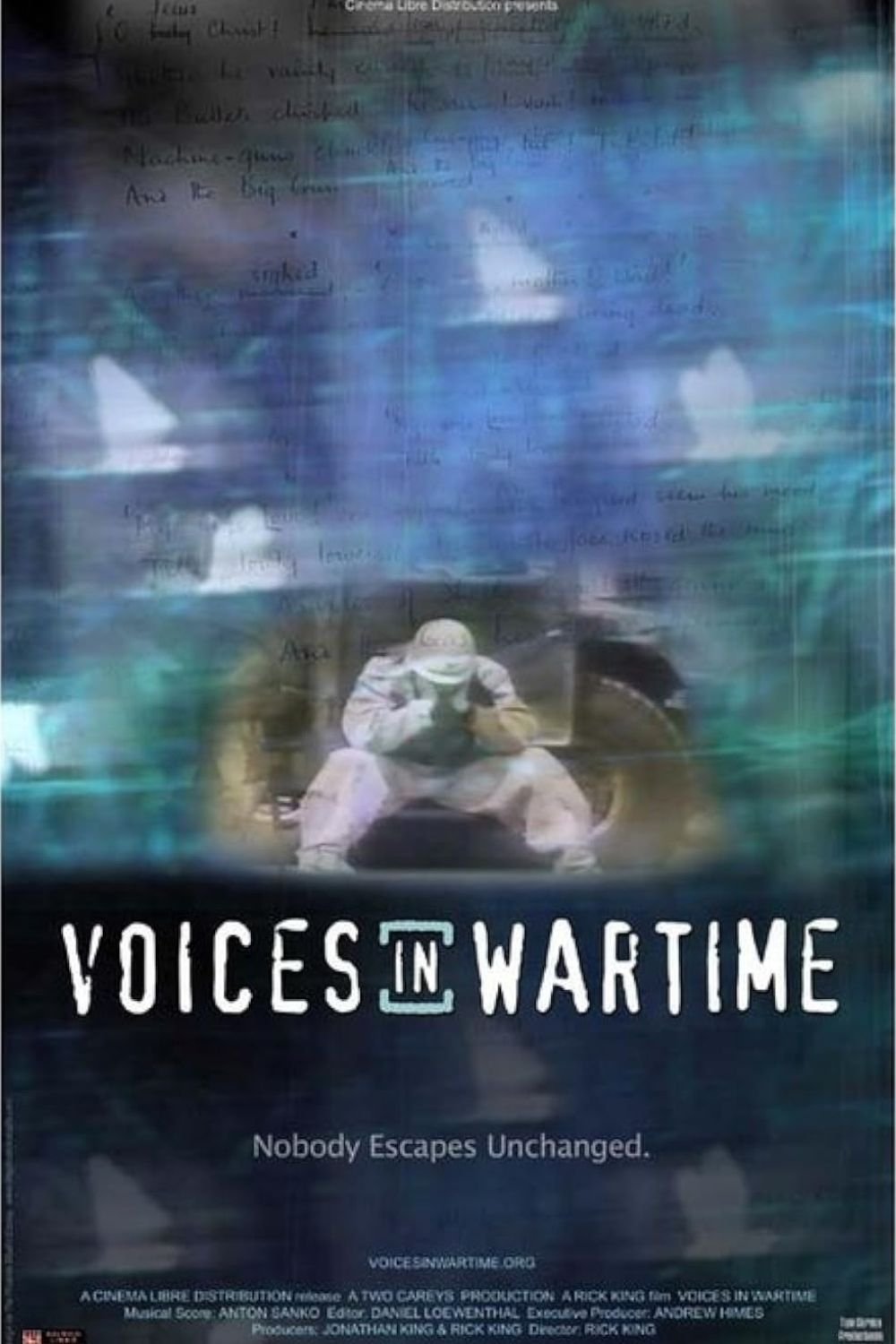
Voices in Wartime
Documentary
Overview
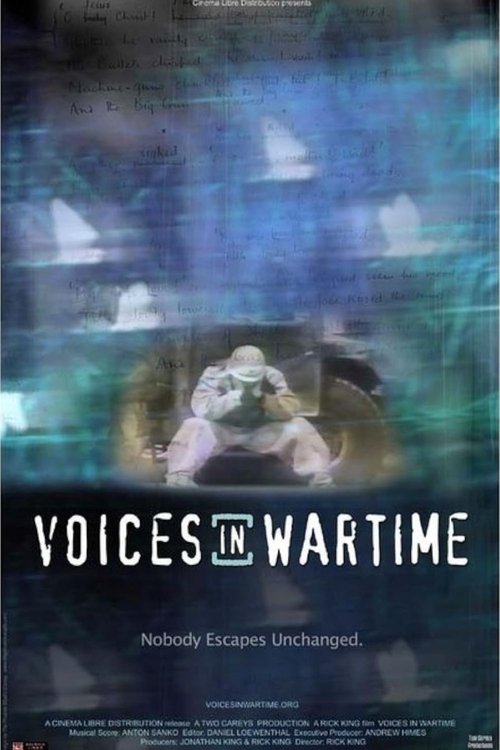
Voices in Wartime is a 2004 documentary that explores the human experience of war through poetry. Combining interviews with soldiers, journalists, and historians, it reveals how war affects individuals and societies across time and place. The film features poets from around the world – from Homer and Wilfred Owen to Shoda Shinoe and modern writers in Iraq and Nigeria – showing how poetry expresses the pain, trauma, and truth of conflict. By linking verse with real-life accounts, Voices in Wartime highlights how poetry helps us understand the emotional and moral impact of war.
Top Cast
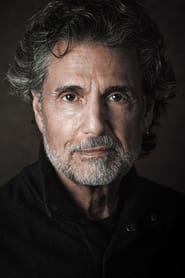
Chris Sarandon
Homer (voice)
Lisbeth Scott
Emily Dickinson (voice)
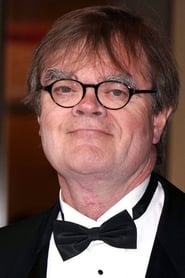
Garrison Keillor
Walt Whitman (voice)
Gilbert Hines
Langston Hughes (voice)
Dorothy King
Enheduanna (voice)
John Francis
Alfred, Lord Tennyson (voice)
Jason Williams
Seigfried Sassoon (voice)
Graham Townsley
Wilfred Owen (voice)
Kazuko Robertshaw
Shōda Shinoe (voice)
Hubert Hodgin
Hashim Shafiq (voice)
Jon Christensen
Ali Habash (voice)




Chris Sarandon
Chris Sarandon
Homer (voice)
Chris Sarandon
Homer (voice)
Lisbeth Scott
Lisbeth Scott
Emily Dickinson (voice)
Lisbeth Scott
Emily Dickinson (voice)
Garrison Keillor
Garrison Keillor
Walt Whitman (voice)
Garrison Keillor
Walt Whitman (voice)
Gilbert Hines
Gilbert Hines
Langston Hughes (voice)
Gilbert Hines
Langston Hughes (voice)
Dorothy King
Dorothy King
Enheduanna (voice)
Dorothy King
Enheduanna (voice)
John Francis
John Francis
Alfred, Lord Tennyson (voice)
John Francis
Alfred, Lord Tennyson (voice)
Jason Williams
Jason Williams
Seigfried Sassoon (voice)
Jason Williams
Seigfried Sassoon (voice)
Graham Townsley
Graham Townsley
Wilfred Owen (voice)
Graham Townsley
Wilfred Owen (voice)
Kazuko Robertshaw
Kazuko Robertshaw
Shōda Shinoe (voice)
Kazuko Robertshaw
Shōda Shinoe (voice)
Hubert Hodgin
Hubert Hodgin
Hashim Shafiq (voice)
Hubert Hodgin
Hashim Shafiq (voice)
Similar Movies
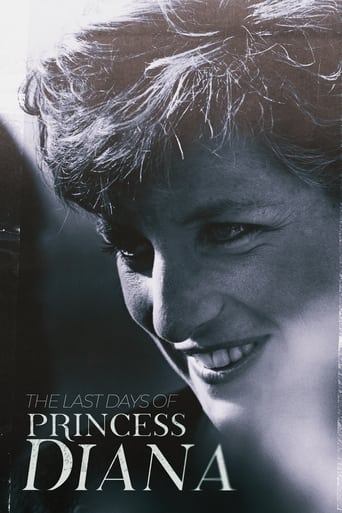
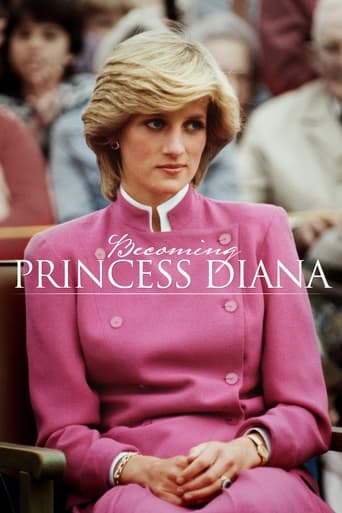
By 1997 Diana, Princess of Wales had spent over a decade in the global spotlight. From a fairytale princess to a powerful independent mother - Diana had shown resilience and resolve. Free from the shackles of a royal marriage, she was just about to conquer the world all over again and this time on her own terms, but everything was about to come to a screeching halt.
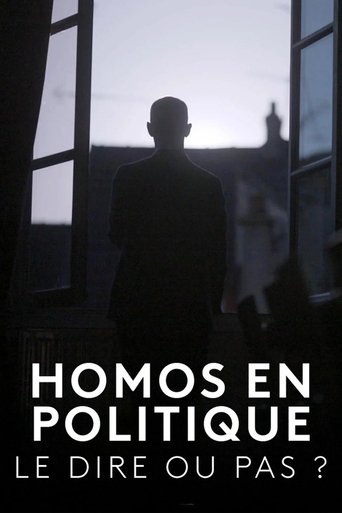
“Being French in 2024 means being able to serve as Prime Minister while openly gay.” With these words closing his policy speech on January 30, 2024, Gabriel Attal made history. The documentary *Homos en politique: le dire ou pas?* uses this milestone — the appointment and visibility of France’s first openly gay Prime Minister — as a springboard for a broader inquiry. Journalists Jean-Baptiste Marteau and Renaud Saint-Cricq travel across France to meet LGBTQ politicians of all generations, from Paris to rural towns. Eleven years after the protests against same-sex marriage, has France really changed? Through interviews with figures like Bertrand Delanoë, Sarah El Haïry, Jean-Philippe Tanguy, Franck Riester, and others, the film explores how coming out intersects with politics, homophobia, and representation — questioning whether saying “I’m gay” in politics is still an act of courage or simply a sign of the times.
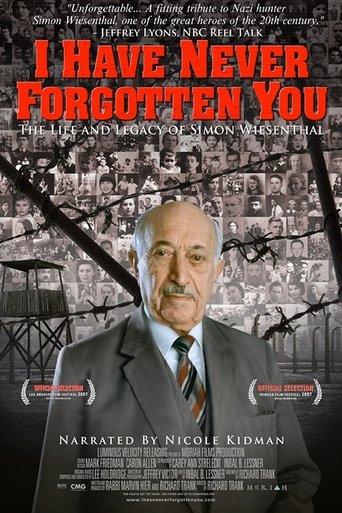
"I Have Never Forgotten You" is a comprehensive look at the life and legacy of Simon Wiesenthal, the famed Nazi hunter and humanitarian. Narrated by Academy Award winning actress Nicole Kidman, it features interviews with longtime Wiesenthal associates, government leaders from around the world, friends and family members--many of whom have never discussed the legendary Nazi hunter and humanitarian on camera. Previously unseen archival film and photos also highlight the film. What was the driving force behind his work? What kept him going when for years the odds were against his efforts? What is his legacy today, more than 60 years after the end of World War Two?

A critical analysis by Jacob Geller analyzing the depiction of head- (or consciouness-) transplants in video games such as Wolfenstein 2 or Soma in parallel with the history of the almost-father of head transplants (his experiences having been limited to monkeys), Robert Joseph White. How did we end up moving the center of human consciouness from the heart to the brain ? Where does the soul come in to play here? When is the body / Theseus' ship no longer the body / Theseus' ship for having had its limbs / its wood transplanted too much ?
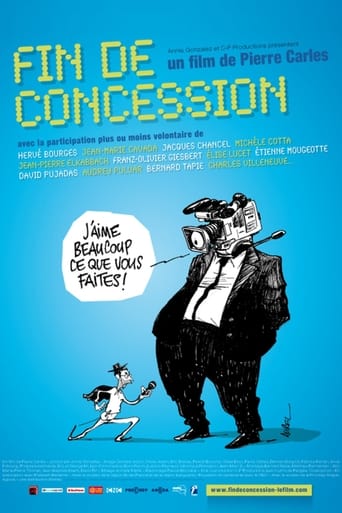
Pierre Carles questions the privatization of the leading French televisions channel : is it not scandalous that the TFI-Bouygues concession has been automatically renewed since 1987 ? Taking up the anti-television fight he initiated with "Pas vu Pas pris", his first film, he confronts the people responsible for the news who have always avoided tackling this taboo subject. But the investigation does not go as planned : the old dinosaurs and young guardians now how to handle this media critic. To find his "fighting spirit" again, Carles calls to arms his friends and changes methods : Henceforth, no more concessions !
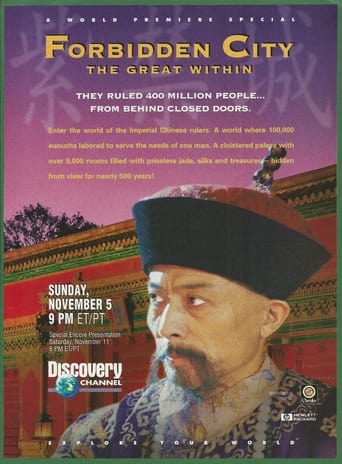
Amidst the grand walls of the Forbidden City, the film takes us on a deep journey through the ceremonial life of the Chinese emperor, unveiling the secrets and intrigues of concubines, eunuchs, and palace maids. As the West begins to influence China in the late 19th century, the dynamics within the city shift dramatically. The film highlights the preservation and restoration of invaluable treasures and paintings, culminating in the creation of the Palace Museum. With insights from renowned China scholar, Jonathan Spence, this is an intimate exploration of the rich cultural and historical tapestry that makes up the heart of ancient China.