

Café Müller
Music · Documentary
Overview
Pina Bausch created and performed Café Müller for her dance company Tanztheater Wuppertal. The dance was inspired by and based on her childhood memories of watching her father work at his café in Germany during and immediately following World War II. In this silent style featurette, Bausch shows a restaurant after closing, in which the ghosts of the departed customers stumble blindly into walls and onto chairs but fail to find one another.



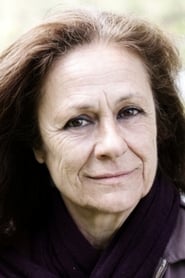
Malou Airaudo
Malou Airaudo
Self
Malou Airaudo
Self
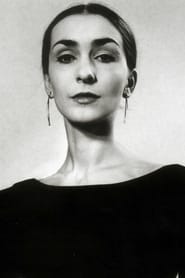
Pina Bausch
Pina Bausch
Self
Pina Bausch
Self
Dominique Mercy
Dominique Mercy
Self
Dominique Mercy
Self
Jan Minařík
Jan Minařík
Self
Jan Minařík
Self
Nazareth Panadero
Nazareth Panadero
Self
Nazareth Panadero
Self
Jean Laurent Sasportes
Jean Laurent Sasportes
Self
Jean Laurent Sasportes
Self
Similar Movies
A love letter to Mar del Plata made of images, times and a road trip. "The Happy Ones" is an experimental short documentary composed of past and present family footage. It portrays a place in the summer, the city of Mar del Plata, with a span of 20 years between past and present images (January 2000 and 2020). Despite the time that passed by, it's beaches, essence and people remain, always willing to keep dancing.

Honey Daniels dreams of making a name for herself as a hip-hop choreographer. When she's not busy hitting downtown clubs with her friends, she teaches dance classes at a nearby community center in Harlem, N.Y., as a way to keep kids off the streets. Honey thinks she's hit the jackpot when she meets a hotshot director casts her in one of his music videos. But, when he starts demanding sexual favors from her, Honey makes a decision that will change her life.

Piel dolor (Skin Pain) explains how power is structurally sustained in violence. Its nature and the relationships it establishes in society are based more on the imposition and use of force than on building consensus, dialogue, and respect for diversity. In that sense, power is a behavior that seeks dominance through force and man as a gender, becomes an instrument of violence that is exercised against the weakest. Extinguishing the socially constructed violence means eliminating the current power and its historical sustenance, questioning the source of origin, religion, ideology, the system and its values. Is that utopia possible?
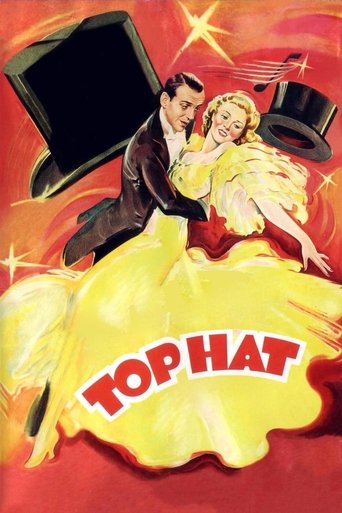
Showman Jerry Travers is working for producer Horace Hardwick in London. Jerry demonstrates his new dance steps late one night in Horace's hotel room, much to the annoyance of sleeping Dale Tremont below. She goes upstairs to complain and the two are immediately attracted to each other. Complications arise when Dale mistakes Jerry for Horace.
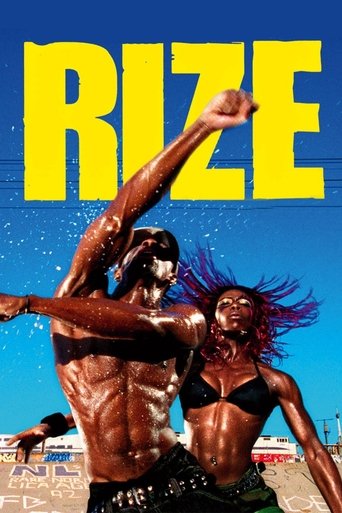
A documentary film that highlights two street derived dance styles, Clowning and Krumping, that came out of the low income neighborhoods of L.A.. Director David LaChapelle interviews each dance crew about how their unique dances evolved. A new and positive activity away from the drugs, guns, and gangs that ruled their neighborhood. A raw film about a growing sub-culture movements in America.
Hello everyone, and welcome to the second edition of "Why so Serious?" MEP – the Polish version of AMV Hell, featuring only Polish creators. The project began in late August 2009, allowing both editors and scriptwriters to participate. In total, 35 Polish creators and 6 scriptwriters joined. After three months, I received 250 tracks, amounting to 1.5 hours of material. Like in the first edition, a special jury was selected to evaluate the clips. The jury consisted of AceMan, Szwagier, Crossfade, and Kosmit, chosen to ensure fair judgment. After their review, the number of tracks was reduced to 100, resulting in about 25 minutes of final material. The grand premiere of "Why so Serious II" took place on February 6, 2010, during the PAcon convention in Warsaw, attracting a large audience and receiving a standing ovation. Special thanks to Heero, Kosmit, AceMan, Szwagier, Crossfade, and Kaeth, and to all co-authors, without whom this project wouldn’t have been possible.
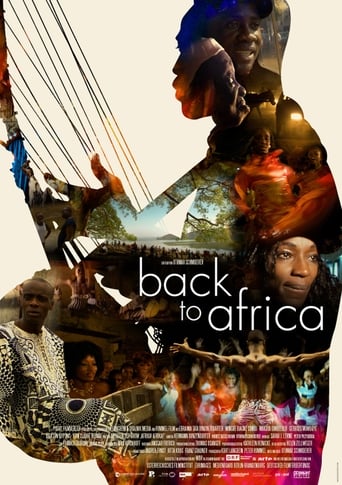
An Austrian director followed five successful African music and dance artists with his camera and followed their lives for a year. The artists, from villages in Ghana, Gambia and Congo, were the subjects of Africa! Africa! touring across Europe, but they have unbreakable roots to their homeland and their families. Schmiderer lovingly portrays his heroes, who tell their stories about themselves, their art and what it means to them to be African with captivating honesty. The interviews are interwoven with dance scenes and colourful vignettes set to authentic music.