



Buena Vista Social Club: Adios
Documentary · Music
Overview
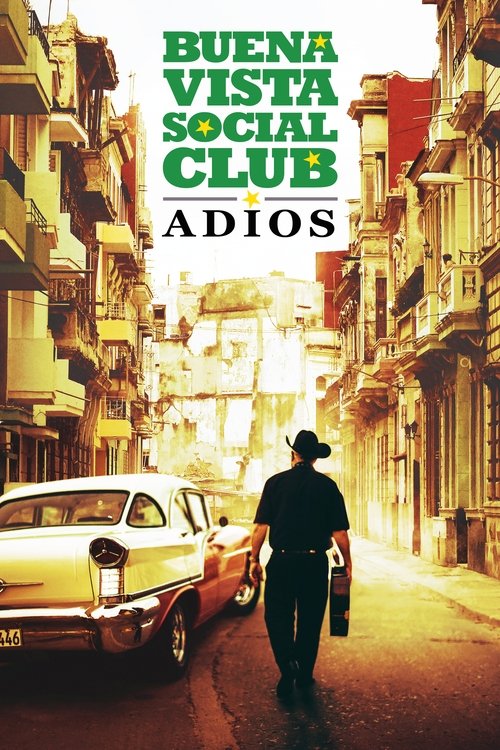
In 1996, Cuban bandleader Juan de Marcos Gonzalez, British producer Nick Gold, and American guitarist Ry Cooder convened in Havana to produce a Cuban-Malian collaboration. When the Malians couldn’t get visas, the team turned their attention to reviving a forgotten generation of legendary son cubano musicians and formed an on-the-fly ensemble: the Buena Vista Social Club. Two decades since that fateful first session, we catch up to these master musicians, as they reflect on the magical unfolding of their lives—from humble origins to the evolution and surprising revival of their careers, all against the backdrop of Cuba’s dramatic history. Brimming with unseen concert, rehearsal, and archival footage, this film is an emotional, shimmering celebration of music’s power to transcend age, ideologies, and class, and to connect us to each other through our souls.






Ibrahim Ferrer
Ibrahim Ferrer
Self
Ibrahim Ferrer
Self

Omara Portuondo
Omara Portuondo
Self
Omara Portuondo
Self
Manuel 'Guajiro' Mirabal
Manuel 'Guajiro' Mirabal
Self
Manuel 'Guajiro' Mirabal
Self
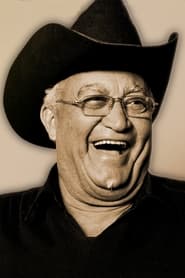
Eliades Ochoa
Eliades Ochoa
Self
Eliades Ochoa
Self
Barbarito Torres
Barbarito Torres
Self
Barbarito Torres
Self
Guajirito Mirabal
Guajirito Mirabal
Self
Guajirito Mirabal
Self
Jesús 'Aguaje' Ramos
Jesús 'Aguaje' Ramos
Self
Jesús 'Aguaje' Ramos
Self
Similar Movies
Heavy metal band Iron Maiden's 2008 Somewhere Back in Time World Tour. This concert recording accompanies the documentary film "Iron Maiden: Flight 666". The 16 songs performed were filmed live in 16 different cities giving you the full experience of the live power of Maiden and their fans all around the globe.
Documentary portrait of José Domínguez Muñoz, better known as "El Cabrero" (French for "the goatherd"), Spanish libertarian flamenco singer born in Aznalcóllar, province of Seville, in 1944 and filmed over two weeks in 1988 in Seville, Aznalcóllar, La Carbonería de Sevilla and Marinaleda, and in concert at a recital in Bayonne. Politically committed, El Cabrero defines himself as a libertarian. Since the 1970s, he has been close to the anarchist movement. For many years, he was a member of the anarcho-syndicalist Confédération Nationale du Travail.
An intimate look at Los Angeles-based funk rock foursome Red Hot Chili Peppers' creative process as they join producer Rick Rubin at a Hollywood Hills mansion to record their 1991 studio album 'Blood Sugar Sex Magik', which would go on to propel the band into critical acclaim and worldwide popularity.

The film discusses the traits and originators of some of metal's many subgenres, including the New Wave of British Heavy Metal, power metal, Nu metal, glam metal, thrash metal, black metal, and death metal. Dunn uses a family-tree-type flowchart to document some of the most popular metal subgenres. The film also explores various aspects of heavy metal culture.
An exploration of Edmond Dédé and Basile Barès were 19th-century New Orleans composers of color. Dédé, born free, was an orchestral composer and violist, known for his opera Morgiane. Barès, born into slavery, was a pianist and composer of music for dance halls, unique for being the only known American composer with a copyright assigned to his work while enslaved.
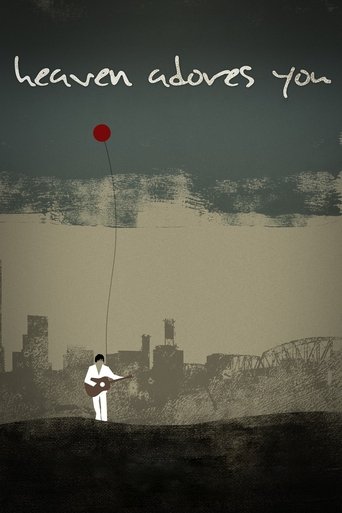
Heaven Adores You is an intimate, meditative inquiry into the life and music of Elliott Smith. By threading the music of Elliott Smith through the dense, yet often isolating landscapes of the three major cities he lived in -- Portland, New York City, Los Angeles -- Heaven Adores You presents a visual journey and an earnest review of the singer's prolific songwriting and the impact it continues to have on fans, friends, and fellow musicians.
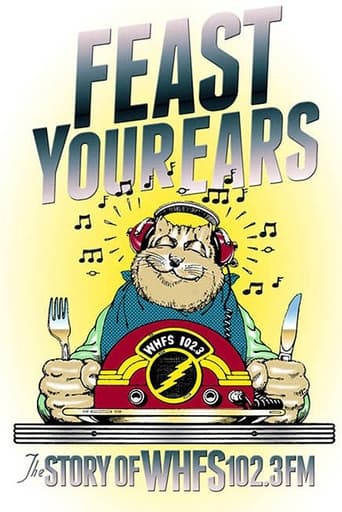
Built out of “a pile of radio junk,” Bethesda, Maryland’s WHFS was a music fan’s dream of a radio station: the place on the dial to hear music listeners loved and new tunes they soon would, all with an anything-goes mentality and an ear for the sounds of social change. This doc pays loving tribute to free-form radio and WHFS’s influence over FM stations across the US from the 1960s to the 1980s. All good things come to an end, and so did the disc-jockey-driven format that WHFS pioneered and made successful, but its legacy lives on. The station’s DJs relate its history with passion in this film that captures the tenor of an era, abetted by reminiscences of performers including Emmylou Harris, Taj Mahal, Jesse Colin Young, and others whose music found its way to ears and minds eager for something more than the same old Top 40 programming.