

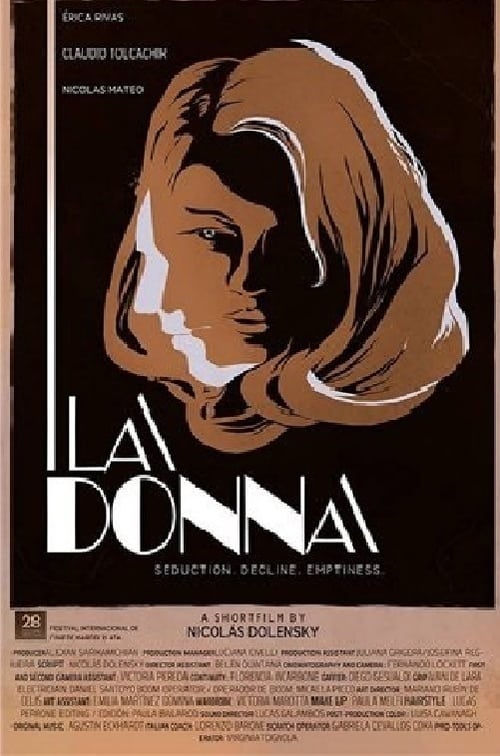
La Donna
Overview
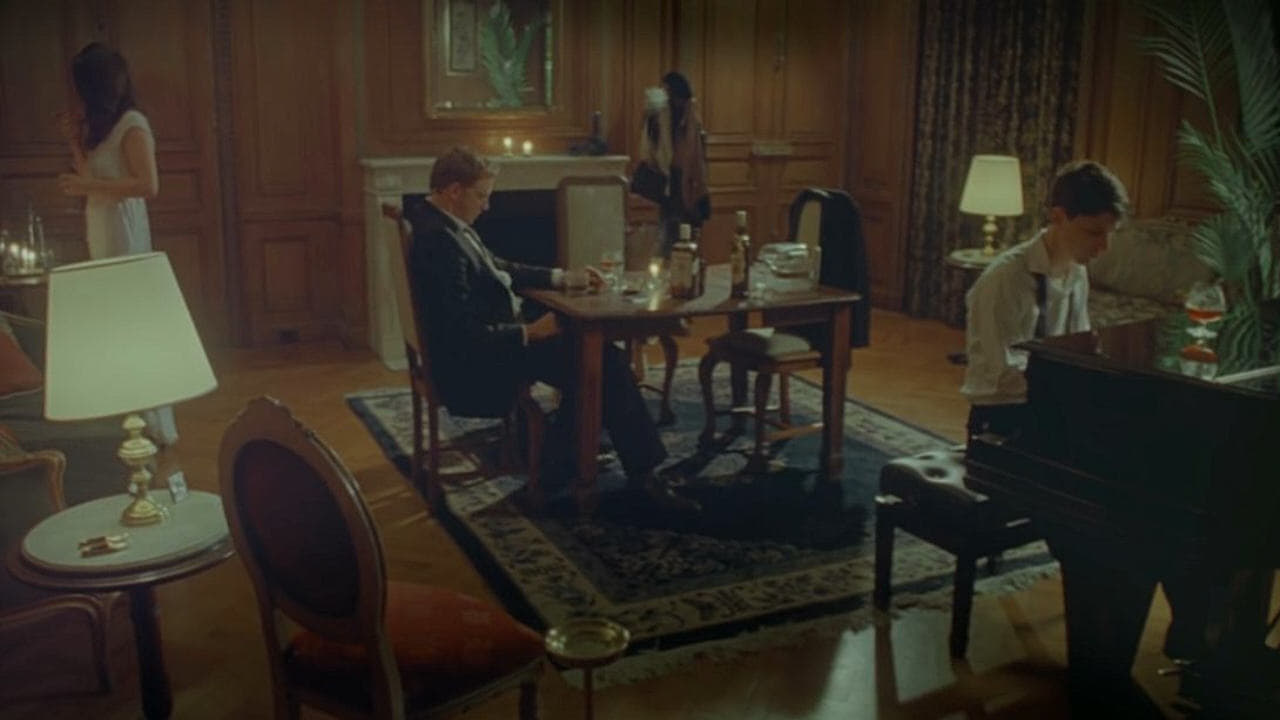
The night. One night. Perhaps any night anywhere. It rains. A woman. No. A man. A man and a woman. No. A man, a woman and someone else. The table. A table. A table immersed in alcohol, singing, playing music. The music. No, jazz. JAZZ! The seduction, the crossing. Acting, pretend. Laught. The kisses. No. Decline. One night, a woman a man and someone else, on a table. No. The Void.







Érica Rivas
Érica Rivas
La Donna
Érica Rivas
La Donna

Claudio Tolcachir
Claudio Tolcachir
El hombre
Claudio Tolcachir
El hombre
Nicolás Mateo
Nicolás Mateo
uomo
Nicolás Mateo
uomo
Similar Movies

A historical drama set in 1950s Britain. Dora Szumski, 30, is an Englishwoman married to a Polish immigrant, Eryk, a former Polish Army officer, who is left with no choice by the post-war balance of power, condemned to die in his homeland or emigrate. After an unsuccessful suicide attempt, Eryk stays in Mabledon Park, a psychiatric hospital designed for former Polish soldiers suffering from war trauma. Erik's illness resulting from a past that has been haunted and concealed from his wife not only becomes a barrier to the couple's future, but also a threat to Erik's life. Dora decides to find out what the secret of her husband's illness is.

The film tells a story of Kosynka, a pregnant mare, and her owner, a battered old man. Kosynka leads the “horse walker,” designed to train young horse to walk steadily and at a pace. Set to a soundtrack of Bach and Russian folk music, this film is another example of a parable-like narrative, which became more popular in Soviet documentary in the early 1970s.

Two Space systematically explores symmetries used by Islamic artists to create abstract temple decorations. The two dimensional patterns, like the tile patterns of Islamic temples, are generated by performing a set of symmetry operations (translations, rotations, and reflections) upon a basic figure or tile. Two Space consists of twelve such patterns produced using each of nine different animating figures (12 x 9 = 108 total). Rendered in stark black and white, the patterns produce optical illusions of figure-ground reversal and afterimages of color. Gamelan music from the classical tradition of Java adds to the mesmerizing effect.
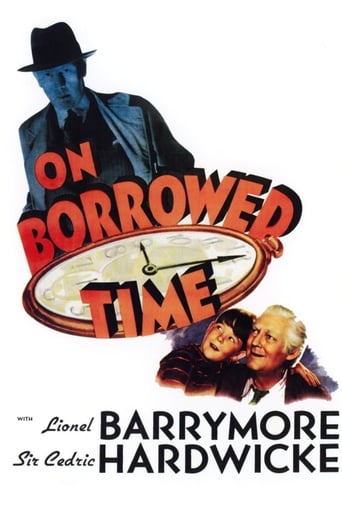
Young Pud is orphaned and left in the care of his aged grandparents. The boy and his grandfather are inseparable. Gramps is concerned for Pud's future and wary of a scheming relative who seeks custody of the child. One day Mr. Brink, an agent of Death, arrives to take Gramps "to the land where the woodbine twineth." Through a bit of trickery, Gramps confines Mr. Brink, and thus Death, to the branches of a large apple tree, giving Gramps extra time to resolve issues about Pud's future.