

Arezki, L'Indigène
Drama · War · History
Overview
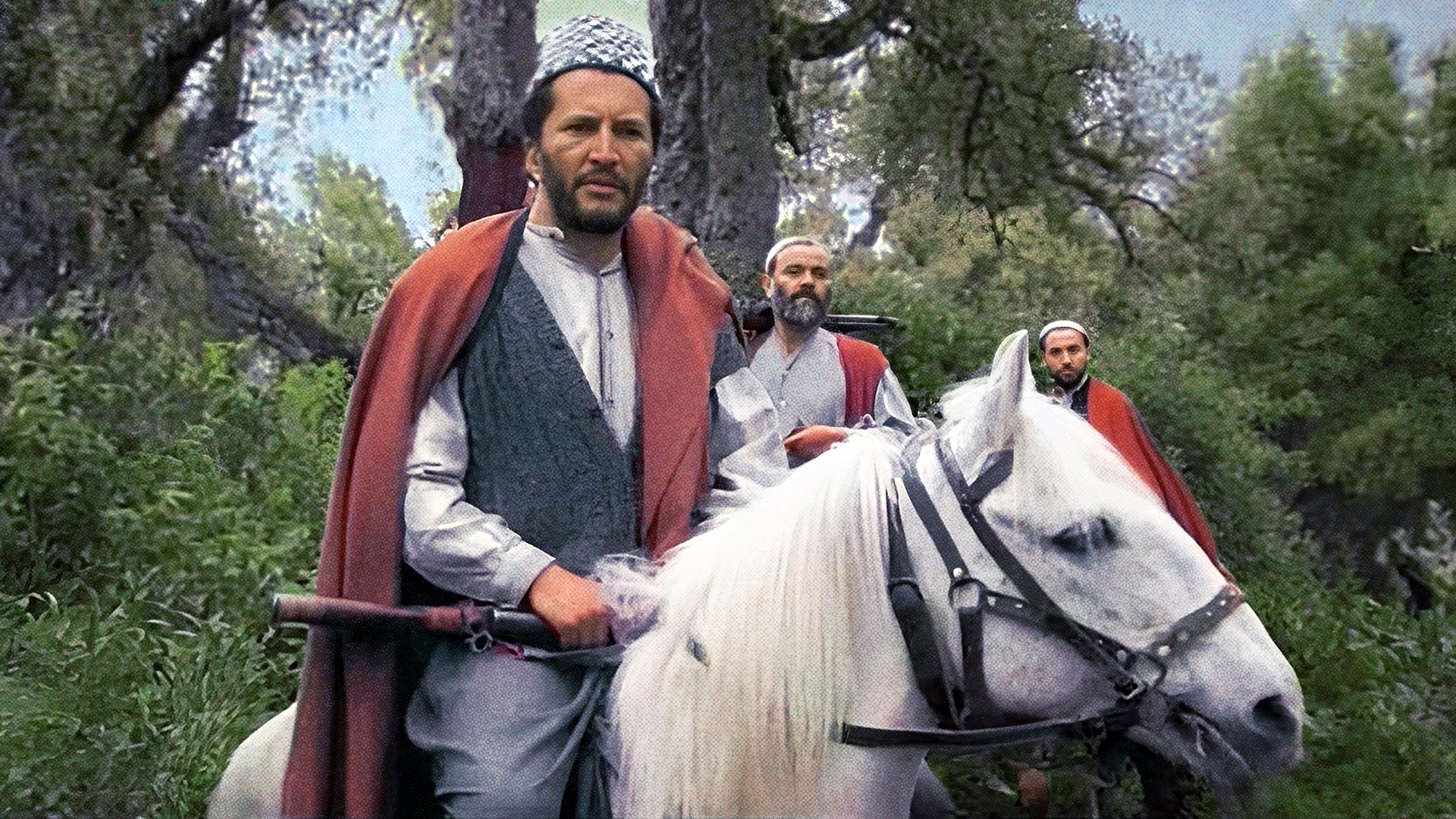
In 1895, young journalist Albertine Auclair arrives in the Kabylie during a family visit. The beauty of the region seduces her but she soon learns of the struggles of the native Algerians. She hears in particular about Arezki El Bachir, who was recently sentenced to death by the colonial justice system, and decides to find out more about this extraordinary man.
Top Cast

Salem Ait Ali Belkacem
Arezki El Bachir
Dahmane Aidrous
Abdoun

Céline Mauge
Albertine Auclair

Michel Pilorgé
Le gouverneur

Jean-François Kopf
Le colonel

Amina Loukil
Mme Leroy

Jean-Pierre Durand
L'administrateur

Jean-Charles Dumay
Mr Reiber

Brigitte Aubry
Mlle Faure
Karim Ghemam
Le garde du chantier
Mohamed Chabane
Amar
Ahmed Mebani
Ali







Salem Ait Ali Belkacem
Salem Ait Ali Belkacem
Arezki El Bachir
Salem Ait Ali Belkacem
Arezki El Bachir
Dahmane Aidrous
Dahmane Aidrous
Abdoun
Dahmane Aidrous
Abdoun
Céline Mauge
Céline Mauge
Albertine Auclair
Céline Mauge
Albertine Auclair
Michel Pilorgé
Michel Pilorgé
Le gouverneur
Michel Pilorgé
Le gouverneur
Jean-François Kopf
Jean-François Kopf
Le colonel
Jean-François Kopf
Le colonel
Amina Loukil
Amina Loukil
Mme Leroy
Amina Loukil
Mme Leroy
Jean-Pierre Durand
Jean-Pierre Durand
L'administrateur
Jean-Pierre Durand
L'administrateur
Jean-Charles Dumay
Jean-Charles Dumay
Mr Reiber
Jean-Charles Dumay
Mr Reiber
Brigitte Aubry
Brigitte Aubry
Mlle Faure
Brigitte Aubry
Mlle Faure
Karim Ghemam
Karim Ghemam
Le garde du chantier
Karim Ghemam
Le garde du chantier
Similar Movies
In colonial Vietnam, dashing French naval captain Jean-Baptiste, wealthy plantation owner Éliane Devries, and her adopted Vietnamese daughter Camillevare the three points of a cross-cultural romantic triangle. As the struggle against European imperialism sweeps Indochina, Jean-Baptiste and Camille have to choose sides and Éliane faces the emotionally difficult challenge of raising the child of her daughter and ex-lover.
These are the first images shot in the ALN maquis, camera in hand, at the end of 1956 and in 1957. These war images taken in the Aurès-Nementchas are intended to be the basis of a dialogue between French and Algerians for peace in Algeria, by demonstrating the existence of an armed organization close to the people. Three versions of Algeria in Flames are produced: French, German and Arabic. From the end of the editing, the film circulates without any cuts throughout the world, except in France where the first screening takes place in the occupied Sorbonne in 1968. Certain images of the film have circulated and are found in films, in particular Algerian films. Because of the excitement caused by this film, he was forced to go into hiding for 25 months. After the declaration of independence, he founded the first Algerian Audiovisual Center.
“La Zerda and the songs of oblivion” (1982) is one of only two films made by the Algerian novelist Assia Djebar, with “La Nouba des femmes du mont Chenoua” (1977). Powerful poetic essay based on archives, in which Assia Djebar – in collaboration with the poet Malek Alloula and the composer Ahmed Essyad – deconstructs the French colonial propaganda of the Pathé-Gaumont newsreels from 1912 to 1942, to reveal the signs of revolt among the subjugated North African population. Through the reassembly of these propaganda images, Djebar recovers the history of the Zerda ceremonies, suggesting that the power and mysticism of this tradition were obliterated and erased by the predatory voyeurism of the colonial gaze. This very gaze is thus subverted and a hidden tradition of resistance and struggle is revealed, against any exoticizing and orientalist temptation.
In Algiers in 1993, while the civil war is starting, Mrs Osmane's tenants have to endure her bad temper. Her husband left her and the fear to lose her respectability haunt her. The former member of the Resistance during the Independence War persists in controlling the slightest moves of the households rather than struggle against her own frustrations. Learning her daughter is in love, the possibility of finding herself alone will push her to the limit: The symbolical Mrs Osmane "harem" is about to collapse.
In 1971, the Algerian government nationalized hydrocarbons. The consequences of this decision on the community of Algerians in France are numerous. The Galti family is prey to these economic problems. The father, Khaled, former member of the F.L.N. in France, does not escape the sentence. Sharazade, his wife and comrade in combat, finds herself torn between her role as wife, mother and nostalgia for a country and a bygone past. As for his son Karim, a victim of socio-cultural division, all he has left is refusal.
Brothers Beau, John and Digby Geste join the Foreign Legion, where they fall under the rule of tyrannical Sergeant Markoff. Beau and John are assigned to Fort Zinderneuf, where Markoff tries to break their spirit, aware of a dark family secret concerning a fabulous jewel one of them carries. As tensions rise, Arabs attack the fort and rivalries must be thrown aside in a desperate battle for life.