


Black and White in Color
Drama · Comedy · War
Overview
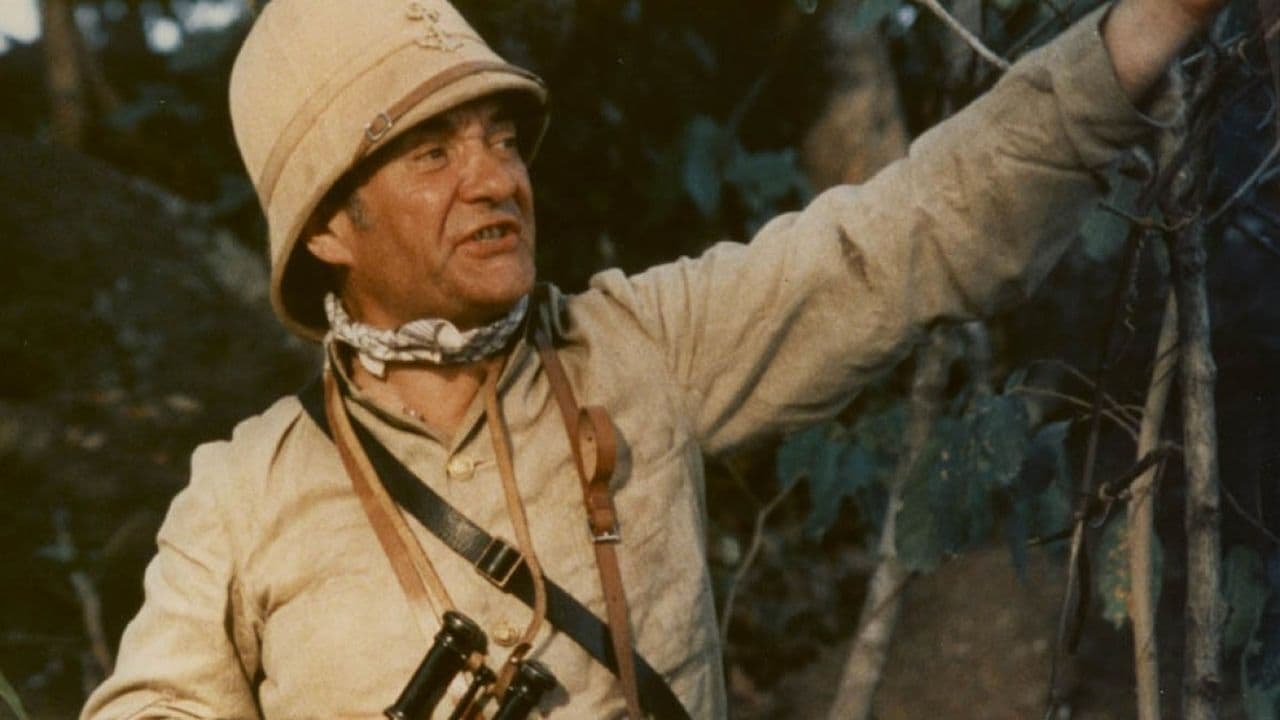
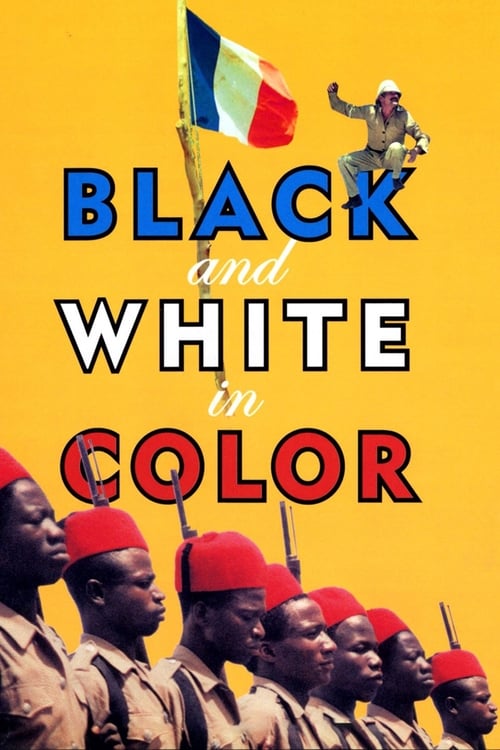
French colonists in Africa, several months behind in the news, find themselves at war with their German neighbors. Deciding that they must do their proper duty and fight the Germans, they promptly conscript the local native population. Issuing them boots and rifles, the French attempt to make "proper" soldiers out of the Africans. A young, idealistic French geographer seems to be the only rational person in the town, and he takes over control of the "war" after several bungles on the part of the others.
Top Cast

Jean Carmet
Sergeant Bosselet

Jacques Dufilho
Paul Rechampot

Catherine Rouvel
Marinette
Jacques Spiesser
Hubert Fresnoy
Dora Doll
Maryvonne
Maurice Barrier
Caprice
Benjamin Memel Atchory
Assomption
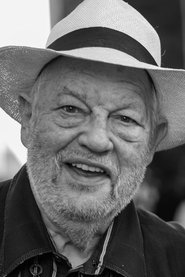
Peter Berling
Père Jean de la Croix
Marius Beugre Boignan
Barthelmy
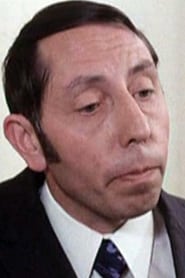
Claude Legros
Jacques Rechampot
Baye Macoumba Diop
Lamartine

Jacques Monnet
Père Simon



Jean Carmet
Jean Carmet
Sergeant Bosselet
Jean Carmet
Sergeant Bosselet
Jacques Dufilho
Jacques Dufilho
Paul Rechampot
Jacques Dufilho
Paul Rechampot
Catherine Rouvel
Catherine Rouvel
Marinette
Catherine Rouvel
Marinette
Jacques Spiesser
Jacques Spiesser
Hubert Fresnoy
Jacques Spiesser
Hubert Fresnoy
Dora Doll
Dora Doll
Maryvonne
Dora Doll
Maryvonne
Maurice Barrier
Maurice Barrier
Caprice
Maurice Barrier
Caprice
Benjamin Memel Atchory
Benjamin Memel Atchory
Assomption
Benjamin Memel Atchory
Assomption
Peter Berling
Peter Berling
Père Jean de la Croix
Peter Berling
Père Jean de la Croix
Marius Beugre Boignan
Marius Beugre Boignan
Barthelmy
Marius Beugre Boignan
Barthelmy
Claude Legros
Claude Legros
Jacques Rechampot
Claude Legros
Jacques Rechampot
Similar Movies
In colonial Vietnam, dashing French naval captain Jean-Baptiste, wealthy plantation owner Éliane Devries, and her adopted Vietnamese daughter Camillevare the three points of a cross-cultural romantic triangle. As the struggle against European imperialism sweeps Indochina, Jean-Baptiste and Camille have to choose sides and Éliane faces the emotionally difficult challenge of raising the child of her daughter and ex-lover.

A fearsome 19th century bandit, Cobra Verde cuts a swath through Brazil until he arrives at the sugar plantation of Don Octávio Countinho. Not knowing that his new guest is the notorious bandit and impressed by his ruthless ways, Don Octávio hires Cobra Verde to oversee his slaves. But when Cobra Verde impregnates Don Octávio’s three daughters, the incensed plantation owner exiles the outlaw to Africa where he is expected to reopen the slave trade. Following his trans-Atlantic journey, Cobra Verde exploits tribal conflicts to commandeer an abandoned fortress and whips an army of naked warriors into a frenzied bloodlust as he vies for survival.
Stories of Waitara combines oral histories, state of the art animations and powerful dramatic re-enactments to bring to life the narratives of Te Ātiawa in their epic battle against the military might of the British Empire. Created and presented by award-winning journalist Mihingarangi Forbes NZ Wars: Stories of Waitara documents the epic battle for control over the fertile lands of Taranaki. Shared through the eyes of Te Atiawa descendants including Dr Ruakere Hond with insights from acclaimed historian Dr Vincent O'Malley this digital documentary project focuses on the beginning of the Taranaki wars which started in Waitara and raged across the region for over two decades. The Taranaki pa site of Pukerangiora holds a significant place in New Zealand's military history as a lasting symbol of Maori resistance and resilience. Pukerangiora is now the backdrop for the latest installment of RNZ's award-winning docu-series on the bloody birth of modern New Zealand.
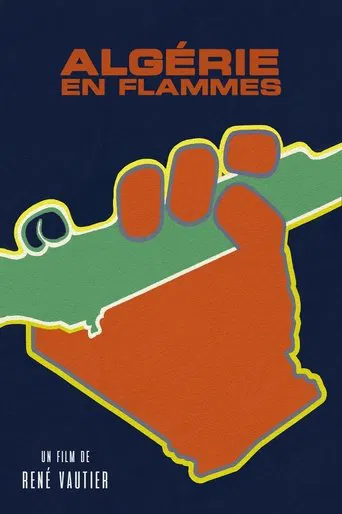
These are the first images shot in the ALN maquis, camera in hand, at the end of 1956 and in 1957. These war images taken in the Aurès-Nementchas are intended to be the basis of a dialogue between French and Algerians for peace in Algeria, by demonstrating the existence of an armed organization close to the people. Three versions of Algeria in Flames are produced: French, German and Arabic. From the end of the editing, the film circulates without any cuts throughout the world, except in France where the first screening takes place in the occupied Sorbonne in 1968. Certain images of the film have circulated and are found in films, in particular Algerian films. Because of the excitement caused by this film, he was forced to go into hiding for 25 months. After the declaration of independence, he founded the first Algerian Audiovisual Center.
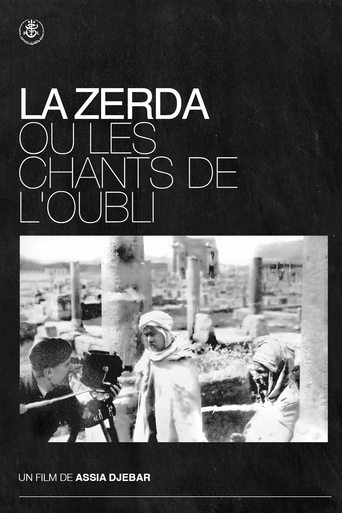
“La Zerda and the songs of oblivion” (1982) is one of only two films made by the Algerian novelist Assia Djebar, with “La Nouba des femmes du mont Chenoua” (1977). Powerful poetic essay based on archives, in which Assia Djebar – in collaboration with the poet Malek Alloula and the composer Ahmed Essyad – deconstructs the French colonial propaganda of the Pathé-Gaumont newsreels from 1912 to 1942, to reveal the signs of revolt among the subjugated North African population. Through the reassembly of these propaganda images, Djebar recovers the history of the Zerda ceremonies, suggesting that the power and mysticism of this tradition were obliterated and erased by the predatory voyeurism of the colonial gaze. This very gaze is thus subverted and a hidden tradition of resistance and struggle is revealed, against any exoticizing and orientalist temptation.