

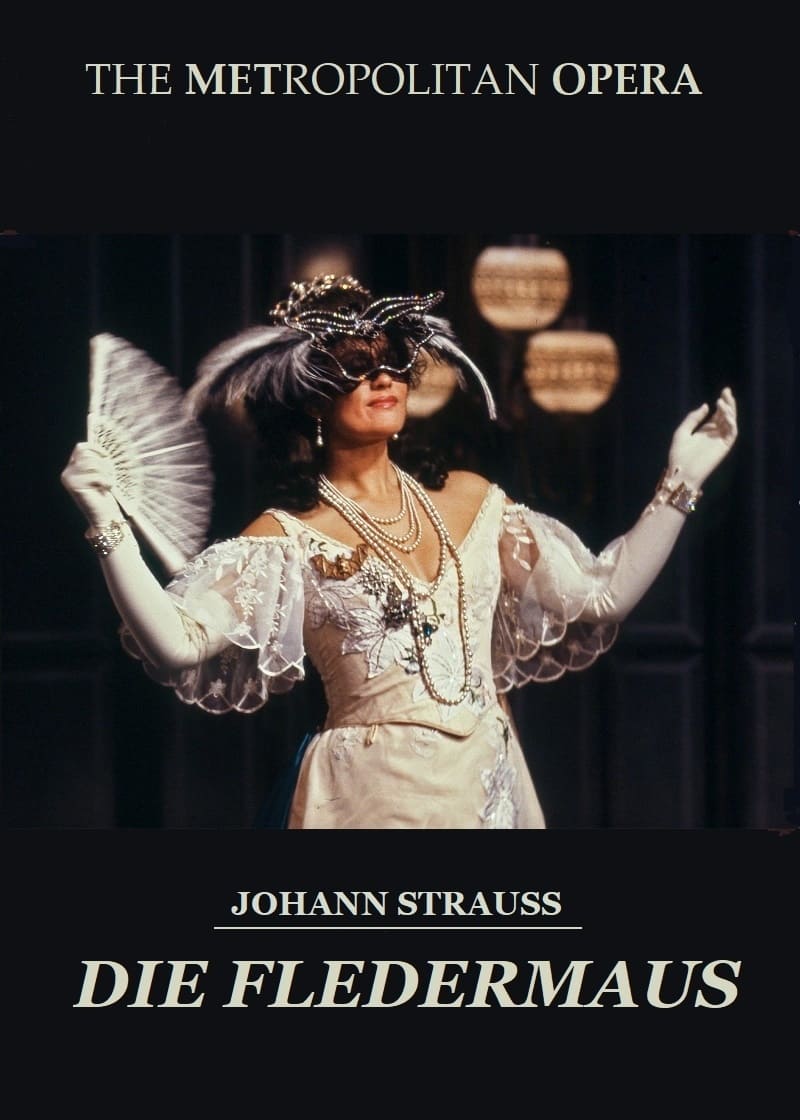
Die Fledermaus
Music
Overview
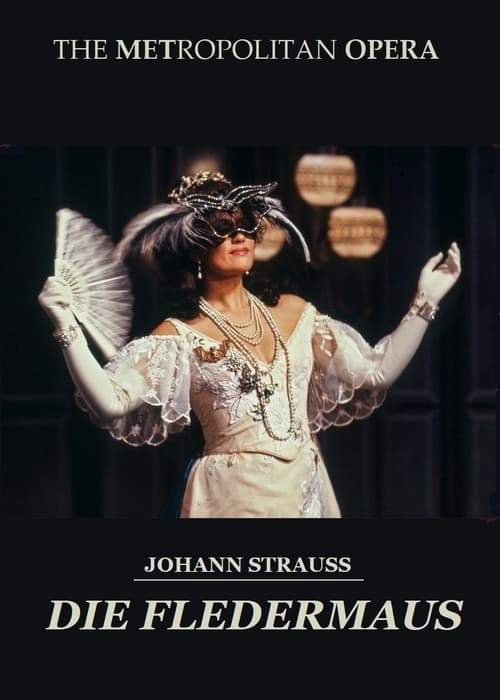
Live performance from the Metropolitan Opera, 31 December 1986.


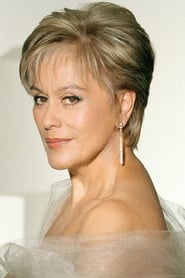
Kiri Te Kanawa
Kiri Te Kanawa
Rosalinde
Kiri Te Kanawa
Rosalinde
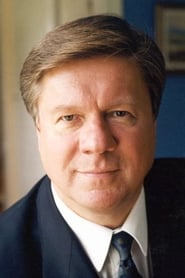
Håkan Hagegård
Håkan Hagegård
Eisenstein
Håkan Hagegård
Eisenstein
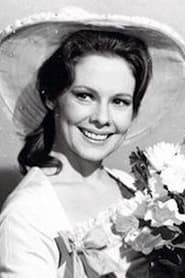
Judith Blegen
Judith Blegen
Adele
Judith Blegen
Adele
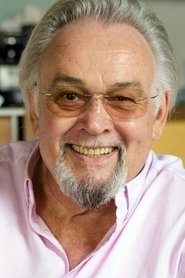
David Rendall
David Rendall
Alfred
David Rendall
Alfred
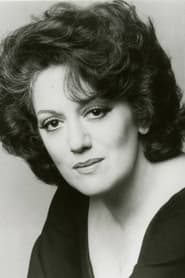
Tatiana Troyanos
Tatiana Troyanos
Prince Orlofsky
Tatiana Troyanos
Prince Orlofsky
Michael Devlin
Michael Devlin
Dr. Falke
Michael Devlin
Dr. Falke
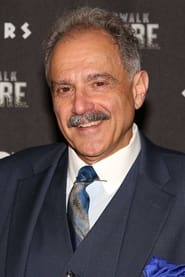
Anthony Laciura
Anthony Laciura
Dr. Blind
Anthony Laciura
Dr. Blind
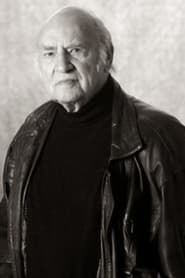
Franz Mazura
Franz Mazura
Frank
Franz Mazura
Frank
Victoria Brasser
Victoria Brasser
Ida
Victoria Brasser
Ida
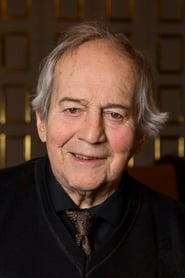
Otto Schenk
Otto Schenk
Frosch
Otto Schenk
Frosch
Similar Movies
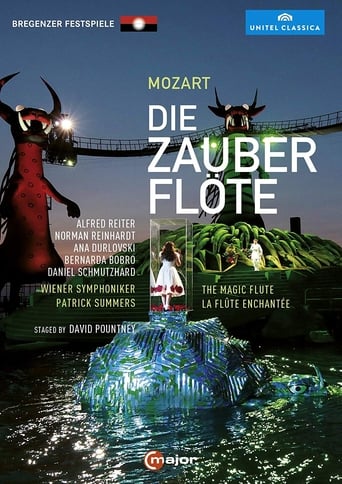
What begins like a fairy-tale turns into a whimsical fantasy halfway between magic farce and Masonic mysticism: The Magic Flute links a love story with the great questions of the Enlightenment, juxtaposes bird-catcher charm with queenly vengeance, and bewitches the listener with music that mixes cheerful melodies, lovers’ arias, showstopping coloraturas and mysterious chorales. W. A. Mozart’s opera premiered in 1791 and is one of the most often performed operas in the world. The production on the Bregenz Festival lake stage impresses the audience with a fantastic setting framed by three dog-dragons, each of them more than twenty meters in height. “David Pountney finds stunning answers to the everlasting questions surrounding ‘The Magic Flute’.” (Tagesspiegel) “The ‘play on the lake’ in Bregenz takes the audience into a fantasy world.” (Salzburger Nachrichten)
Don Giovanni's list of romantic conquests reaches into the hundreds. But his reputation as a lothario puts him in danger as the women he's betrayed -- and their suitors -- begin to seek revenge. A modern-day setting proves the timeless nature of Mozart's popular opera, performed with the Vienna Philharmonic as part of an epic presentation of all 22 of the composer's stage works at the 2006 Salzburg Festival, in honor of his 250th birthday.
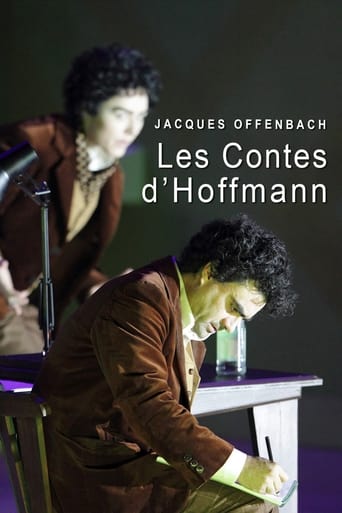
Live performance, Bayerische Staatsoper, 2011. The Tales of Hoffmann (French: LES CONTES D'HOFFMANN) is an opéra fantastique by Jacques Offenbach that combines three short stories by E.T.A. Hoffmann into a haunting whole: a melancholy poet reflects on three women he loved and lost in the past: a mechanical performing doll, a Venetian courtesan, and the consumptive daughter of a celebrated composer. One of the questions this opera poses for any director is how to link the 'tales' of Hoffmann's three lost loves together and knit them satisfactorily into the Prologue and Epilogue. In this production, Richard Jones solves the puzzle by turning it into an autobiographical journey which ends with a grand meet-up of all the characters Hoffmann has encountered: for once, Hoffmann is not presented as a rollicking kind of drunken story-spinner, but rather a sad-eyed, sobered-up depressive, who reaches for the bottle only because his disastrous love life has gone wrong yet again.
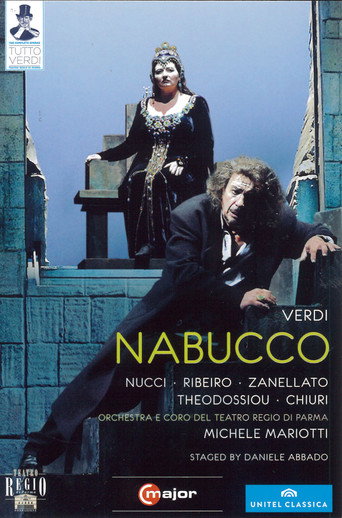
‘Nabucco’, or ‘Nebuchadnezzar’ (Italian: Nabucco), is an opera by Giuseppe Verdi with a libretto by T. Solera, based on events described in the Bible. (Nabucco is a shortened Italian rendering of the name of King Nebuchadnezzar II). It was this opera, the third in Verdi’s oeuvre, that brought him true fame. It tells of the tribulations of the Jews, their captivity by the Babylonians, and their subsequent release to their homeland by Nebuchadnezzar, King of Babylon. Giuseppe Verdi’s opera ‘Nabucco’, is a monumental work that tells the story of the enslavement of the Hebrew people by the Babylonian king Nebuchadnezzar (Nabucco) and their journey towards redemption. The premiere took place on 9 March 1842 at La Scala in Milan. The first performance of the final version was held at the Teatro San Giacomo in Corfu in September 1844. From the box set of 27 Verdi operas, ‘Tutto Verdi’. Recorded live at the Teatro Regio in Parma, 12–14 October 2009.
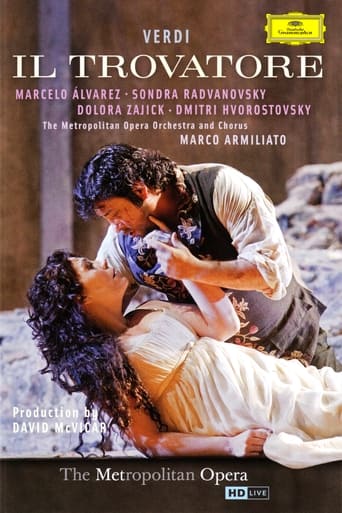
Verdi’s IL TROVATORE again storms the Met stage in a star-studded, anvil-wielding cast , including Sondra Radvanovsky, Dolora Zajick and Dmitri Hvorostovsky. Marcelo Álvarez sings Manrico, the troubadour of the title. The story is well-known already: The gypsy Azucena has harbored a grudge for thirty years, but she is about to have revenge at last. Meanwhile, her son Manrico is in love with Leonora, but so is his arch-enemy, the Count Di Luna. A pot-boiler, where every tune is a hit.
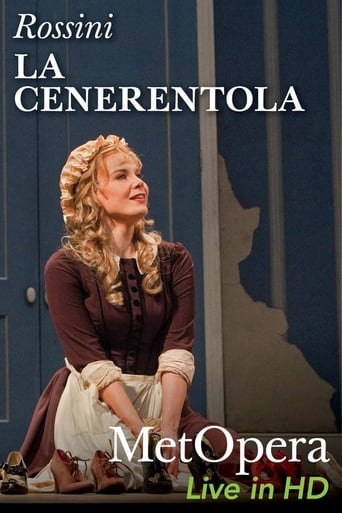
"Irresistible" (Opera News) rising-star mezzo Elina Garanca triumphs as Rossini's Cinderella in this delightful Metropolitan Opera production. "As close to pure joy as you will find in a big-time opera house" (New Yorker), conquering audiences and critics alike, "Garanca has a gorgeous voice that she uses with exceptional skill, melting tenderness; but when the part calls for coloratura fireworks, she unleashes a flawless technique and ringing high notes of impressive power" (Associated Press). Filmed in High Definition Widescreen.
23-year-old Gioachino Rossini completed his masterpiece IL BARBIERE DI SIVIGLIA incredibly quickly – legend has it in just 13 days – which Rossini attributed to ‘facility and lots of instinct’. The opera, characterized by youthful energy and bold wit, has all the ingredients for comic chaos: an imprisoned young woman, her lecherous guardian and a young noble suitor. Skilfully plotting behind the scenes is Figaro, an irrepressible and inventive character in whom many have seen a resemblance to the young Rossini himself. The score fizzes with musical brilliance, from Figaro’s famous entrance aria to the frenzy of the Act I finale. This recording sees Joyce DiDonato (Rosina) bring literal meaning to the old theatrical motto Break a leg! She did just that in an earlier show but was determined to finish her commitment and was re-staged into the production to allow for the additional challenges that come when a leading lady in a lively physical role must wheel around the other performers...
Live peformance from the Sferisterio Opera Festival, August 2004. Our edition has an Italian cast of exceptional quality, in which stand out the amazing voice of Desirée Rancatore, the extraordinary artistry of Ruggiero Raimondi and the fascinating direction of Pier Luigi Pizzi, one of today's most creative directors. Interesting overview here: http://www.operatoday.com/content/2006/08/offenbach_les_c.php
“In a world that often demands certainty, Dialogues des Carmélites invites us to sit with profound questions that have no easy answers: What makes a life worthy? How can we be truly prepared for our inevitable end? What does security mean when everything familiar is threatened? What sustains us when our institutions crumble? … Rather than imposing answers, the opera creates room for reflection on how faith manifests not as abstract doctrine, but as lived experience under extraordinary pressure.” — Louisa Muller, Director’s Note. Juilliard Opera directed by Louisa Muller. Matthew Aucoin conducts the Juilliard Orchestra. Performed and recorded on April 26, 2025 at the Peter Jay Sharp Theater. Dialogues des Carmélites, an opera by Francis Poulenc. Libretto adapted by the composer.