

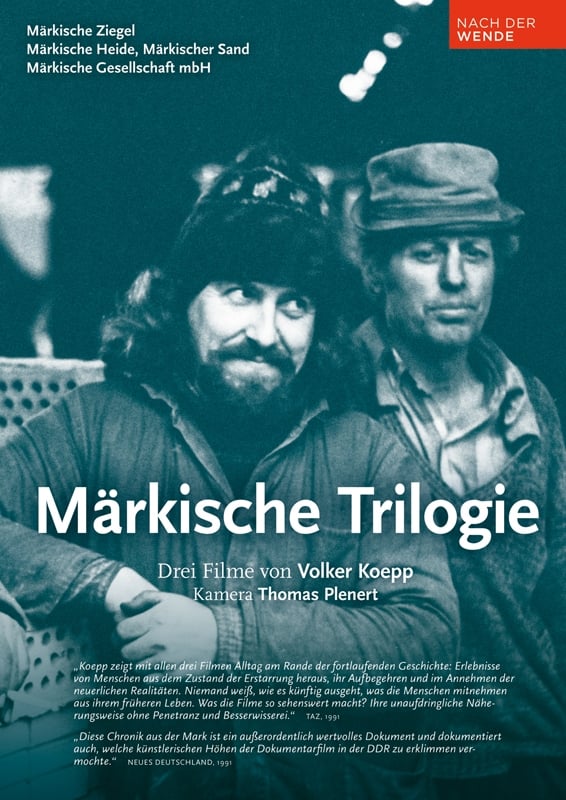
Märkische Heide, Märkischer Sand
Documentary
Overview
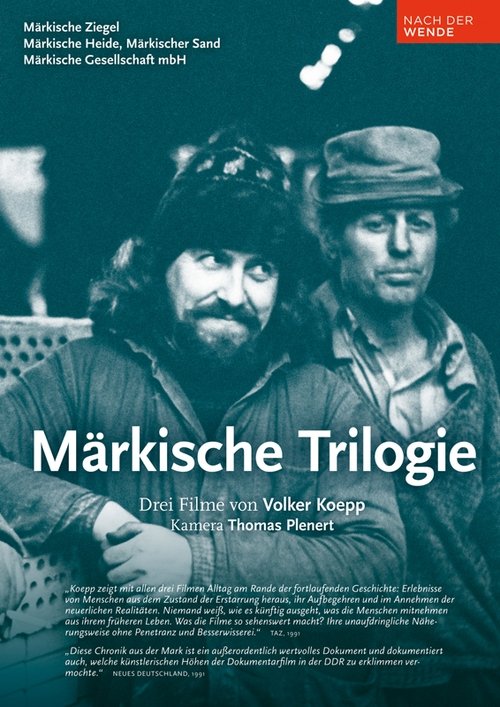
Volker Koepp revisits Zehdenick and Grüneberg, East Germany. People are struggling with the new political and economical conditions shortly before the German Reunification.



No cast information.
Similar Movies
The army of the GDR, called NVA had not survived the reunification of Germany, it was completely absorbed by the Bundeswehr and scrapped subsequently. But what apparently went on so smoothly as a peaceful unification of hostile brothers quietly left deep scars in the East German landscape.
This report was broadcast on ARD in 1993. In 43 minutes, the development of psychiatry "in the third year after reunification" is shown using two institutions in the new federal states as examples. A touchstone for all of psychiatry and disability care to this day. The film shows a shocking way in which disabled people are treated. The commentary uses the perspective of those affected. 50 years after euthanasia in Germany, this documentary reminds us of this once again.
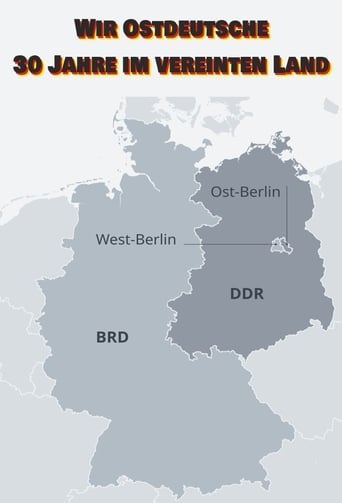
Explration of today’s East German identity, shaped by history, hopes, and upheaval. Through multimedia storytelling, it explores lives between the Elbe and Oder, intergenerational socialization, and self-perception three decades after reunification. Are the new Länder lost to nostalgia and extremism or still salvageable?
Shocking experiences with nudism on the Baltic Sea beach, the desire to rebuild the Wall "10 meters higher" - these are just some of the stories collected by the rbb-Erzählmobil 30 years after the "year of reunification". People from Berlin-Brandenburg have described their moving, exciting and humorous experiences for the website www.rbb-deine-geschichte.de and their view of unity today.
Early summer 1990: West German money transporters carrying billions of Deutschmarks roll towards the former GDR. From the inner-German border, the People's Police and the heavily armed National People's Army take over guarding the transports. Over 25 billion Deutschmarks are transferred from West to East within a few weeks. On July 1, 1990, the German-German monetary union takes place. The citizens of the former GDR were to hold the D-Mark in their hands from this point onwards, but a huge amount of work had to be done before this could happen. 441 million banknotes had to be printed and 102 million coins minted. This is because the organizers of the Bundesbank barely had time to prepare for the largest money transport in history. Many contemporary witnesses describe their experiences in the documentary, which gives an insight into the exciting months before monetary union, the consequences of which still have an impact today.
Women from Turkey and Mecklenburg are working together side-by-side at a fish-processing factory in Lübeck. As they work, they share stories about their lives, including their sorrows, griefs, hopes, and dreams, while expressing their longing for home and feelings of being lost in a foreign place.