

Rome's Invisible City
Documentary · History
Overview
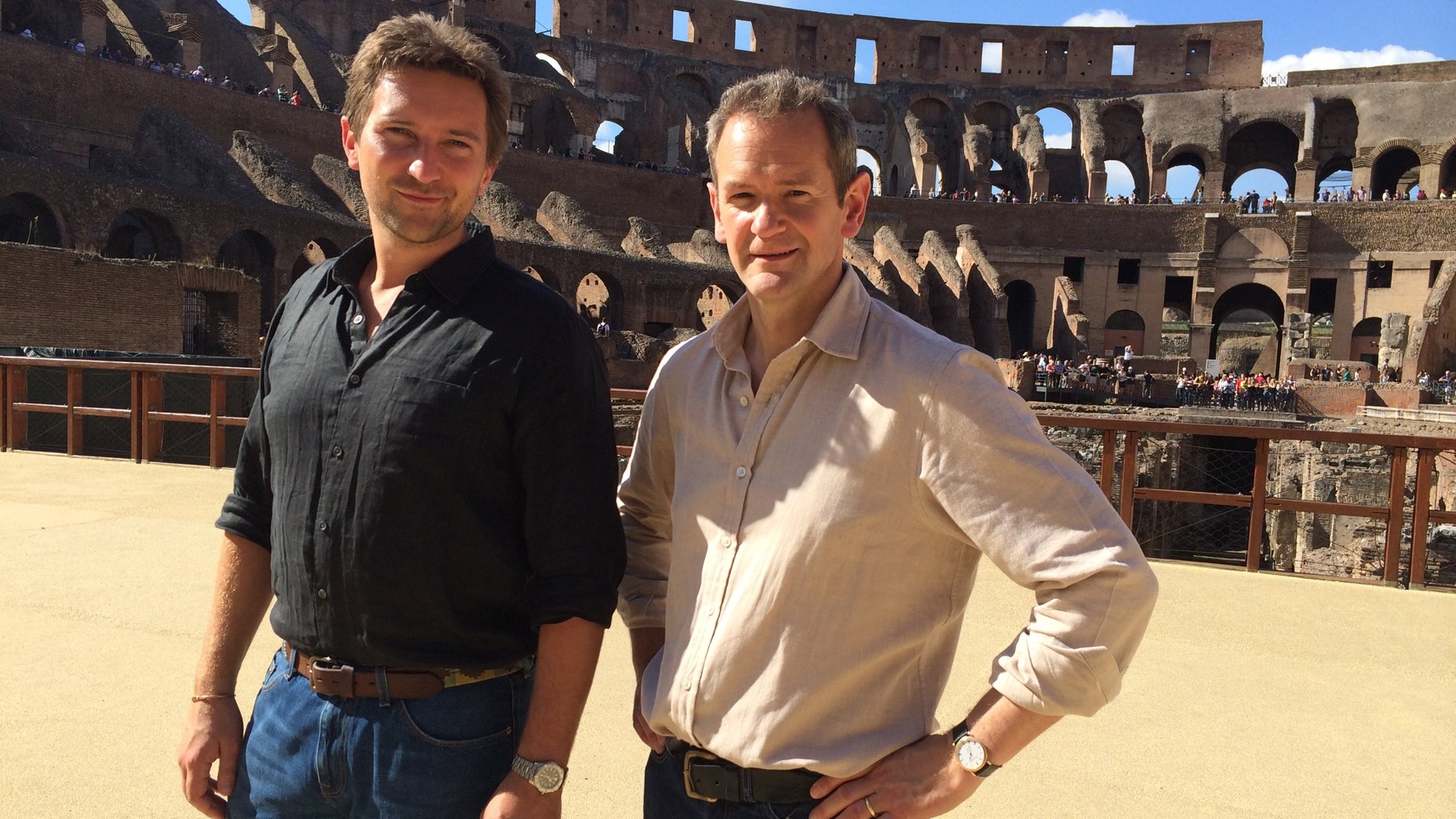
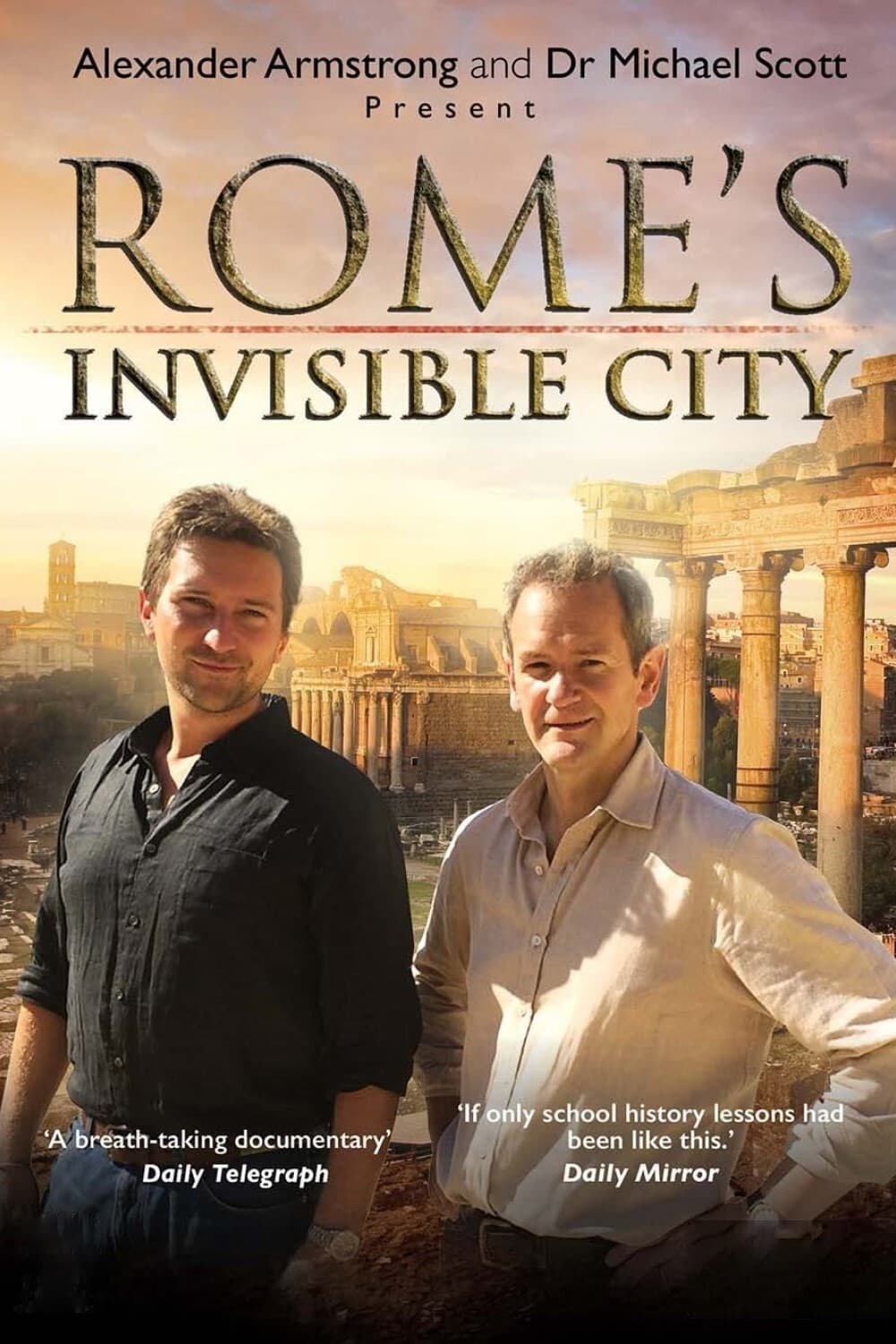
With the help of a team of experts and the latest in 3-D scanning technology, Alexander Armstrong, along with Dr Michael Scott, explores the hidden underground treasures that made Rome the powerhouse of the ancient world.

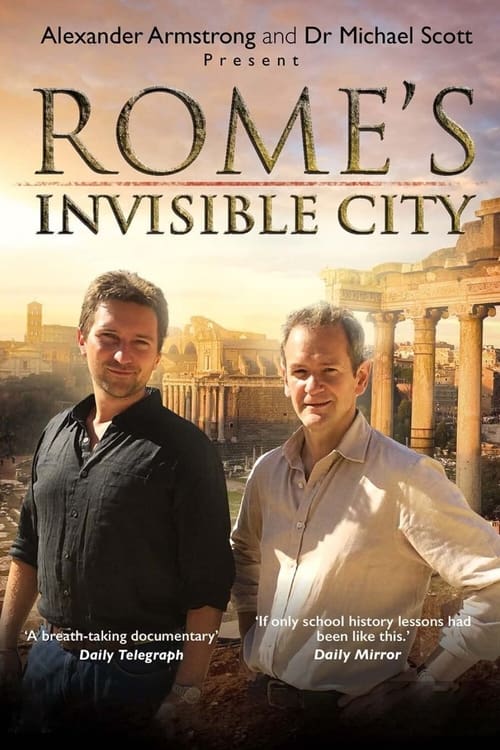

Alexander Armstrong
Alexander Armstrong
Himself - Presenter
Alexander Armstrong
Himself - Presenter
Michael Scott
Michael Scott
Himself - Participant
Michael Scott
Himself - Participant
Similar Movies
A journey back through Dacia Maraini's and her trips around the world with her close friends cinema director Pier Paolo Pasolini and opera singer Maria Callas. An in-depth story of this fascinating woman's life. Maraini's memories come alive through personal photographs taken on the road as well as her own Super 8 films shot almost thirty years ago.
For almost two thousand years, the story of Jesus’ final days has been celebrated by Christians the world over. From Jesus’ triumphant entry into Jerusalem, through to his eventual crucifixion six days later, the key moments have been immortalized in countless films, pieces of music, and works of art. But in recent years, some historians have begun to question inconsistencies in the Gospels’ version of events. They believe that the Gospels could hide a very different story; one that casts the historical Jesus in an entirely new light. Based on a new interpretation of contemporary historical events in Rome, "Last Days of Jesus" peels back thousands of years of tradition, to explore a new political context to the events in Jerusalem. "Last Days of Jesus" explores how dramatic political events in Rome could have played a crucial role in shaping Jesus’ destiny, and examines an extraordinary political alliance that altered the course of history.

In 1919 an art school opened in Germany that would change the world forever. It was called the Bauhaus. A century later, its radical thinking still shapes our lives today. Bauhaus 100 is the story of Walter Gropius, architect and founder of the Bauhaus, and the teachers and students he gathered to form this influential school. Traumatised by his experiences during the Great War, and determined that technology should never again be used for destruction, Gropius decided to reinvent the way art and design were taught. At the Bauhaus, all the disciplines would come together to create the buildings of the future, and define a new way of living in the modern world.
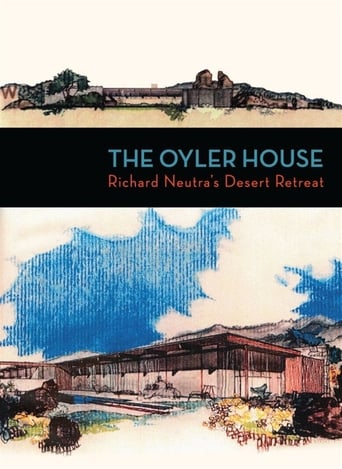
In 1959, a government employee named Richard Oyler, living in the tiny desert town of Lone Pine, California, asked world-famous modern architect Richard Neutra to design his modest family home. To Oyler's surprise, Neutra agreed. Thus began an unlikely friendship that led to the design and construction of an iconic mid-century modern masterpiece.
Frank Lloyd Wright’s Modern Masterpiece, Unity Temple is an homage to America’s most renowned architect. The film pulls back the curtain on Wright’s first public commission in the early 1900’s to the painstaking efforts to restore the 100 year old building back to its original beauty. The dedicated team of historians, craftspeople, members of the Unitarian congregation and Unity Temple Restoration Foundation reveal the history of one of Wright’s most innovative buildings that merged his love of architecture with his own spiritual values. The film intersperses the architect’s philosophies with quotes narrated by Brad Pitt.
After the death of Octavian, the rebel populations of Illyria and Pannonia pose a grave threat to the Roman Empire. Tribune Marcus Ventidius is sent to subdue the uprising and, after a bitter battle, captures Pannonian chief Magdus together with a number of women hostages. These include Magdus's own daughter Helen, betrothed to cruel Illyrian warrior Batone who has killed many Romans. Julia, daughter of the Roman governor Messala, is in love with Tribune Marcus and, jealous of his sympathy for the barbarian girl, plots an escape by Helen and her father. Pursuing the fugitives, Marcus crosses a mountain pass where Batone has laid a trap.
Originally produced in 1997 on the threshold of the Third Millennium of the Christian Era, and in celebration of the Jubilee of the Year of Our Lord 2000, The Vatican Museums was the culmination of three years of research and filming, the collaboration of thirty-two scholars and historians from around the world, a crew of forty directors of photography, operators, and lighting technicians, state-of-the-art digital cinematography, lighting, animation, and computerized editing, and the work of a famous composer with original performances by master musicians. Now available on DVD for the first time, this historic three-disc collection features seven hours of magnificent documentary film that illuminates and chronicles the great journey of the human spirit. Here then is the world's most spectacular and sacred repository of art, history, and faith.
The great King of Dacia, Decebal (Decebalus), is disposed to make the ultimate sacrifice in order to keep the integrity of his people. His own son, Cotyso, is given to the god Zamolxis to the dismay of the King and his daughter Meda. Septimius Severus, a young Roman devoted to his adopted country, must make the choice between his blood origins and the culture he was introduced to.
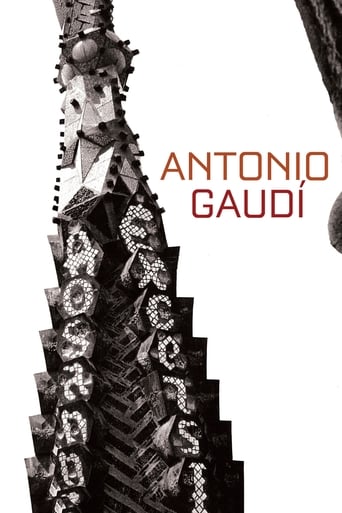
Catalan architect Antonio Gaudí (1852-1926) designed some of the world's most astonishing buildings, interiors, and parks; Japanese director Hiroshi Teshigahara constructed some of the most aesthetically audacious films ever made. With camera work as bold and sensual as the curves of his subject's organic structures, Teshigahara immortalizes Gaudí on film.