

Afterword: Images of the Unconscious
Documentary
Overview
Dialoguing directly with the trilogy of documentaries “Images of the Unconscious”, made between 1983 and 1986 and based on clinical cases and therapies with a humanist approach and artistic expression, conducted by the pioneering psychiatrist Nise da Silveira (1905-1999) – screenwriter of that film –, here is presented, in two parts, an interview with the doctor, a student of Carl Jung and a pioneer in the application of non-violent treatments for psychiatric patients, given to director Leon Hirszman, in 1986. The conversation is divided in two parts: the first, "The emotion of dealing", the second, "The egress".





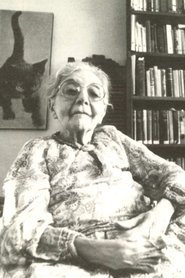
Nise da Silveira
Nise da Silveira
Herself
Nise da Silveira
Herself
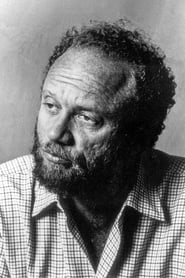
Leon Hirszman
Leon Hirszman
Himself
Leon Hirszman
Himself
Luiz Carlos Mello
Luiz Carlos Mello
Himself
Luiz Carlos Mello
Himself
Luiz Carlos Saldanha
Luiz Carlos Saldanha
Himself
Luiz Carlos Saldanha
Himself
Similar Movies

NCR: Not Criminally Responsible tells the story of a troubled young man who stabbed a complete stranger 6 times in a crowded shopping mall while gripped by psychosis. Twelve years later, his victim, who miraculously survived, is terrified to learn that he's out, living in the community under supervision. He's applying for an absolute discharge, and if he succeeds, he'll no longer be required to take the anti-psychotic drugs that control his mental illness. With unprecedented access to the patient, the victim, and the mental institution, the film looks at both sides of the debate and puts a human face on the complex ethical issues raised.
When Rasmus was 15, his mother and siblings moved from the island Bornholm and left Rasmus with his mentally ill father. Influenced by his father's insecurity, anger and failure, Rasmus chooses to move from Bornholm at the age of 18. Two years later, Rasmus is trying to see if a reunion is possible, but in order to forgive and create a new relationship, father and son must go on a common journey that requires extreme courage and determination to succeed.
Stooge is a feature documentary about Robert Pargiter, Iggy Pop's No1 fan. It covers the three years leading up to his 50th birthday when he tries to track his hero down in a final absolution. His journey has taken him all over the world in search of redemption after years of struggling with addiction, of coping with depression, and of celebrating the communal lust that is Rock'n Roll.
THEY HEARD VOICES is a documentary film exploring the Hearing Voices Movement, chronic psychosis, and the schizophrenia label. The film is a series of wide-ranging interviews with voice hearers, medical historians, anthropologists and psychiatrists from Britain and America, presenting different people’s views. Is schizophrenia hard science or an arbitrary, catch-all term with no real meaning? What does it mean for those experiencing psychosis?
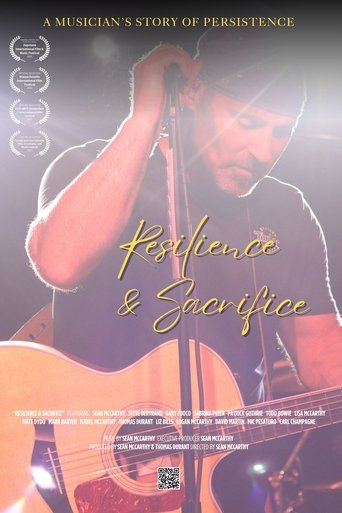
Award-winning documentary Resilience & Sacrifice follows an emerging musician from Vermont’s Northeast Kingdom who shelved his dreams to raise his family. Years later, he returns to the stage, facing the music industry and a medical crisis that nearly ends his career. A story of grit and passion.
This compelling film represents a rare record of an original genius. In Jung on Film, the pioneering psychologist tells us about his collaboration with Sigmund Freud, about the insights he gained from listening to his patients' dreams, and about the fascinating turns his own life has taken. Dr. Richard I. Evans, a Presidential Medal of Freedom nominee, interviews Jung, giving us a unique understanding of Jung's many complex theories, while depicting Jung as a sensitive and highly personable human being.
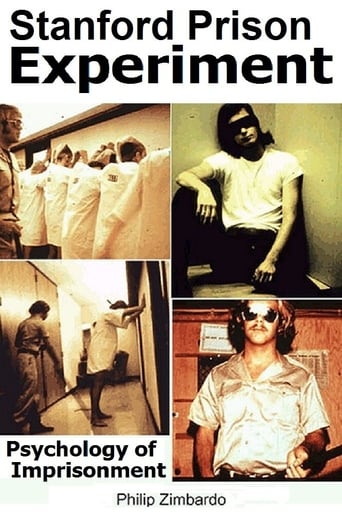
The Stanford prison experiment was a landmark psychological study of the human response to captivity, in particular, to the real world circumstances of prison life, and the effects of imposed social roles on behaviour. It was conducted in 1971 by a team of researchers led by Philip Zimbardo of Stanford University.