

Cinema Novo
Documentary · History
Overview
A deep investigation, in the way of a poetic essay, on one of the main Latin American movements in cinema, analyzed via the thoughts of its main authors, who invented, in the early 1960s, a new way of making movies in Brazil, with a political attitude, always near to people's problems, that combined art and revolution.
Top Cast

Nelson Pereira dos Santos
Self - Filmmaker (archive footage)
Glauber Rocha
Self - Filmmaker (archive footage)
Leon Hirszman
Self - Filmmaker (archive footage)
Joaquim Pedro de Andrade
Self - Filmmaker (archive footage)
Carlos Diegues
Self - Filmmaker (archive footage)
Paulo César Saraceni
Self - Filmmaker (archive footage)
Ruy Guerra
Self - Filmmaker (archive footage)
Luiz Carlos Barreto
Self - Film Producer (archive footage)
Walter Lima Jr.
Self - Filmmaker (archive footage)

Gustavo Dahl
Self - Filmmaker (archive footage)
Arnaldo Jabor
Self - Filmmaker (archive footage)
Zelito Viana
Self - Filmmaker (archive footage)

Nelson Pereira dos Santos
Nelson Pereira dos Santos
Self - Filmmaker (archive footage)
Nelson Pereira dos Santos
Self - Filmmaker (archive footage)
Glauber Rocha
Glauber Rocha
Self - Filmmaker (archive footage)
Glauber Rocha
Self - Filmmaker (archive footage)
Leon Hirszman
Leon Hirszman
Self - Filmmaker (archive footage)
Leon Hirszman
Self - Filmmaker (archive footage)
Joaquim Pedro de Andrade
Joaquim Pedro de Andrade
Self - Filmmaker (archive footage)
Joaquim Pedro de Andrade
Self - Filmmaker (archive footage)
Carlos Diegues
Carlos Diegues
Self - Filmmaker (archive footage)
Carlos Diegues
Self - Filmmaker (archive footage)
Paulo César Saraceni
Paulo César Saraceni
Self - Filmmaker (archive footage)
Paulo César Saraceni
Self - Filmmaker (archive footage)
Ruy Guerra
Ruy Guerra
Self - Filmmaker (archive footage)
Ruy Guerra
Self - Filmmaker (archive footage)
Luiz Carlos Barreto
Luiz Carlos Barreto
Self - Film Producer (archive footage)
Luiz Carlos Barreto
Self - Film Producer (archive footage)
Walter Lima Jr.
Walter Lima Jr.
Self - Filmmaker (archive footage)
Walter Lima Jr.
Self - Filmmaker (archive footage)
Gustavo Dahl
Gustavo Dahl
Self - Filmmaker (archive footage)
Gustavo Dahl
Self - Filmmaker (archive footage)
Similar Movies
For the first 50 years of film history, the newsreel was a fixture in American movie theaters. From 1911 to 1967, these shorts proved an influential source of information – and misinformation – for generations of American moviegoers. Television news and public affairs programs became a great improvement over the scanty information offered by the newsreels. This documentary offers insight into a medium which has disappeared.
A tribute to a fascinating film shot by Alfred Hitchcock in 1958, starring James Stewart and Kim Novak, and to the city of San Francisco, California, where the magic was created; but also a challenge: how to pay homage to a masterpiece without using its footage; how to do it simply by gathering images from various sources, all of them haunted by the curse of a mysterious green fog that seems to cause irrepressible vertigo…
As Australian cinema broke through to international audiences in the 1970s through respected art house films like Peter Weir's "Picnic At Hanging Rock," a new underground of low-budget exploitation filmmakers were turning out considerably less highbrow fare. Documentary filmmaker Mark Hartley explores this unbridled era of sex and violence, complete with clips from some of the scene's most outrageous flicks and interviews with the renegade filmmakers themselves.
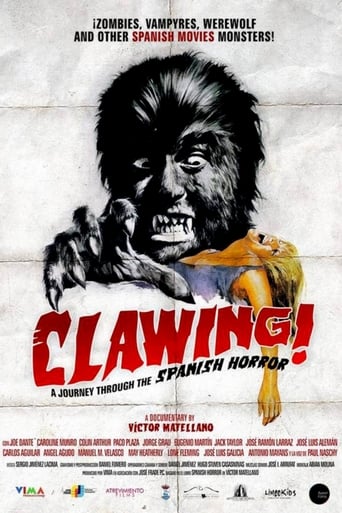
In the late sixties, Spanish cinema began to produce a huge amount of horror genre films: international markets were opened, the production was continuous, a small star-system was created, as well as a solid group of specialized directors. Although foreign trends were imitated, Spanish horror offered a particular approach to sex, blood and violence. It was an extremely unusual artistic movement in Franco's Spain.
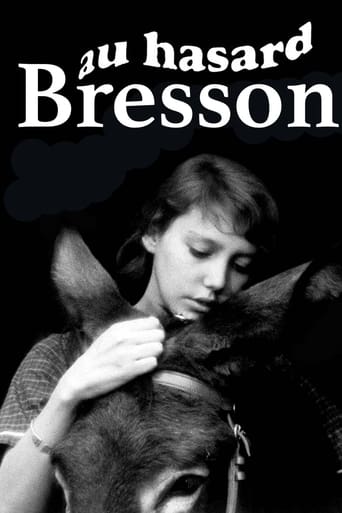
In 1966, German film critic Theodor Kotulla — who would go on to become one of the New German Cinema's most uncompromising filmmakers — visited the set of Robert Bresson's "Mouchette" (1967) and created this half-hour documentary about the director. It won the 1967 German Film Award for best short documentary.