

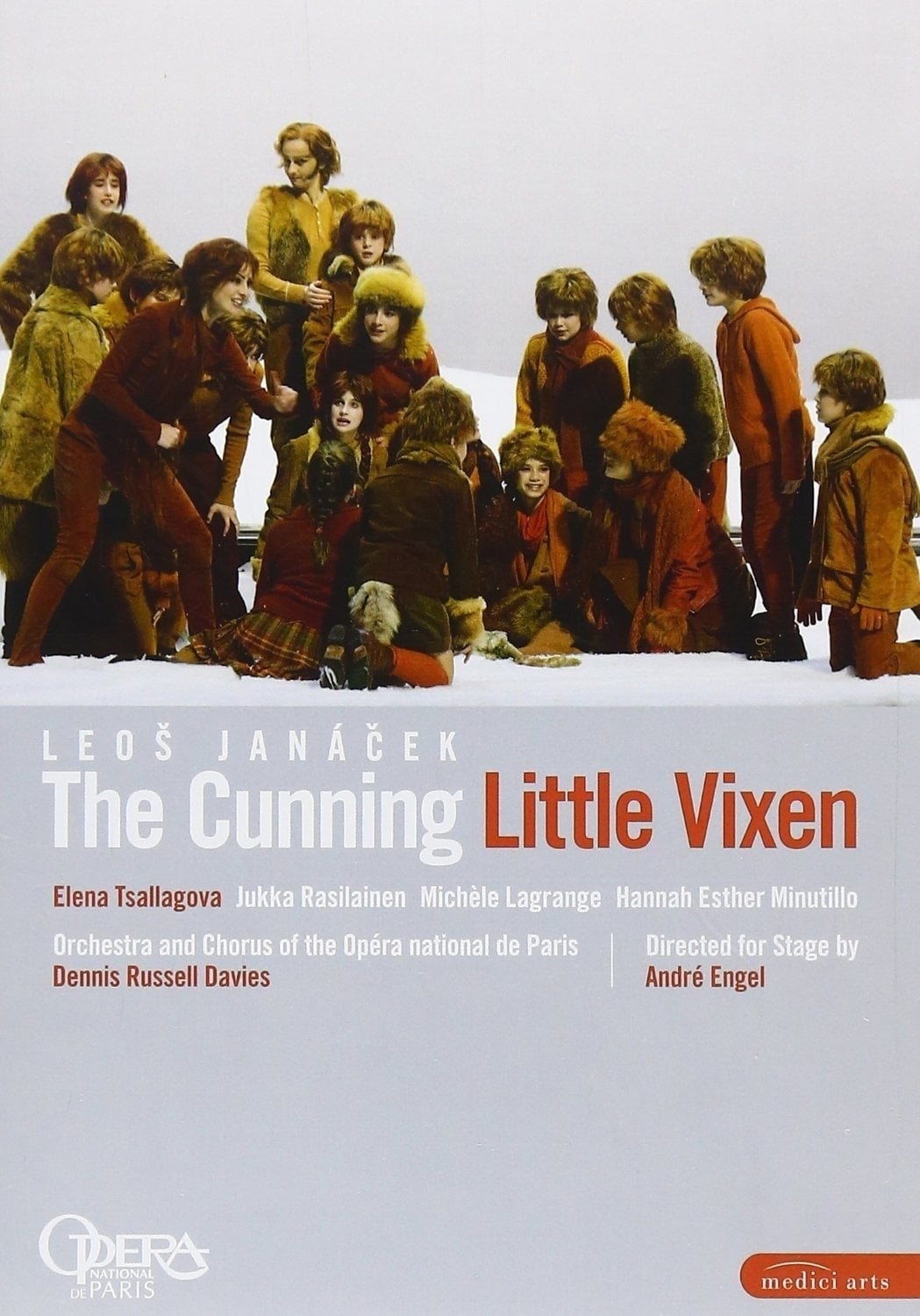
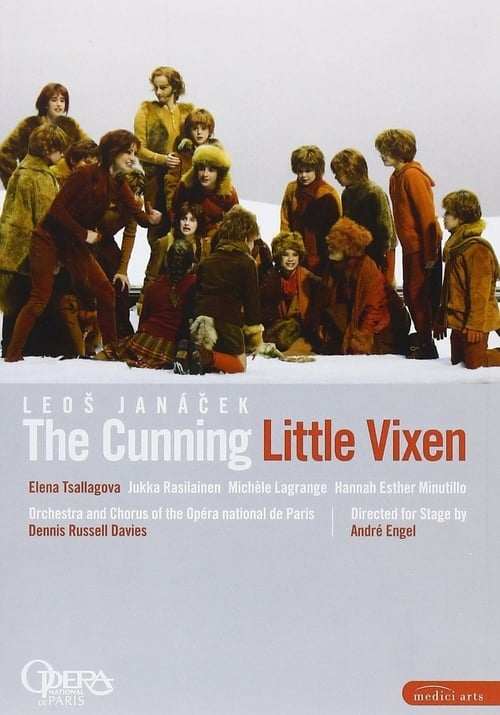
The Cunning Little Vixen
Fantasy · Music
Overview
In the forest, the animals and insects are playing and dancing. The Forester enters and lies down against a tree for a nap. A curious Vixen Cub inquisitively chases a frog right into the lap of the surprised forester who forcibly takes the vixen home as a pet. Time passes and we see the Vixen, now grown up into a young adult tied up in the forester's yard with the conservative old dachshund. Fed up with life in confinement, the vixen chews through her rope and runs off to freedom.


Elena Tsallagova
Elena Tsallagova
The Vixen
Elena Tsallagova
The Vixen
Jukka Rasilainen
Jukka Rasilainen
The Forester
Jukka Rasilainen
The Forester
Michèle Lagrange
Michèle Lagrange
His Wife / The Owl
Michèle Lagrange
His Wife / The Owl
Hannah Esther Minutillo
Hannah Esther Minutillo
The Fox
Hannah Esther Minutillo
The Fox
David Kuebler
David Kuebler
The Schoolmaster
David Kuebler
The Schoolmaster
Roland Bracht
Roland Bracht
The Parson
Roland Bracht
The Parson
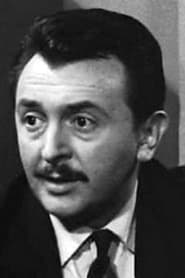
Paul Gay
Paul Gay
Harasta
Paul Gay
Harasta
Similar Movies
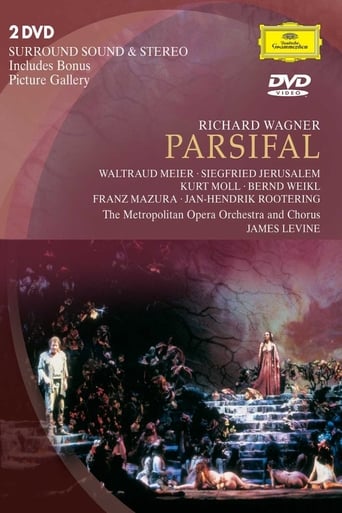
The Met production easily has the most beautiful staging, designed by Otto Schenck, who also produced the fabulous set for the Met's previous Ring cycle. Kurt Moll is a wonderful Gurnemanz, but compared to his studio recording under Karajan a decade earlier it has lost some of its original velvety body and luster. As Parsifal, Jerusalem is starting to show some wear and tear on his voice at the Met in 1992 as opposed to his prime form at Bayreuth in 1981, but is still quite good; only Placido Domingo could compete with him in the role at that time.
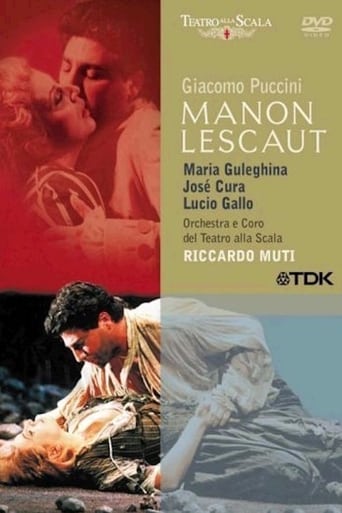
TDK presents a recording of Puccini’s heart-breaking opera from one of the best opera houses of the world featuring star tenor José Cura and remarkable soprano Maria Guleghina as the two inseparable lovers. Riccardo Muti, music director of La Scala at the time of this performance, gives full weight to the alternation of social realism and private amatory psychology, of crowds and intimacy, body and spirit. And the director of this Milan production, the famous Italian film director Liliana Cavani, provides it with a realistic setting. Every scene looks like a genre painting, from which Puccini’s psychograms emerge musically. This forms the background for the two outstanding singer actors, who take the lead roles.

The career of Maria Callas was just a bit too early and too brief to receive full and satisfying video documentation like that now being accorded to such singers as Renée Fleming and Luciano Pavarotti. This black-and-white televised recital (Callas's Paris debut) took place at the Paris Opera on December 19, 1958 when television was still in its infancy. We might wish that it had happened earlier, when her voice was in better condition, or later, when video recording technology was more advanced--so that, for example, we would not have to take the narrator's word that Callas is wearing a red dress. But this is probably the best available Callas video recording, and her fans will welcome it warmly. Visual elements were as important as the vocal dimensions in her art.
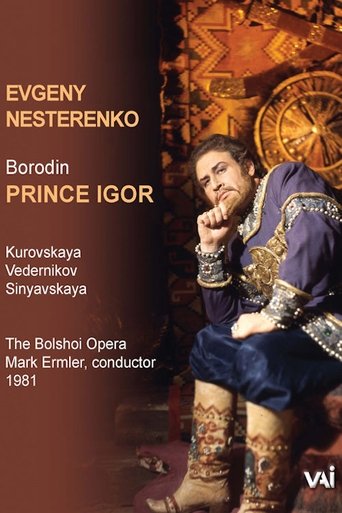
This 1981 Bolshoi production performed in the concert hall of The Kremlin is by far the best available, despite the more ‘historical’ picture and mono sound. The production itself is a very classic period production, with utterly authentic costumes and aptly dramatic sets. There are even horses on stage. The depiction of the Don Cossacks’ Khan Konchak and his tribe is colourful and historically informed in one. Needless to say, the scene of the Polovtsian Dances is spectacularly presented with great choregraphy and terrific dancing, in the league of the Spartacus of Bolshoi, no less.