

Calling on Michigan
Documentary
Overview
This Traveltalk series short begins with a look at Michigan's major educational institutions, which started as agricultural schools. We then visit the fish hatcheries at Grayling, which are used to keep the state's numerous lakes and rivers well stocked. After a short look at Detroit, the car capital of the world, we spend several minutes at Greenfield Village, founded in 1929 by automobile magnate Henry Ford. Included in the tour are churches, a clock tower, and the homes of several famous persons in American history. Although some of the structures are reproductions, many of them are the actual buildings they lived in.







James A. FitzPatrick
James A. FitzPatrick
Narrator (voice)
James A. FitzPatrick
Narrator (voice)
Similar Movies
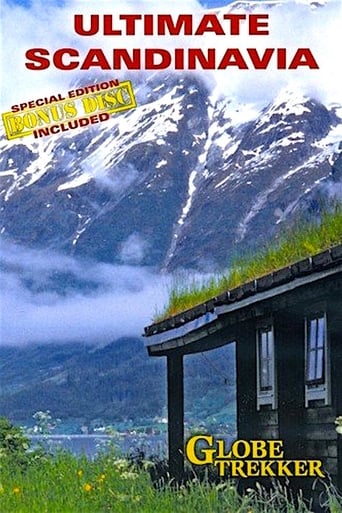
In this ultimate guide to Scandinavia travelers Megan McCormick, Ian Wright and Neil Gibson explore Denmark, Sweden, Norway, Lapland, Finland and the Baltic States. From enjoying a traditional Viking festival to crossing the Arctic Circle into Lapland for dinner with reindeer herders to a visit to the capital of Lithuania, Vilinus, and the Midsummer Night Festival in Kernave, these hosts will introduce the viewer to a variety of sites and attractions during their Scandinavian tour.

Beirut, Lebanon's capital has a long history of political and social unrest that still makes headlines today. Globe Trekker's Beirut City Guide captures the city in more optimistic days, two weeks before the latest outbreak of hostilities in Lebanon between Israeli and Hezbollah forces in July 2006. Globe Trekker Megan McCormick explores the neighborhoods of Basta, Solidere, Gemayze and the Hezbollah District and finds a city in the midst of regeneration. She gets a glimpse at Beirut's future when meeting up with a group of young Arabic hip hop artists, who are eager to live in peace and put the country's political troubles in the past.

When Tomoko finds some messages for a 'Mr Smith' on a lost mobile phone, she finds herself on an 'Alice in Wonderland' journey through Tokyo's boulevards and back alleys. From the tyranny of symmetry in soaring office blocks - to buildings that look like space-ships, this creative documentary shows us the city's soul.

Since Little League Baseball was founded in 1939, about 40 million kids have played the sport. The list includes future Hall of Famers like Carl Yastrzemski, Tom Seaver and Nolan Ryan, and hundreds of other future Major Leaguers. But of all the kids who ever played Little League, the best of the best was a boy you’ve probably never heard of: Art “Pinky” Deras. In the summer of 1959, he led the team from Hamtramck, Mich., to the Little League World Series title, and in the process, he put together a Little League season the likes of which we might never see again. His amazing story comes to life in “The Legend of Pinky Deras: The Greatest Little-Leaguer There Ever Was,” a new film from Blue Hammer Films. Pinky received a ton of national publicity back in 1959, but then he fell off the map. In the half-century since he lit the Little League world on fire, there have been no films about him, no magazine stories, not even a single newspaper article.
This Traveltalk series short visits several popular vacation spots in Michigan. Among them are Saugatuck, which hosts a school for artists during the summer; Zeeland, where descendants of Dutch settlers perform traditional Dutch dances wearing wooden shoes; the Silver Lake sand dunes, where specially outfitted cars race; and Colon, "The Magic Capitol of the World", which hosts an annual gathering of magicians.

This Traveltalk series short visit to New Zealand starts in Auckland, a bustling, modern city. Next is Christchurch, home of Canterbury University, where rowing teams participate in a regatta. Nearby is Lake Wakatipu, which inspires artists to put their impressions on canvas. We then visit Rotorua, a city famous for its geysers, hot springs, bubbling mud pools, and other geothermal activity. At Ferry Springs there is lots of trout for fishing. Later, a group of natives performs a canoe dance.
The Andes Mountains travel the western side of South America. Unlike many other mountain ranges of their altitude, the Andes do support human life on their high altitude slopes. Modern life is slowly making its way to the high altitude Andes, but the natives for the most part continue with the traditional ways of their ancestors, growing limited crops such as beans and potatoes - where the crop originated - raising sheep and pigs, and living in crude huts. The llama is the most useful of their work animals. The most conspicuous aspect of the native dress is their derby hats, the origins which are unknown. Further down the slopes, agriculture and ranching is more productive and is carried out by descendants of the Spanish settlers. There is a famous lake district in the Chilean part of the Andes, where resort hotels are located.