

The Go Master
Drama
Overview
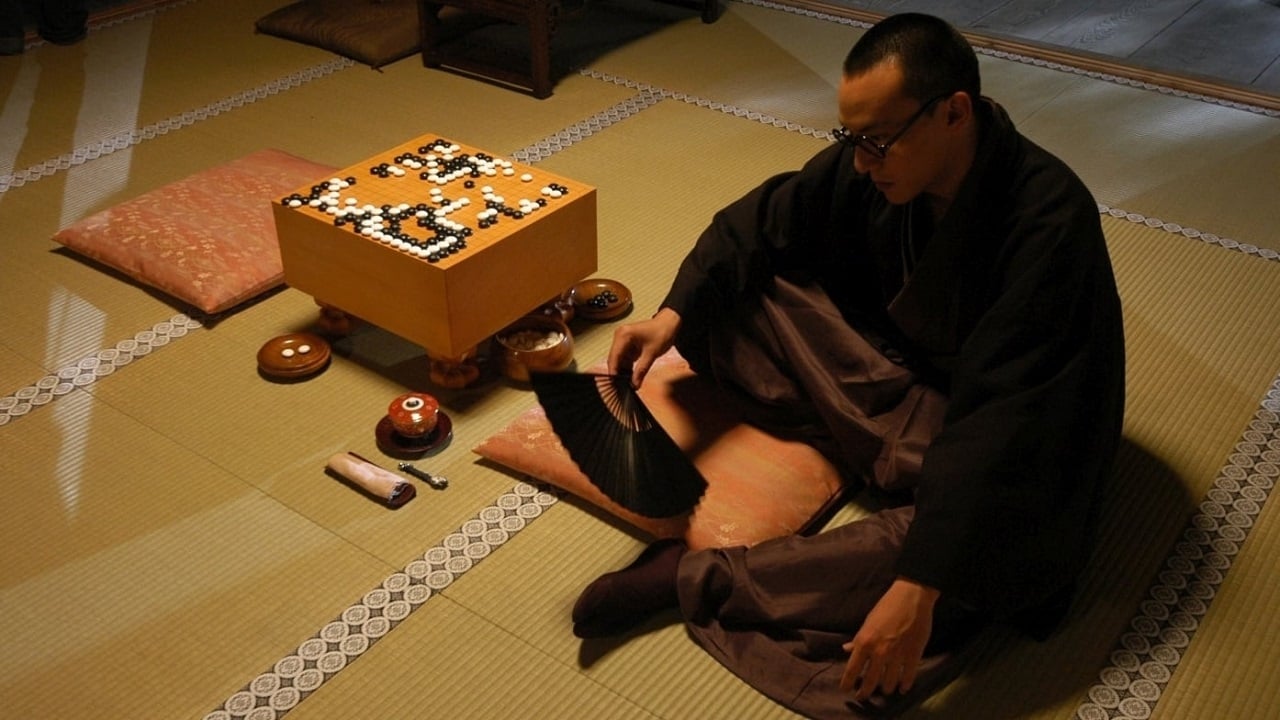
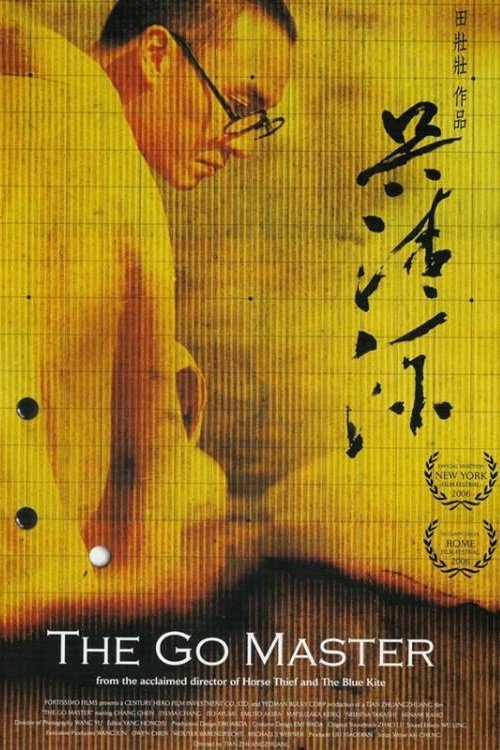
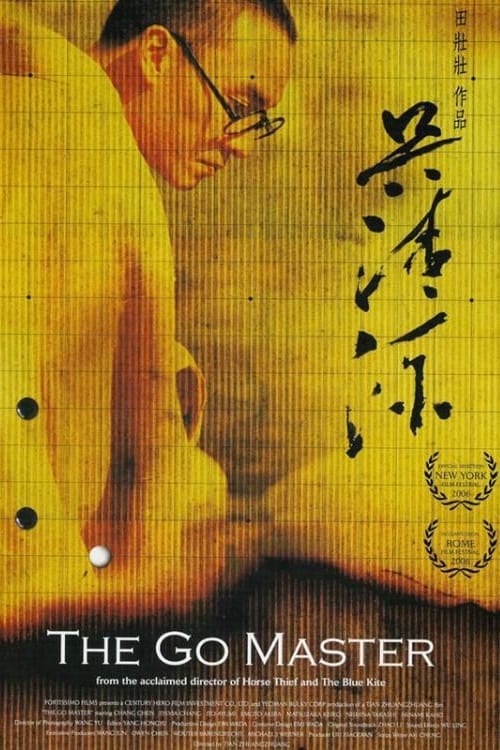
The life of Go master Wu Qingyuan from his meteoric rise as a child prodigy to fame and fortune as a revolutionary strategic thinker, as well as the tumultuous conflicts between his homeland of China and his adopted nation of Japan.
Top Cast








Chang Chen
Chang Chen
Wu Qingyuan
Chang Chen
Wu Qingyuan
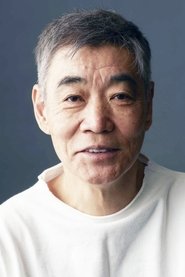
Akira Emoto
Akira Emoto
Kensaku Segoe
Akira Emoto
Kensaku Segoe

Sylvia Chang
Sylvia Chang
Shu Wen
Sylvia Chang
Shu Wen

Ayumi Ito
Ayumi Ito
Kazuko Nakahara
Ayumi Ito
Kazuko Nakahara

Takashi Nishina
Takashi Nishina
Minoru Kitani
Takashi Nishina
Minoru Kitani

Nao Omori
Nao Omori
Utaro Hashimoto
Nao Omori
Utaro Hashimoto
Takayuki Inoue
Takayuki Inoue
Shusai Honinbo
Takayuki Inoue
Shusai Honinbo

Hironobu Nomura
Hironobu Nomura
Yasunari Kawabata
Hironobu Nomura
Yasunari Kawabata

Kaho Minami
Kaho Minami
Jikou Son
Kaho Minami
Jikou Son

Keiko Matsuzaka
Keiko Matsuzaka
Fumiko Kita
Keiko Matsuzaka
Fumiko Kita
Similar Movies
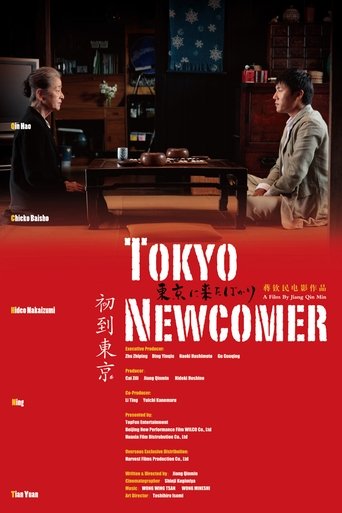
A young Chinese Go board game player arrives in Japan for training. He doesn't speak Japanese and becomes embarrassed living there. By dropping his Go stones, he happens to meet an old Japanese woman who sells vegetables on the street. They become familiar with each other. The young Chinese Go player, the old woman named Igarashi and her grandson Shoichi then live together.
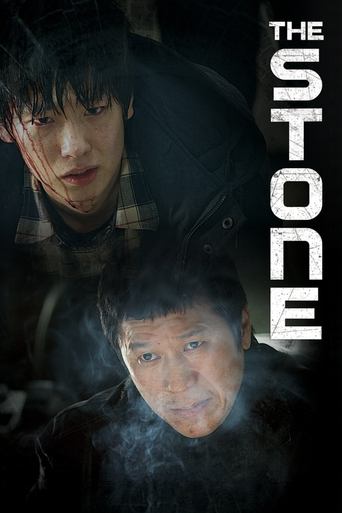
A gang boss Nam-hae meets a young Go player Min-su, who rekindles his interest in the game. Despite his outstanding talent, Min-su has been wasting his days as a gambler without pursuing a real career out of it. Nam-hae orders his second in command to persuade Min-su and Min-su becomes Nam-hae’s private Go tutor. In learning Go from Min-su, Nam-hae looks back on his own life. While Min-su discovers the coarse masculine underworld, the meaning of life and true victory through Nam-hae. However, when Nam-hae’s competition starts to expand their territory, Nam-hae is forced into a path to destruction.

Ten years before the outbreak of the Second World War in Asia, a Japanese Go master and his Chinese rival meet in China to play a game of Go (loosely described as an Asian version of chess). It soon becomes evident that the Chinese master's son is the most talented player that the Japanese master has ever encountered, and he convinces the boy's father to let him bring the child back to Japan to train him as a professional Go player. Years pass, and as the young Chinese master grows to maturity in Japan, the Japanese invasion of China forces him to choose between his triumphant career and his loyalty to his native country. His decision is complicated by his marriage to the daughter of the Japanese master, with whom he has produced a child. His choice will profoundly alter the lives of two families. Their saga serves as a reflection of the tragic relations between their two great countries, and the possibility of reconciliation and healing.

The story is told from the point of view of a high school girl called Jessie (Jessica Wong) whose talent for the Chinese board game Go has earned her the nickname ‘Queen Chess’. She balances her time between practising Go and hanging out with her boyfriend (Yau Hawk-sau Neo). The former seems to win for this studious girl, but it is clear she’s also seeking something to pull her out of this lonely life of late-night computer games.
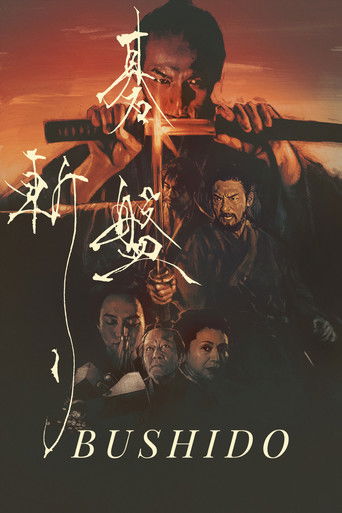
Kakunoshin, renowned for his skills with a sword and in the game of go, embodies the samurai code. Falsely accused of a theft, he is forced to become a lowly ronin. Years later, when a case of missing gold pulls him into a new web of intrigue, Kakunoshin uncovers the truth behind his downfall. With the real culprit exposed, the go board flips, and a hellstorm of righteous vengeance follows.
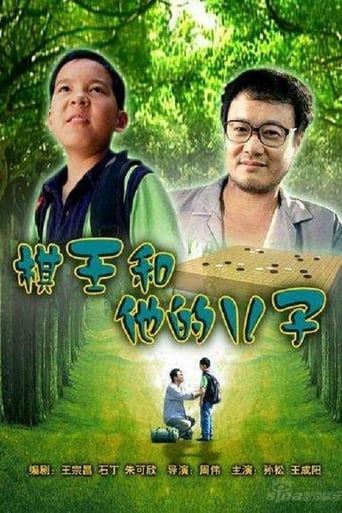
When LIU Yishou, nicknamed the "Go King" by his peers because of his skill in Weiqi (Go), finds himself without a job. And with no other skills to make a living, he then turns to teaching this strategic Chinese board game in a humble training school for children. Annoyed by her husband's passion for the game, LIU Yishou's wife leaves him, but their son, Xiao Chuan, wants to stay with his dad. Unexpectedly, LIU Yishou discovers that his son has a great talent for playing Weiqi and vows to support him in developing his gift for the game. A struggle then arises for the Go King to come up with the money to finance his son's studies of Weiqi.
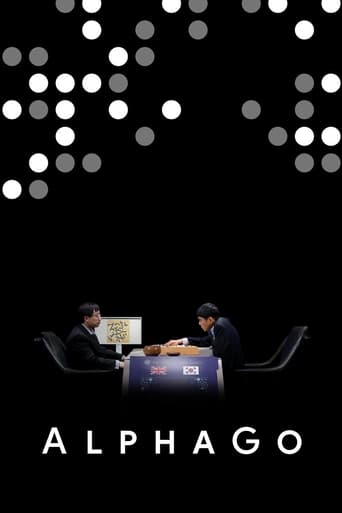
The ancient Chinese game of Go has long been considered a grand challenge for artificial intelligence. Yet in 2016, Google's DeepMind team announced that they would be taking on Lee Sedol, the world's most elite Go champion. AlphaGo chronicles the team as it prepares to test the limits of its rapidly-evolving AI technology. The film pits man against machine, and reveals as much about the workings of the human mind as it does the future of AI.
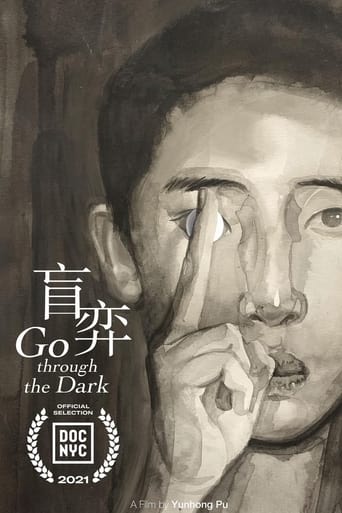
Guanglin is a blind boy in China who displays great skill at the ancient board game called Go, in which two players place black and white pieces on a grid in an attempt to dominate their opponent. Raised by a single father with limited means, Guanglin faces deep societal prejudice against the blind. First-time filmmaker Yunhong Pu, supported by veteran producer Jean Tsien (76 Days), follows the father and son trying to make a better future for themselves.
Weiqi, often referred to as "Go" in English, is arguably the most important game in East Asia, with an estimated thirty million to fifty million players throughout the world. Weiqi is a board game but it is more. It is immersed in more vivid and often contradictory cultural metaphors than any other game in the world. As Chinese politics have changed over the last two millennia, so too has the imagery of the game—from a tool to seek religious enlightenment to military metaphors, one of the noble four arts, one of the condemned “four olds”, nationalism, transnationalism, historical elitism, and futuristic hyper rationality.