

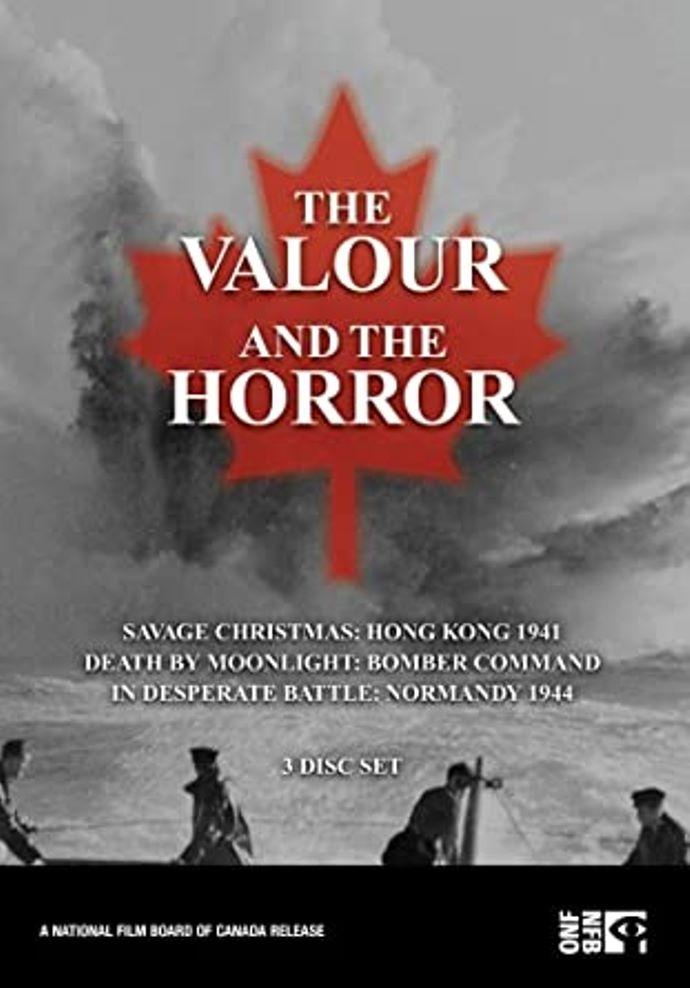
A Savage Christmas: The Fall of Hong Kong
Documentary · War
Overview
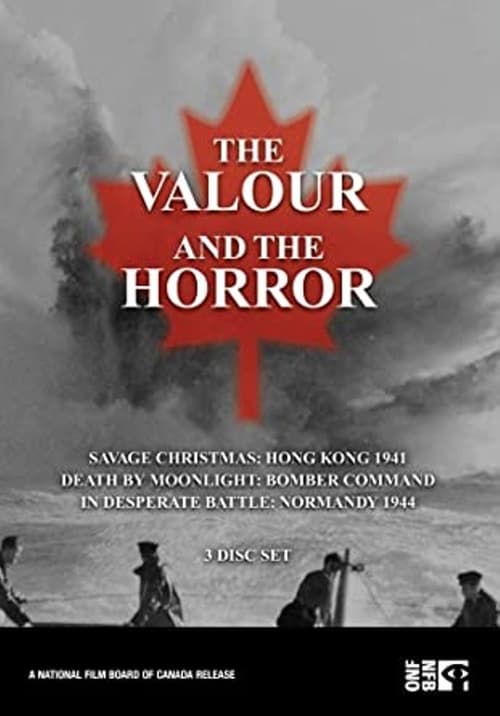
The documentary, using the dramatization of fact, makes the case that the Canadian government knowingly sent two unprepared infantry battalions to help defend Hong Kong in late 1941, fully aware that they may have been on a doomed mission. The C Force, consisting of about 2000 soldiers from the Winnipeg Grenadiers and the Royal Rifles of Canada (from Quebec City) were, with the other British, Indian and Hong Kong troops, attacked on December 8, 1941 and overwhelmed by Japanese troops, leading to numerous casualties and the surrender on Christmas day. The Canadians would spend more than 3 and half years as prisoners of war, in horrible conditions. Part of "The Valour and the Horror" mini series.
Top Cast
Terence McKenna
Narrator

Andrew Tarbet
John Payne

David Hewlett
Walter Jenkins

Greg Spottiswood
John Stroud

Brooke Johnson
Kay Christie

Martin Julien
Les Canivet

Andrew Miller
Ike Friesen

Jeremy Ratchford
Fred Reich
Robert Clayton
Self (Royal Rifles of Canada) (as Bob Clayton)
Robert Manchester
Self (Winnipeg Grenadiers) (as Bob Manchester)


Terence McKenna
Terence McKenna
Narrator
Terence McKenna
Narrator
Andrew Tarbet
Andrew Tarbet
John Payne
Andrew Tarbet
John Payne
David Hewlett
David Hewlett
Walter Jenkins
David Hewlett
Walter Jenkins
Greg Spottiswood
Greg Spottiswood
John Stroud
Greg Spottiswood
John Stroud
Brooke Johnson
Brooke Johnson
Kay Christie
Brooke Johnson
Kay Christie
Martin Julien
Martin Julien
Les Canivet
Martin Julien
Les Canivet
Andrew Miller
Andrew Miller
Ike Friesen
Andrew Miller
Ike Friesen
Jeremy Ratchford
Jeremy Ratchford
Fred Reich
Jeremy Ratchford
Fred Reich
Robert Clayton
Robert Clayton
Self (Royal Rifles of Canada) (as Bob Clayton)
Robert Clayton
Self (Royal Rifles of Canada) (as Bob Clayton)
Robert Manchester
Robert Manchester
Self (Winnipeg Grenadiers) (as Bob Manchester)
Robert Manchester
Self (Winnipeg Grenadiers) (as Bob Manchester)
Similar Movies

In 1992, the Yugoslav army and Serbian paramilitary forces captured one-third of Croatia as the country was engulfed in a state of war. A squad of fighters is defending their position in the small but strategically significant village of Sunja, where the invaders have surrounded them on three sides. Ivan Salaj, a young and gifted director who was still enrolled in film school at the time, chooses to use their story as the subject of his student film. Considered one of the most important films from a period when Croatian independence was still at stake, it provides an accurate portrayal of life on the front lines. What makes Hotel Sunja even more special is that it was made by a group of students who risked their lives to make the movie.
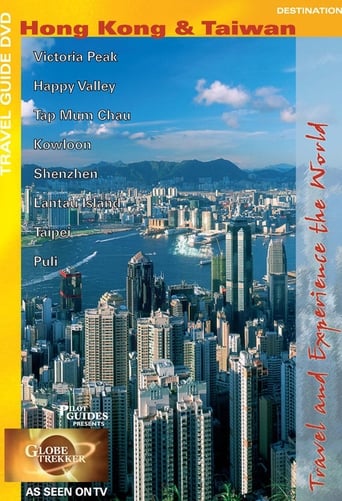
Hong Kong and Taiwan are 2 islands inextricably linked by their huge neighbour. Modern metropolises full of eastern traditions, they're forging forward in the 21st century as China's little dragons. Traveller Megan McCormick begins her journey in Hong Kong, looking out at the incredible skyline from Victoria Peak. She then takes in the contrasts of the city before taking the ferry visit Tap Mum Chau and Lantau Island. After a flight to Taiwan she explores the capital Taipei, ending her trip with a visit to its most remote outpost - Orchid Island.
This expository film shows the mood of European society on the eve of the Second World War while promoting the values of international cooperation. Using the Swiss office of the BBC as an example, the film describes the functioning of radio and presents the possibilities opened by mass communications. After the advent of sound film, Cavalcanti promoted experimentation with sound, and in this connection he was interested in the communicational, organizational, and social aspects of radio.
West Estate spotlights the severe housing problems in Hong Kong, taking the spirit of resistance outside of the protest. The damaged walls in the cage-like tenements reflect the many forms of social injustice as well as Hongkongers’ widespread sense of rootlessness. Connecting three stories from different households like puzzle pieces, the film depicts people’s despair over issues of family, sexuality, love, and freedom.
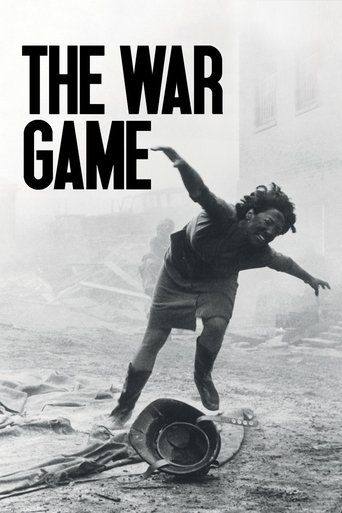
A docudrama depicting a hypothetical nuclear attack on Britain. After backing the film's development, the BBC refused to air it, publicly stating "the effect of the film has been judged by the BBC to be too horrifying for the medium of broadcasting." It debuted in theaters in 1966 and went on to great acclaim, but remained unseen on British television until 1985.