

The Sabinal Canyon
Documentary
Overview
This 2015 documentary about the history behind the Sabinal Canyon in Texas. The story starts in the Hill Country where Cap. William Ware was given land for his years of service and after moving there started Waresville. After his death the town was moved about half a mile north and was called Montana but after a man was healed by swimming in the Sabinal river for a year the town was renamed Utopia. The movie also talks about town of Vanderpool as well as the Lost Maples state park.
Top Cast







Alice LeMond
Alice LeMond
Interviewee
Alice LeMond
Interviewee
Anne Woodley
Anne Woodley
Interviewee
Anne Woodley
Interviewee
Bill Schaefer
Bill Schaefer
Interviewee
Bill Schaefer
Interviewee
Chad Hillis
Chad Hillis
Interviewee
Chad Hillis
Interviewee
Charles Chaney
Charles Chaney
Interviewee
Charles Chaney
Interviewee
David Hillis
David Hillis
Interviewee
David Hillis
Interviewee
Ernen Haby
Ernen Haby
Interviewee
Ernen Haby
Interviewee
Jack McClain
Jack McClain
Interviewee
Jack McClain
Interviewee
Harvey Donoho
Harvey Donoho
Interviewee
Harvey Donoho
Interviewee
Jim Willis
Jim Willis
Interviewee
Jim Willis
Interviewee
Similar Movies
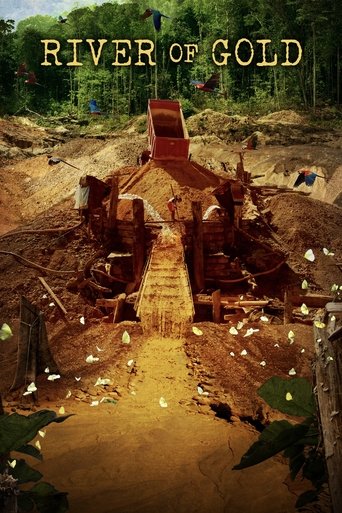
Narrated by Academy Award winners Sissy Spacek and Herbie Hancock, River of Gold is the disturbing account of a clandestine journey into Peru's Amazon rainforest to uncover the savage unraveling of pristine jungle. What will be the fate of this critical region of priceless biodiversity as these extraordinarily beautiful forests are turned into a hellish wasteland?
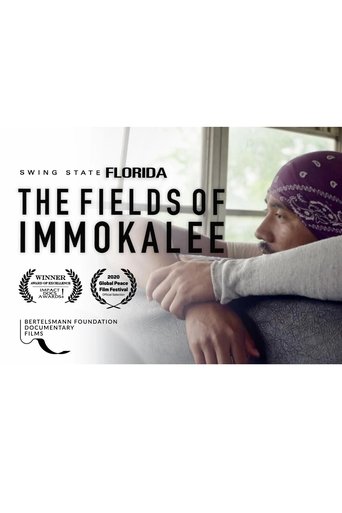
For decades, migrant workers have worked the fields of Immokalee, harvesting tomatoes, peppers, eggplants, oranges and other produce that is then shipped across the United States of America. Many of the workers are undocumented, and attempting to keep their jobs even as federal migration crackdowns hover over the town. The Fields of Immokalee film follows the daily lives of tomato workers, from the 5:00am trips to the parking lot in hopes of finding day labor, to work sessions in the scorching mid-day heat, to child detention centers for migrant youth that have been separated from their families. Via these vignettes, the film offers insight into the most volatile political issue of our time.
The river Yamuna, known to the locals as 'Jamna', the lifeline of Delhi, is going through a major crisis due to pollution, mismanagement and sheer ignorance. A documentary crew tries to make sense of the situation by talking to different stakeholders and Shyam - a boatman who relies on the river for his livelihood.
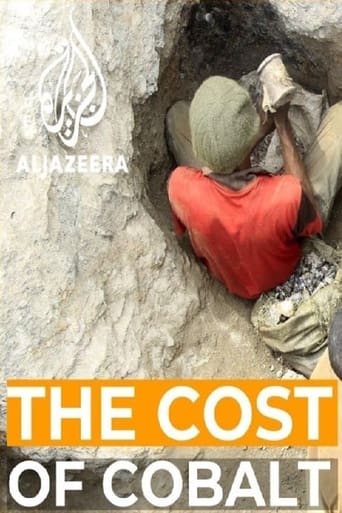
In the cobalt mining areas of Katanga in the Democratic Republic of the Congo (DRC), babies are being born with horrific birth defects. Scientists and doctors are finding increasing evidence of environmental pollution from industrial mining which, they believe, may be the cause of a range of malformations from cleft palate to some so serious the baby is stillborn. More than 60% of the world’s reserves of cobalt are in the DRC and this mineral is essential for the production of electric car batteries, which may be the key to reducing carbon emissions and to slowing climate change. In The Cost of Cobalt we meet the doctors treating the children affected and the scientists who are measuring the pollution. Cobalt may be part of the global solution to climate change, but is it right that Congo’s next generation pay the price with their health? Many are hoping that the more the world understands their plight, the more pressure will be put on the industry here to clean up its act.

In the 19th century, China held the monopoly on tea, which was dear and fashionable in the West, and the British Empire exchanged poppies, produced in its Indian colonies and transformed into opium, for Chinese tea. Inundated by the drugs, China was forced to open up its market, and the British consolidated their commercial dominance. In 1839, the Middle Empire introduced prohibition. The Opium War was declared… Great Britain emerged as the winner, but the warning was heeded: it could no longer depend on Chinese tea. The only alternative possible was to produce its own tea. The East India Company therefore entrusted one man with finding the secrets of the precious beverage. His mission was to develop the first plantations in Britain’s Indian colonies. This latter-day James Bond was called Robert Fortune – a botanist. After overcoming innumerable ordeals in the heart of imperial China, he brought back the plants and techniques that gave rise to Darjeeling tea.