

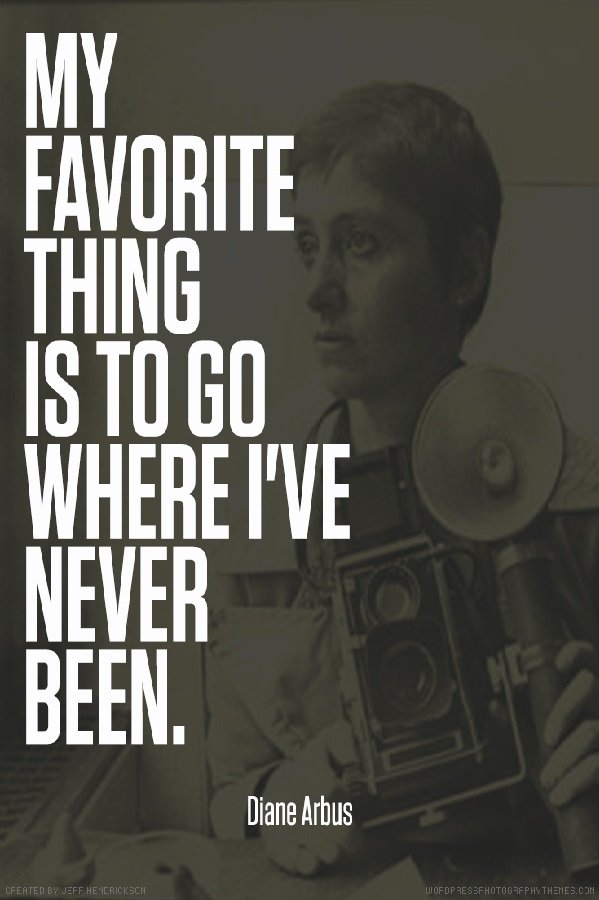
Going Where I've Never Been: The Photography of Diane Arbus
TV Movie · Documentary
Overview
The work of photographer Diane Arbus as explained by her daughter, friends, critics, and in her own words as recorded in her journals. Illustrated with many of her photographs. Mary Clare Costello, narrator Themes: Arbus' quirky go-it-alone approach. Her attraction to the bizarre, people on the fringes of society: sexual deviants, odd types, the extremes, styles in questionable taste, poses and situations that inspire irony or wonder. Where most people would look away she photographed.

Doon Arbus
Doon Arbus
Herself
Doon Arbus
Herself
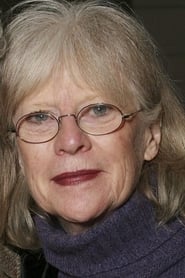
Mariclare Costello
Mariclare Costello
Herself - Narrator
Mariclare Costello
Herself - Narrator
Mary Clare Costello
Mary Clare Costello
Narrator
Mary Clare Costello
Narrator
Marvin Israel
Marvin Israel
Himself
Marvin Israel
Himself
Lisette Model
Lisette Model
Herself
Lisette Model
Herself
John Szarkowski
John Szarkowski
Himself
John Szarkowski
Himself
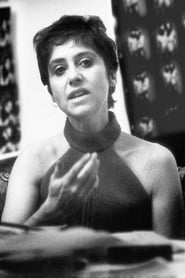
Diane Arbus
Diane Arbus
Diane Arbus
Similar Movies
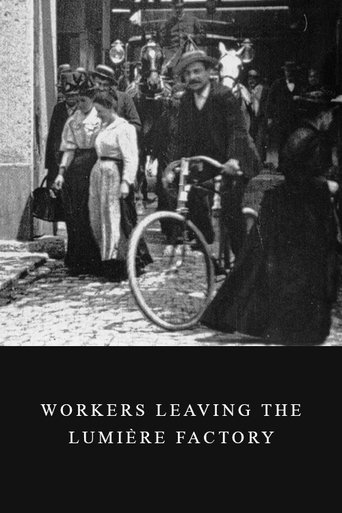
Working men and women leave through the main gate of the Lumière factory in Lyon, France. Filmed on 22 March 1895, it is often referred to as the first real motion picture ever made, although Louis Le Prince's 1888 Roundhay Garden Scene pre-dated it by seven years. Three separate versions of this film exist, which differ from one another in numerous ways. The first version features a carriage drawn by one horse, while in the second version the carriage is drawn by two horses, and there is no carriage at all in the third version. The clothing style is also different between the three versions, demonstrating the different seasons in which each was filmed. This film was made in the 35 mm format with an aspect ratio of 1.33:1, and at a speed of 16 frames per second. At that rate, the 17 meters of film length provided a duration of 46 seconds, holding a total of 800 frames.
A multimedia short created for the U.S. millennium celebrations, The Unfinished Journey reflects on America’s history and spirit through six chapters—immigration, war, culture, civil rights, and innovation. Commissioned by President Bill Clinton and premiered at the Lincoln Memorial on New Year’s Eve 1999, the film features an original orchestral score by John Williams titled American Journey.
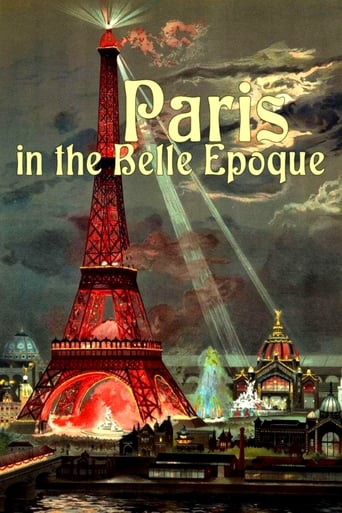
The Bokelberg photographic collection brings to life the Paris of the Belle Époque (1871-1914), an exhibition of workshops and stores with extremely beautiful shop windows before which the owners and their employees proudly pose, hiding behind their eyes the secret history of a great era.
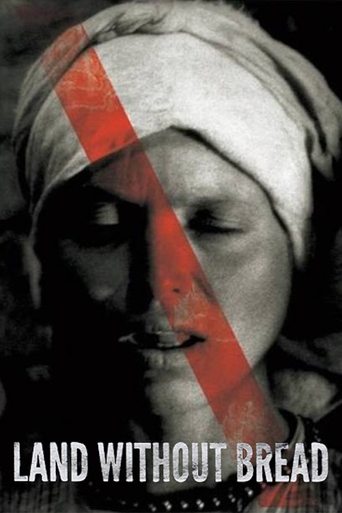
An exploration —manipulated and staged— of life in Las Hurdes, in the province of Cáceres, in Extremadura, Spain, as it was in 1932. Insalubrity, misery and lack of opportunities provoke the emigration of young people and the solitude of those who remain in the desolation of one of the poorest and least developed Spanish regions at that time.
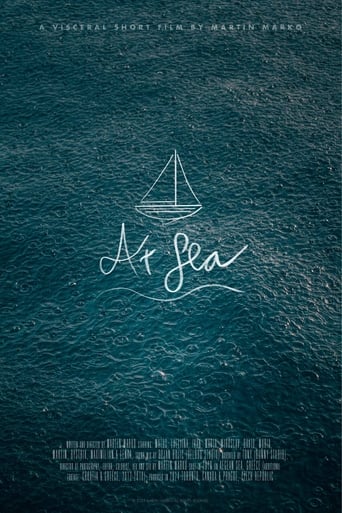
AT SEA is a visceral and poetic short film that blends docu-style realism with narrative fiction, following a group of faceless sailors navigating the unpredictable seas of Greece. Through the fragmented memories of an unreliable narrator, the film weaves together a non-linear story that shifts in mood with each chapter, offering a fresh perspective on the sea. Based on true events… almost.
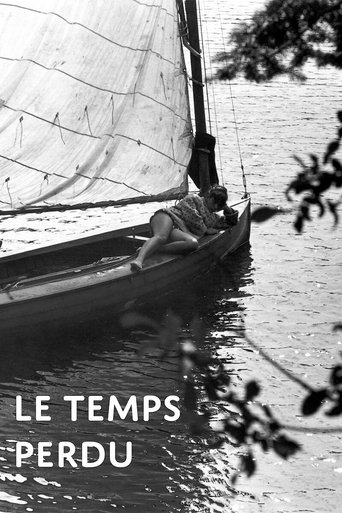
A 16 year old girl recalls the last moments of her summer vacation, spent with friends in the Laurentians north of Montreal. She reminisces about their talks on life, death, love, and God. Shot in direct cinema style, working from a script that left room for the teenagers to improvise and express their own thoughts, the film sought to capture the immediacy of the youths presence their bodies, their language, their environment.