

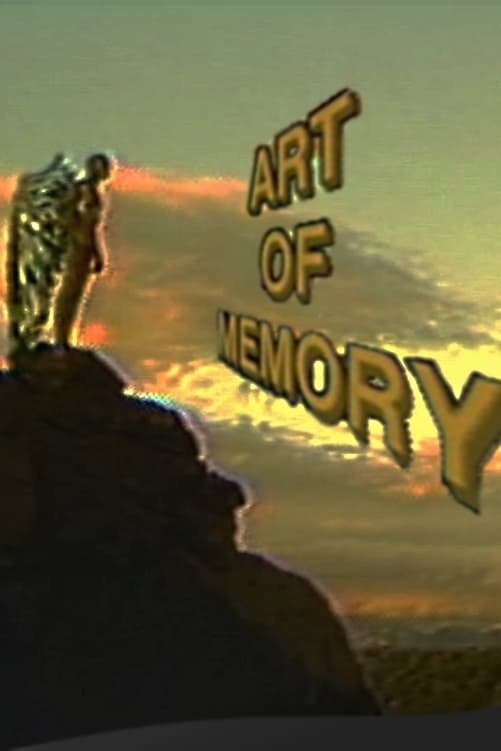
Art of Memory
War
Overview
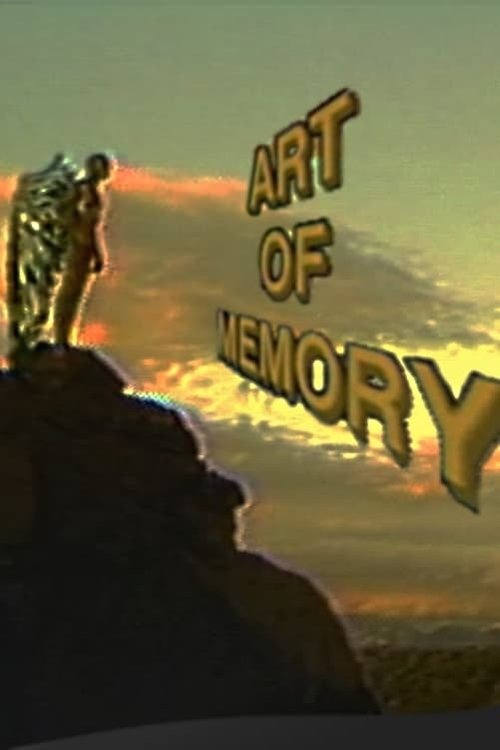
Manipulating a variety of sources, Vasulka uses creative imaging tools to situate historical images against Southwestern landscapes of incredible beauty. Contorting the images into a variety of isomorphic forms, Vasulka creates a literal shape for these memories, developing these shapes as metaphors for the processes of fragmentation, condensation, and inversion, that inevitably contort fact into memory. While much of the raw material for the tape is drawn from World War II and its rehearsals, the Spanish Civil War and the Russian Revolution, The Art of Memory is really an extended meditation seeking to reconcile the blurry, banal photographs of historic figures with the mass destruction they helped engineer.
Top Cast

Daniel Nagrin
Daniel Nagrin
Daniel Nagrin
Doris Cross
Doris Cross
Voices (voice)
Doris Cross
Voices (voice)
Similar Movies
After concluding the now-legendary public access TV series, The Pain Factory, Michael Nine embarked on a new and more subversive public access endeavor: a collaboration with Scott Arford called Fuck TV. Whereas The Pain Factory predominantly revolved around experimental music performances, Fuck TV was a comprehensive and experiential audio-visual presentation. Aired to a passive and unsuspecting audience on San Francisco’s public access channel from 1997 to 1998, each episode of Fuck TV was dedicated to a specific topic, combining video collage and cut-up techniques set to a harsh electronic soundtrack. The resultant overload of processed imagery and visceral sound was unlike anything presented on television before or since. EPISODES: Yule Bible, Cults, Riots, Animals, Executions, Static, Media, Haterella (edited version), Self Annihilation Live, Electricity.
Commissioned for the Irish representation at the 55th Venice Biennale in 2013, The Enclave is an immersive, six-screen video art installation by Irish contemporary artist Richard Mosse. Partly inspired by Joseph Conrad’s modernist literary masterpiece Heart of Darkness, the visceral and moving work was filmed in the Democratic Republic of Congo using 16mm colour infra-red film, which captures otherwise invisible parts of the spectrum. The resulting imagery in Mosse’s work is hallucinatory and dream-like with the usual greens of jungle and forest replaced by shimmering violet. The Enclave depicts a complicated, strife-ridden place in a way that reflects its complexity, using a strategy of beauty and transfixion to combat the wider invisibility of a conflict that has claimed so many.
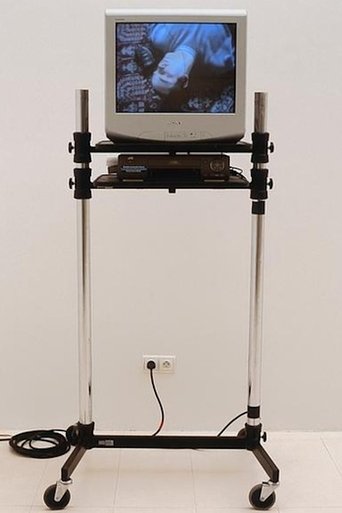
In the present work, the artists appears lying on his back, his eyes mostly closed, dreamingly listening to a walkman that plays, a recording of 'The Best of Lou Reed and the Velvet Underground'. The artist can hear the music through his earphones, but as viewers we are only privy to the sound of his voice that whispers the melody. As we listen to the hypnotic interpretion of the familiar songs - as emblematic for pop music history as 'Psycho' is for film - we are forced to mentally 'reconstruct' the remaining orchestration, instrumentation and vocals. We must attempt to reassemble something we already know to be a fact by negotiating the sticky mess of interpretation, meaning, and memory.
Although Gainsbourg and Birkin had appeared in a string of films since their magnetic collision in Pierre Grimblat’s Slogan, Melody was a bit of diversion from their collaborations since it’s a series of interwoven videos inspired by the Gainsbourgalbum. For '71 it’s a novel concept to bring visual life to an LP, but even more surprising are the short film’s amazing visuals that director Averty crafted using a wealth of video filters, overlays, camera movements and chroma key effects. Averty applies these in tandem with the increasing tone of Gainsbourg’s songs, which more or less chronicle an older man's affair with a young girl. Each song is comprised of steady, sometimes brooding poetic delivery, with refrains timed to the phrase repeats of each song, while Alan Parker’s buzzing guitar accompanies and wiggles around Gainsbourg’s resonant voice. The bass is fat and groovy, the drums easy but steady, and the periodic use of strings or rich vibrato makes this short a sultry little gem.
This is a didactic film in disguise. A progression of brilliant geometric shapes bombard the screen to the insistent beat of drums. The filmmaker programmed a computer to coordinate a highly complex operation involving an electronic beam of light, colour filters and a camera. This animation film, without words, is designed to expose the power of the cinematic medium, and to illustrate the abstract nature of time.
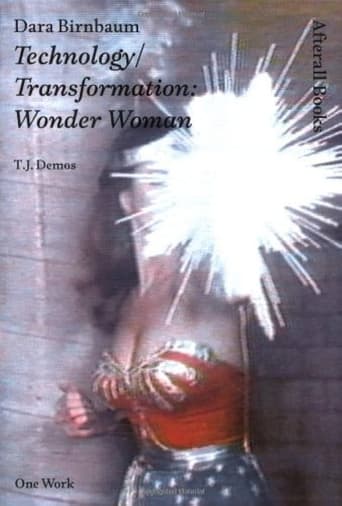
The video opens with a barrage of explosive imagery along with an audio track of a siren taken from the 1970s TV show Wonder Woman. The following scenes are fast paced repeated shots from Wonder Woman, with several scenes following of actress Lynda Carter as the main character Diana Prince, performing her transformative spin from secretarial role into superhero role. […] The representation of repeated transformations expose the illusion of fixed female identities in media and attempts to show the emergence of a new woman through use of technology. […] The video ends with a scene of repeating explosions that precedes a blue background with white text that scrolls upwards, delivering a transcription of lyrics to the song ‘Wonder Woman Disco'.
Strange things occur tonight whether the paranormal phenomenon is the invisible invasion of aliens from outer space or light flashes of another dimension? We will never know. Are we alone or may we encounter extraterrestrial species that are coming at night to conquer our dreams, our body and mind? What are you afraid of?
Anémona and Pisces live a capicua experience: they are at the same time the woman who looks, the woman who is looked at, and the very act of looking. Between fractal scenes and images multiplied in reference to Man Ray, Anémona assumes the will to, through the state of trance, always be a foreigner within herself, while Pisces goes in search of an alien vision, to assume herself as the self and otherness to understand the world.
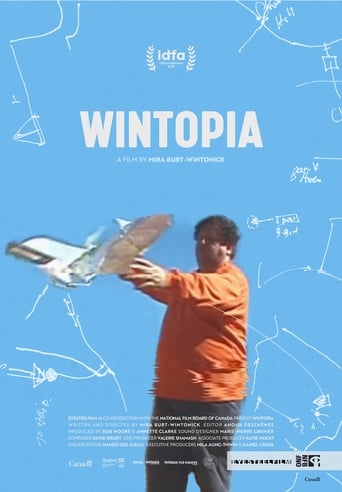
IDFA and Canadian filmmaker Peter Wintonick had a close relationship for decades. He was a hard worker and often far from home, visiting festivals around the world. In 2013, he died after a short illness. His daughter Mira was left behind with a whole lot of questions, and a box full of videotapes that Wintonick shot for his Utopia project. She resolved to investigate what sort of film he envisaged, and to complete it for him.