

Jay Z: Live at the Royal Albert Hall
Music
Overview
The Jay Z Royal Albert Hall concert marks the first time that a hip hop act has headlined at the 135 year old London venue. The event follows Jay Z’s landmark Fade to Black concert at New York’s Madison Square Gardens, held in 2004,



Nas
Nas
Self
Nas
Self
JAŸ-Z
JAŸ-Z
Self
JAŸ-Z
Self

Chris Martin
Chris Martin
Self
Chris Martin
Self

Gwyneth Paltrow
Gwyneth Paltrow
Self
Gwyneth Paltrow
Self
Beyoncé
Beyoncé
Self
Beyoncé
Self
Similar Movies
The golden age of the annual Tony Awards ceremony lasted from 1967 to 1986 — the period during which Alexander H. Cohen and his wife, Hildy Parks, were the producers of the show. This film offers a compilation of performances from Tony Award broadcasts during those years. They are presented with color-corrected footage and digitally re-mastered sound.
On the evening of August 12, 1978, Waylon Jennings and The Waylons performed on the concert stage of the Grand Ole Opry in Nashville, Tennessee. The master recordings of this concert were never released and had been locked in the vaults of RCA Records, long forgotten since 1978. The songs embodied in this performance capture Waylon Jennings and his band at the height of the country music "Outlaw" period, ample evidence of the extraordinary and individualistic writing and singing talents of Waylon Jennings. Now presented for the first time in its entirety, exactly as it was recorded on August 12, 1978.
A group of dancers congregate on the stage of a Broadway theatre to audition for a new musical production directed by Zach. After the initial eliminations, seventeen hopefuls remain, among them Cassie, who once had a tempestuous romantic relationship with Zach. She is desperate enough for work to humble herself and audition for him; whether he's willing to let professionalism overcome his personal feelings about their past remains to be seen.
An usherette in a theatre, where a distinguished and popular actor performs, gets her big break when the leading actress has an accident. The director decides to take advantage of the heretofore unexploited talent of the girl and asks her to replace the leading actress. This unexpected opportunity transforms her from a humble usherette into a shining star. Later on, she wins the heart of the leading actor with whom she was secretly in love. However, her sudden rise to theatrical-musical stardom creates complications in their love affair, as her companion sinks into disappointment and drowns himself in drink, abandoning his career. Nevertheless, the usherette/leading actress doesn't give up; She looks for him, finds him and supports him, psychologically and morally, until he makes a comeback to the stage and their love nest.
This film features unreleased concert footage of Elvis Presley's afternoon performance at the 'Mississippi-Alabama Fair and Dairy Show' held at the Fairgrounds in Tupelo, Mississippi on September 26, 1956. The professionally filmed black and white newsreel footage was synchronized with an amateur audio recording of the concert that had previously appeared on the 'Elvis Presley: A Golden Celebration' LP/CD box set.
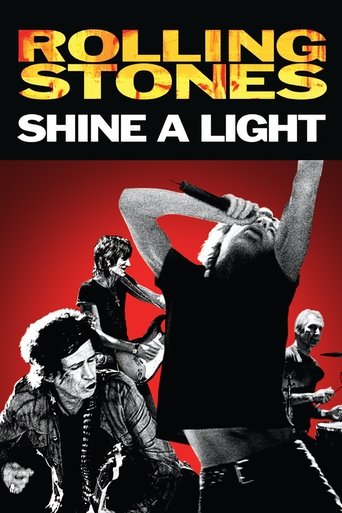
Martin Scorsese’s electrifying concert documentary captures The Rolling Stones live at New York’s Beacon Theatre during their A Bigger Bang tour. Filmed over two nights in 2006 with an all-star team of cinematographers, the film combines dynamic performances with archival footage and rare glimpses behind the scenes, offering a vibrant portrait of the band’s enduring energy and legacy.
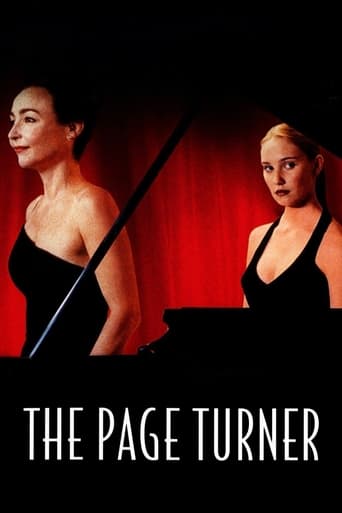
Mélanie Prouvost, a ten-year-old butcher's daughter, is a gifted pianist. That is why she and her parents decide that she sit for the Conservatory entrance exam. Although Mélanie is very likely to be admitted, she unfortunately gets distracted by the president of the jury's offhand attitude and she fails. Ten years later, Mélanie becomes her page turner, waiting patiently for her revenge.
A reel of the Noh drama Momiji-gari, in which Danjuro Ichikawa played opposite Onoe Kikugoro V as an ogress who has disguised herself as the Princess Sarashina. Filmed by Shibata Tsunekichi in the open air on a windy day in November 1899, Danjuro would allow only the one take, so that when his fan blew away in mid-performance the scene had to stay. The film re-emerged at the Kikikan theatre in 1907 where it was a great success and inspired a wave of fiction filmmaking based on traditional Japanese narratives.