

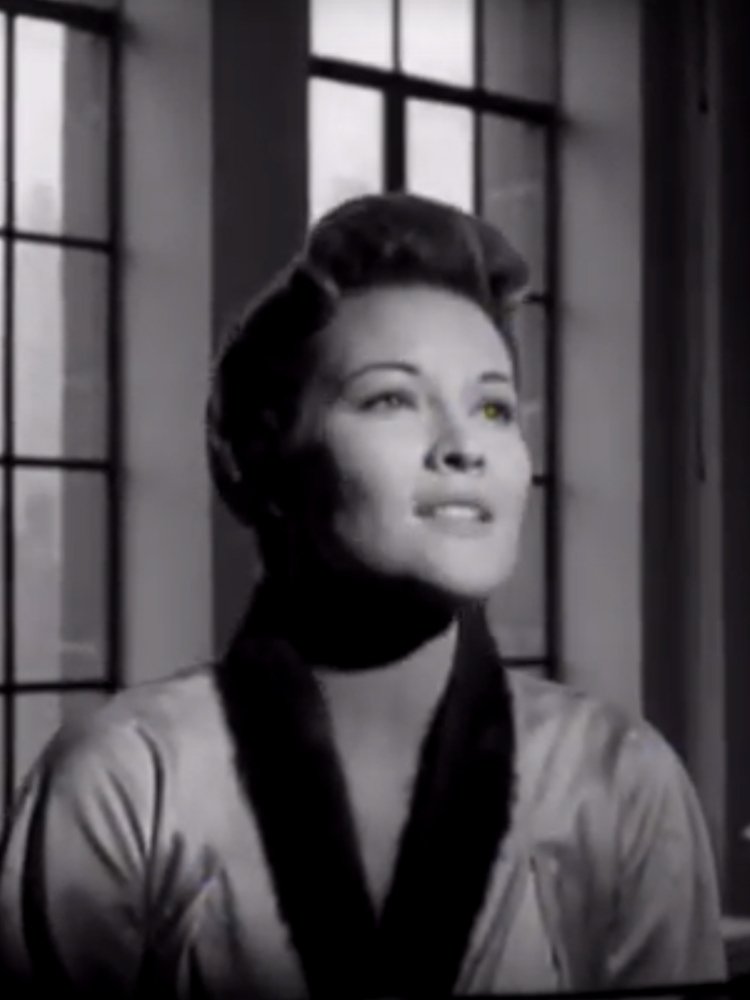
Autumn in Rome
Music
Overview
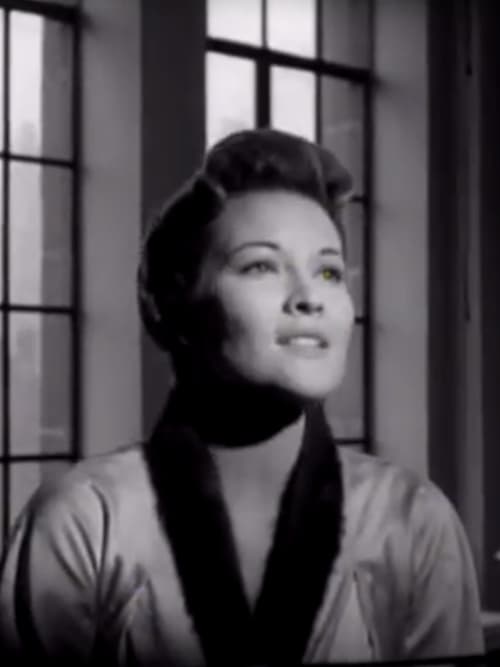
A lonely young woman sings two melancholy ballads in her Manhattan high rise apartment.
Top Cast





Patti Page
Patti Page
Patti Page
Similar Movies
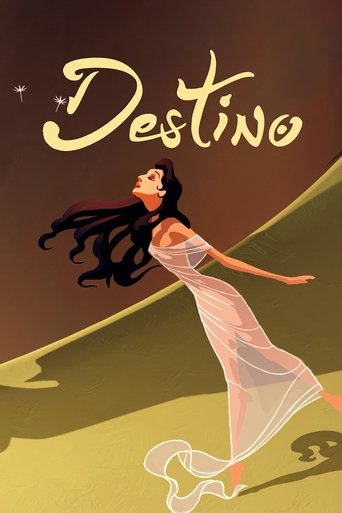
Short film to a song of love lost and rediscovered, a woman sees and undergoes surreal transformations. Her lover's face melts off, she dons a dress from the shadow of a bell and becomes a dandelion, ants crawl out of a hand and become Frenchmen riding bicycles. Not to mention the turtles with faces on their backs that collide to form a ballerina, or the bizarre baseball game.
A reel of the Noh drama Momiji-gari, in which Danjuro Ichikawa played opposite Onoe Kikugoro V as an ogress who has disguised herself as the Princess Sarashina. Filmed by Shibata Tsunekichi in the open air on a windy day in November 1899, Danjuro would allow only the one take, so that when his fan blew away in mid-performance the scene had to stay. The film re-emerged at the Kikikan theatre in 1907 where it was a great success and inspired a wave of fiction filmmaking based on traditional Japanese narratives.
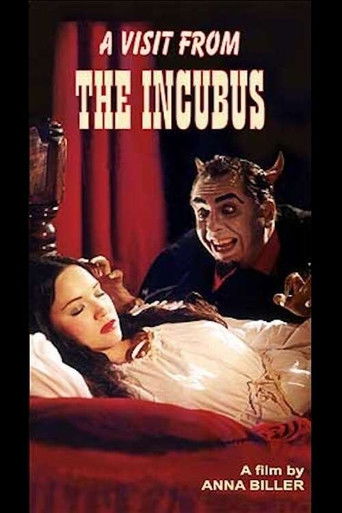
Lucy, a young Victorian woman in the Old West, is being tormented by nightly visits from an incubus. Her friend Madeleine tries to console her, but is unable to help. A fallen woman, Lucy gets a job singing at the local saloon. However, the Incubus has followed her there; and things take an unexpected turn as Lucy and the Incubus, amidst the rowdy cowboys and saucy can-can girls, have their final showdown.
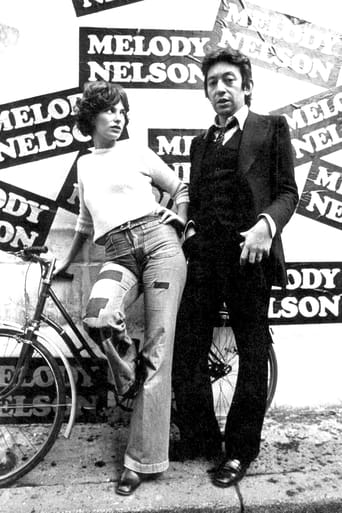
Although Gainsbourg and Birkin had appeared in a string of films since their magnetic collision in Pierre Grimblat’s Slogan, Melody was a bit of diversion from their collaborations since it’s a series of interwoven videos inspired by the Gainsbourgalbum. For '71 it’s a novel concept to bring visual life to an LP, but even more surprising are the short film’s amazing visuals that director Averty crafted using a wealth of video filters, overlays, camera movements and chroma key effects. Averty applies these in tandem with the increasing tone of Gainsbourg’s songs, which more or less chronicle an older man's affair with a young girl. Each song is comprised of steady, sometimes brooding poetic delivery, with refrains timed to the phrase repeats of each song, while Alan Parker’s buzzing guitar accompanies and wiggles around Gainsbourg’s resonant voice. The bass is fat and groovy, the drums easy but steady, and the periodic use of strings or rich vibrato makes this short a sultry little gem.

This film resulted from the unfinished short film Puce Women. The film opens with a camera watching 1920s style flapper gowns being taken off a dress rack. The dresses are removed and danced off the rack to music. (The original soundtrack was Verdi opera music; in the 1960s, Anger re-released the film with a new psychedelic folk-rock soundtrack performed by Jonathan Halper.) A long-lashed woman, Yvonne Marquis, dresses in the purple puce gown and walks to her vanity to apply perfume. She lies on a chaise lounge which then begins to move around the room and eventually out to a patio. Borzois appear and she prepares to take them for a walk.
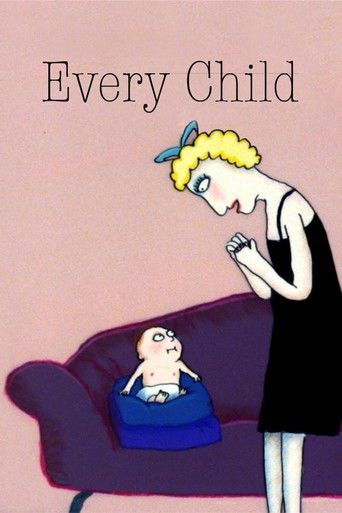
This animated short follows an unwanted baby who is passed from house to house. The film is the Canadian contribution to an hour-long feature film celebrating UNESCO's Year of the Child (1979). It illustrates one of the ten principles of the Declaration of Children's Rights: every child is entitled to a name and a nationality. The film took home an Oscar® for Best Animated Short Film.
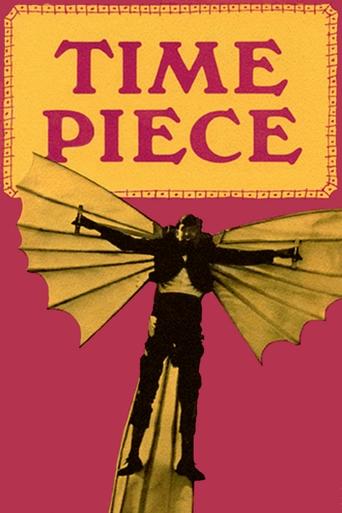
Dislocation in time, time signatures, time as a philosophical concept, and slavery to time are some of the themes touched upon in this 9-minute experimental film, which was written, directed, and produced by Jim Henson. Screened for the first time at the Museum of Modern Art in May of 1965, "Time Piece" enjoyed an eighteen-month run at one Manhattan movie theater and was nominated for an Academy Award for Outstanding Short Subject.