

The Long Way Home
Action · Drama · History
Overview
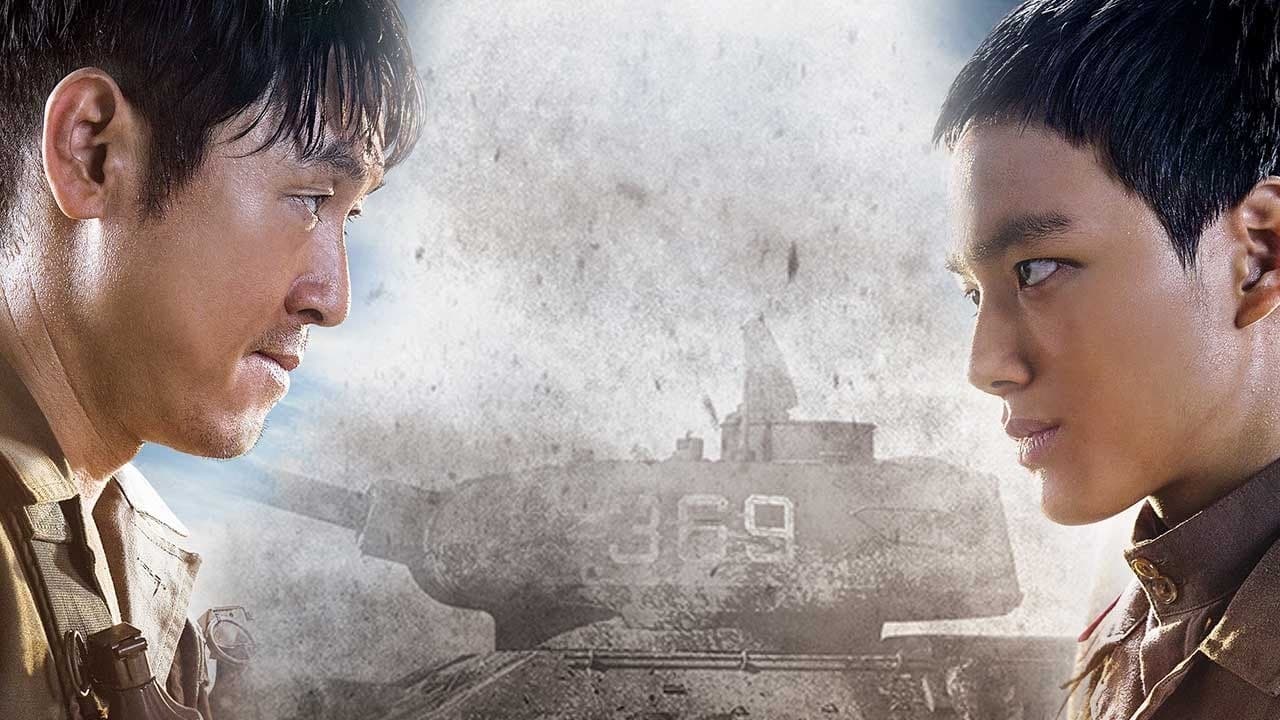
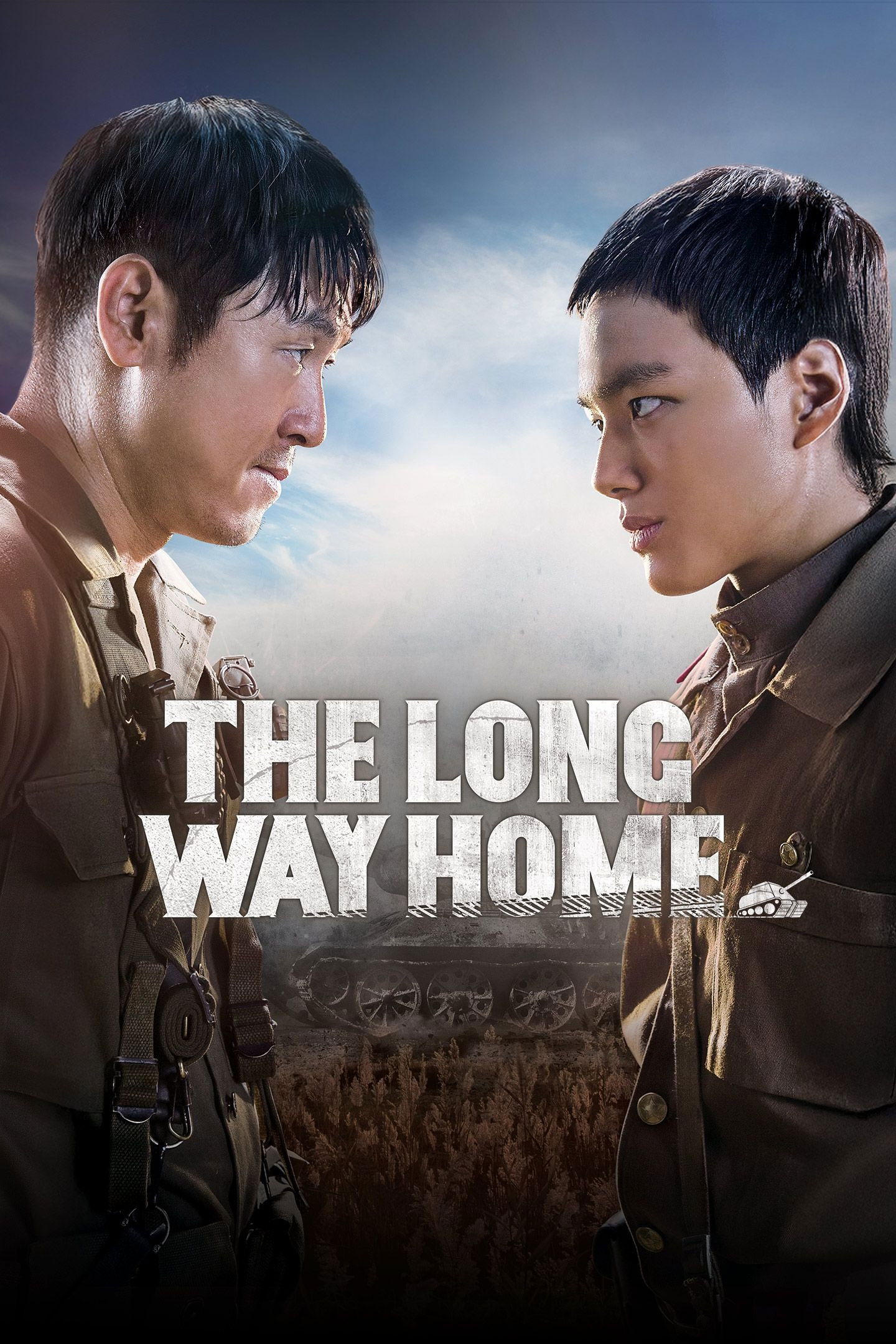
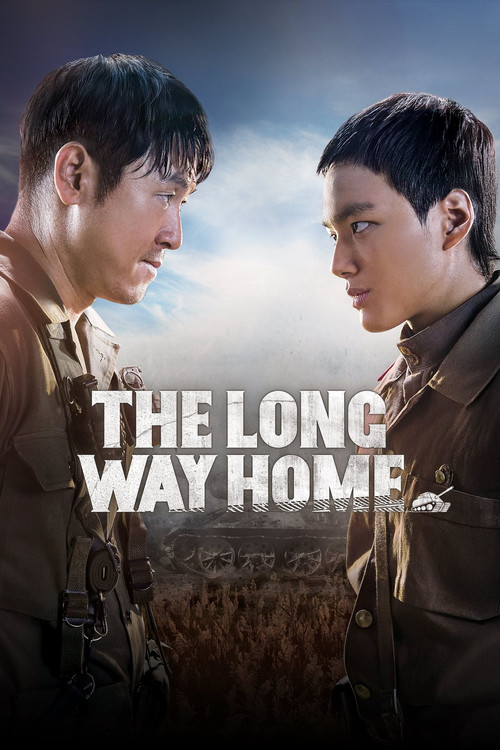
Nam-bok, a middle-aged South Korean farmer is conscripted and assigned a mission to deliver a classified military document that may decide the fate of the war. After losing it while under attack from the enemy, he then faces a teenage North Korean soldier named Yeong-gwang who happens to acquire the secret document on his way to the North.
Top Cast
Sul Kyung-gu
Nam-bok

Yeo Jin-goo
Yeong-gwang

Chung Sung-hwa
Regimental Commander
Jo Hee-bong
Drunken Man of Funeral Procession
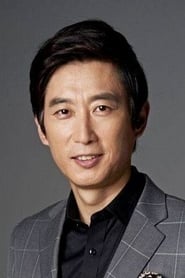
Kim Won-hae
Tank Commander

Jung Suk-won
Senior Lieutenant

Kim Sun-young
Middle-aged Woman
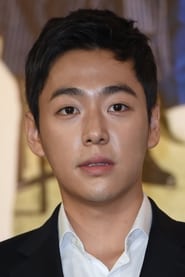
Noh Young-hak
Petty officer Choi

Lee Sang-hee
Nam-bok's Wife
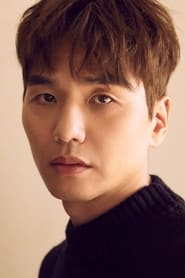
Kim Tae-hun
General Jo
Choi Ho-joong
Soldier of Regimental Headquarters
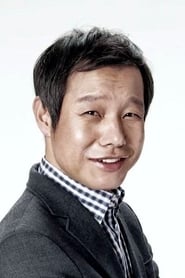
Jung In-gi
First Sergeant Kim


Sul Kyung-gu
Sul Kyung-gu
Nam-bok
Sul Kyung-gu
Nam-bok
Yeo Jin-goo
Yeo Jin-goo
Yeong-gwang
Yeo Jin-goo
Yeong-gwang
Chung Sung-hwa
Chung Sung-hwa
Regimental Commander
Chung Sung-hwa
Regimental Commander
Jo Hee-bong
Jo Hee-bong
Drunken Man of Funeral Procession
Jo Hee-bong
Drunken Man of Funeral Procession
Kim Won-hae
Kim Won-hae
Tank Commander
Kim Won-hae
Tank Commander
Jung Suk-won
Jung Suk-won
Senior Lieutenant
Jung Suk-won
Senior Lieutenant
Kim Sun-young
Kim Sun-young
Middle-aged Woman
Kim Sun-young
Middle-aged Woman
Noh Young-hak
Noh Young-hak
Petty officer Choi
Noh Young-hak
Petty officer Choi
Lee Sang-hee
Lee Sang-hee
Nam-bok's Wife
Lee Sang-hee
Nam-bok's Wife
Kim Tae-hun
Kim Tae-hun
General Jo
Kim Tae-hun
General Jo
Similar Movies
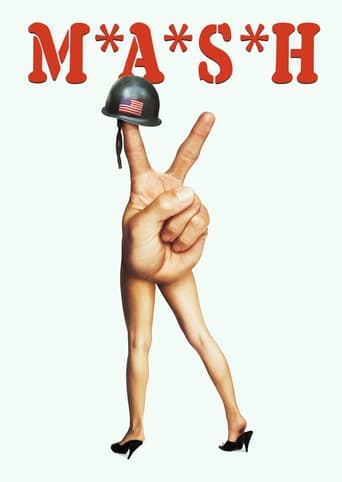
One of the world's most acclaimed comedies, M*A*S*H focuses on three Korean War Army surgeons brilliantly brought to life by Donald Sutherland, Tom Skerritt and Elliott Gould. Though highly skilled and deeply dedicated, they adopt a hilarious, lunatic lifestyle as an antidote to the tragedies of their Mobile Army Surgical Hospital, and in the process infuriate Army bureaucrats. Robert Duvall, Gary Burghoff and Sally Kellerman co-star as a sanctimonious Major, an other-worldly Corporal, and a self-righteous yet lusty nurse.
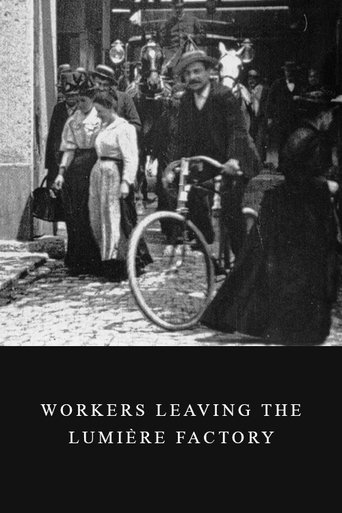
Working men and women leave through the main gate of the Lumière factory in Lyon, France. Filmed on 22 March 1895, it is often referred to as the first real motion picture ever made, although Louis Le Prince's 1888 Roundhay Garden Scene pre-dated it by seven years. Three separate versions of this film exist, which differ from one another in numerous ways. The first version features a carriage drawn by one horse, while in the second version the carriage is drawn by two horses, and there is no carriage at all in the third version. The clothing style is also different between the three versions, demonstrating the different seasons in which each was filmed. This film was made in the 35 mm format with an aspect ratio of 1.33:1, and at a speed of 16 frames per second. At that rate, the 17 meters of film length provided a duration of 46 seconds, holding a total of 800 frames.
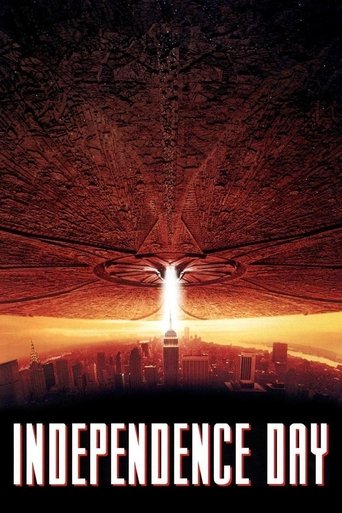
Strange phenomena surface around the globe. The skies ignite. Terror races through the world's major cities. As these extraordinary events unfold, it becomes increasingly clear that a force of incredible magnitude has arrived. Its mission: total annihilation over the Fourth of July weekend. The last hope to stop the destruction is an unlikely group of people united by fate and unimaginable circumstances.
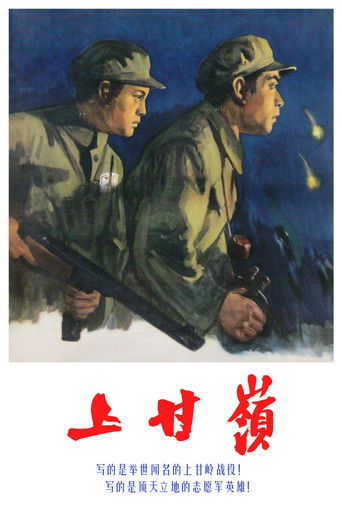
The film follows a group of Chinese People's Volunteer Army soldiers who are holding Triangle Hill for several days against US forces. Short of both food and water, they hold their ground until the relief troops arrive. The movie portray the battle as a Chinese victory over an American invasion, and the People's Volunteer Army soldiers were shown as Chinese war heroes."
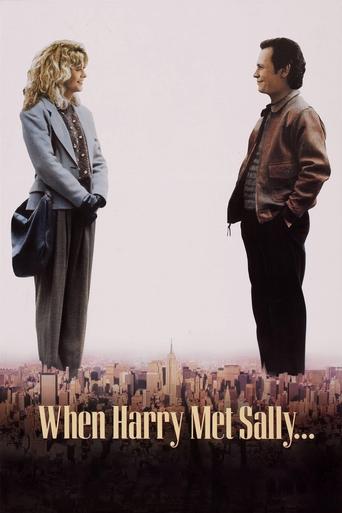
Sex always gets in the way of friendships between men and women. At least, that's what Harry Burns believes. So when Harry meets Sally Albright and a deep friendship blossoms between them, Harry's determined not to let his attraction to Sally destroy it. But when a night of weakness ends in a morning of panic, can the pair avoid succumbing to Harry's fears by remaining friends and admitting they just might be the perfect match for each other?