


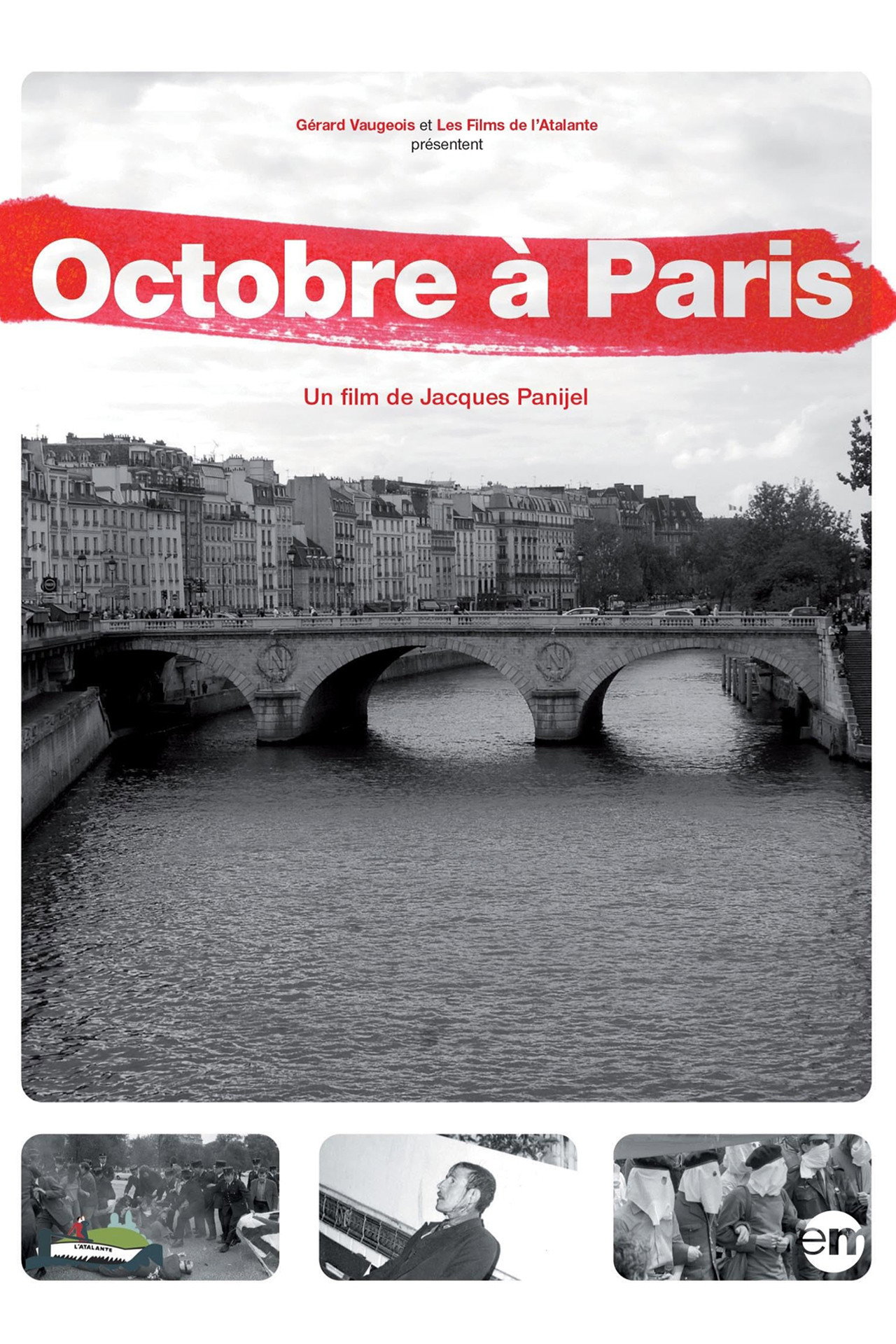
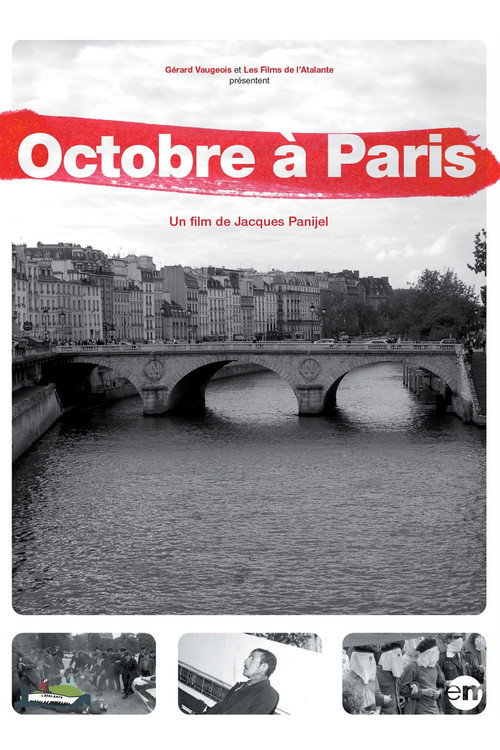
Octobre à Paris
Documentary · History · Drama
Overview
On October 17, 1961, 30,000 Algerians demonstrated peacefully in Paris to protest the discriminatory curfew imposed upon them and to demand Algerian independence. Under the authority of the then Prefect of Police, Maurice Papon, the demonstration was brutally repressed, resulting in the deaths of dozens of Algerians. Historians cite eleven thousand arrests, dozens of murders, demonstrators thrown into the Seine, hundreds of expulsions, and just as many complaints that went unanswered; all for a night that would become a blind spot in the national narrative. No investigation, no trial, and certainly no commemoration. The day after the demonstration, Jacques Panijel began filming *October in Paris* to alert the public to the massacre that had just taken place in the streets of Paris. The film was banned by the French authorities. It obtained a distribution license in 1973. It was first shown in theaters in October 2011.







No cast information.
Similar Movies
Léon, the top hit man in New York, has earned a rep as an effective "cleaner". But when his next-door neighbors are wiped out by a loose-cannon DEA agent, he becomes the unwilling custodian of 12-year-old Mathilda. Before long, Mathilda's thoughts turn to revenge, and she considers following in Léon's footsteps.
Imprisoned in the 1940s for the double murder of his wife and her lover, upstanding banker Andy Dufresne begins a new life at the Shawshank prison, where he puts his accounting skills to work for an amoral warden. During his long stretch in prison, Dufresne comes to be admired by the other inmates -- including an older prisoner named Red -- for his integrity and unquenchable sense of hope.
All Rise is a short drama inspired by real events and set in Athens, Greece. The story follows 18-year-old Petros, who tragically loses his life during a late-night return home. Eight months later, his parents, Eleni and Konstantinos, sit in a courtroom, awaiting a verdict that could finally offer them clarity and perhaps, closure.
Documentary depicts what happened in Rio de Janeiro on June 12th 2000, when bus 174 was taken by an armed young man, threatening to shoot all the passengers. Transmitted live on all Brazilian TV networks, this shocking and tragic-ending event became one of violence's most shocking portraits, and one of the scariest examples of police incompetence and abuse in recent years.
In 1958 in Paris, during the Algerian War, a young trainee lawyer, Maître Chabrier, was assigned to defend an Algerian garbage collector against paratroopers who had beaten him. Stay out of Algerian affairs, his peers advise him because the trial is taking a political turn. Chabrier acquired the reputation of the Fellaghas' lawyer.
This film from Bill Moyers is the first documentary to focus exclusively on people formerly detained in New York City’s notorious Rikers Island Jail. They tell their compelling stories direct to the camera, revealing the violent arc of the Rikers experience – from the trauma of entry to extortion and control by inmates, to oppressive corrections officers, violence and solitary confinement.
Italy, early '90s. Calm, clever and inscrutable, politician Giulio Andreotti has been synonymous with power for decades. He has survived everything: electoral battles, terrorist massacres, loss of friends, slanderous accusations; but now certain repentant mobsters implicate him in the crimes of Cosa Nostra.
When a worker is found murdered on the construction side, the investigation swiftly turns from things criminal to the political circumstances surrounding the building itself. Widespread corruption and neglect by the builder himself are seen to have brought the situation about. Much of the movie is filmed using hand-held cameras, and the majority of the dialogue is in the difficult-to-understand and very slangy Spanish dialect of Mexico City's bricklayers.
The exceptional portrait of a pacifist general, the only senior officer to have spoken out against torture. This precious testimony still remains censored in France, since no national channel has to date decided to program this documentary. Son and brother of a soldier, General Pâris de Bollardière was destined for a career in arms. He was, for many years, one of the most brilliant representatives of this adventurer career in France, from Narvik to the Algerian War. After fighting in the French maquis, he reached Indochina, where he suddenly found himself in the aggressor's camps. His beliefs are strongly shaken. But it is in Algeria, where the French army practices torture and summary executions, that he takes the big turn. He expresses his contempt to Massu, and is relieved of his command. Until his death in 1986, Jacques de Bollardière fought for world peace, from the Larzac plateaus to the Mururoa atolls.