


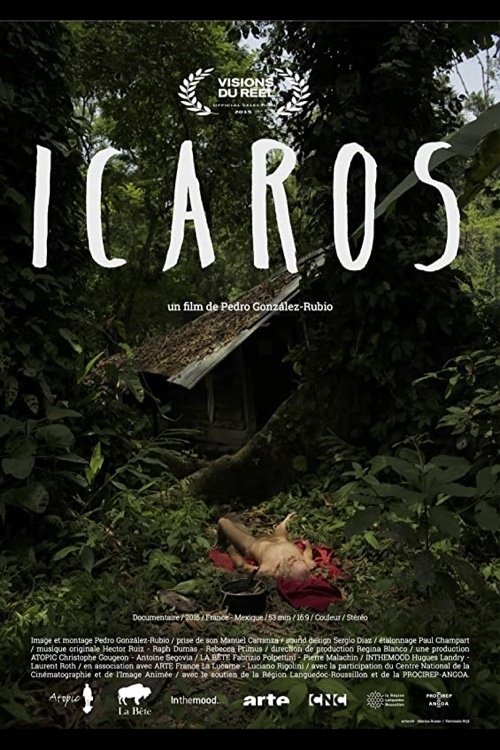
Ícaros
Documentary
Overview
In the late 1970s, Marcel fled Catalonia to avoid conscription into the Spanish military. For 30 years he has been living in the tropical forests of Costa Rica, where he hosts ayahuasca ceremonies for young seekers from the West.

No cast information.
Similar Movies
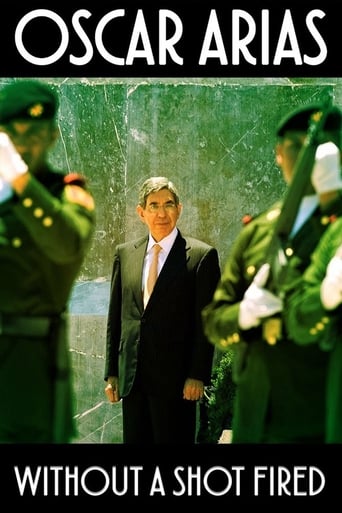
This is the story of a tiny country that made a decision to do something that no other country had ever done -- it decided to abolish its army and declare peace to the world. And this is the story of a young boy who grew up in that country, and how he ended up challenging -- and sometimes even convincing -- the greatest powers in the world to follow Costa Rica's example. "Oscar Arias: Without a Shot Fired" is a Don Quixote-like saga with great historical touchstones -- Ronald Reagan and Mikhail Gorbachev, Cold War politics and Communism, Central American War and Peace. It follows a slight, academic, and most unlikely hero over the course of more than fifty years, as he travels the world in a quest to stop the spread of the weapons of war. In the end, it is a story about the triumph of reason, of the sparrow triumphing over the eagle, and how the impossible dream can sometimes come true.
The Shipibo-Konibo people of Peruvian Amazon decorate their pottery, jewelry, textiles, and body art with complex geometric patterns called kené. These patterns also have corresponding songs, called icaros, which are integral to the Shipibo way of life. This documentary explores these unique art forms, and one Shipibo family's efforts to safeguard the tradition.

Back in 2012 I had my very first Ayahuasca ceremony and, needless to say, I was terrified. But it ended up entirely changing my life and that of my future family. Which is why I decided to revisit the medicine in 2018, participating in three Ayahuasca ceremonies over the course of one week in Costa Rica, and document the process. In the film, we tackle my personal story of trying to build London Real into a global media and transformation company while also struggling with my own disconnection from friends, family and my own species. We also dive deep into the division and tribalism currently facing all of us around the world.
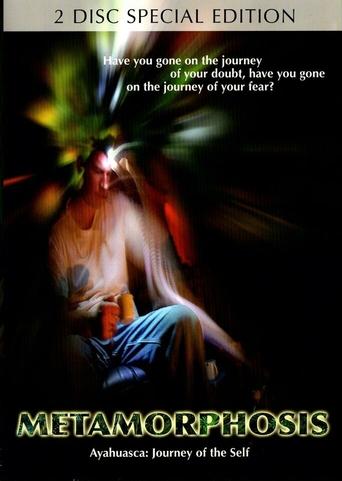
Hamilton Souther is the founder of Blue Morpho Tours, a company that caters to ayahuasca tourists in the Peruvian Amazon. Souther talks about the events that led him to Amazonian shamanism. Five first-time ayahuasca drinkers on a nine-day retreat with Blue Morpho relate their experiences.
In June 2010, French actress Marion Cotillard spent a week in the heart of the tropical forests of the Democratic Republic of Congo with members of Greenpeace France and Greenpeace Africa. She delivers in video a strong testimony on the looting of Congolese forests which benefits a few industrial groups, often European.
Don Emilio is a humble, 63-year-old man who lives in the Amazon rainforest, seven miles from the city of Iquitos, Peru. For all of his adult life he has worked as a curandero and vegetalista, a traditional healer. He estimates that in his career he has treated more than 2,500 clients. Through the camera lens of anthropologist Luis Eduardo Luna, Don Emilio tells us about his practice, his beliefs, his community, and his life. He shows us how he prepares ayahuasca and other herbal medicines. Finally, we see Don Emilio treat a man who has come to him for help, and hear from a poor woman who has brought her infant son for medical care.
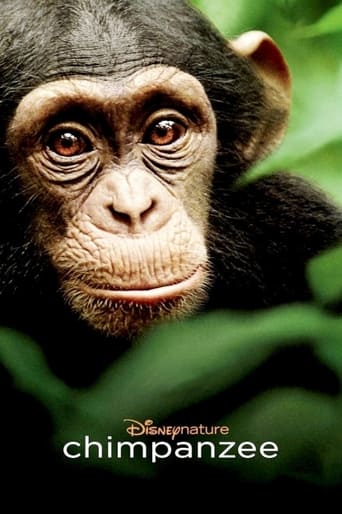
A nature documentary centered on a family of chimps living in the Ivory Coast and Ugandan rain forests. Through Oscar, a little chimpanzee, we discover learning about life in the heart of the African tropical forest and follow his first steps in this world with humor, emotion and anguish. Following a tragedy, he finds himself separated from his mother and left alone to face the hostility of the jungle. Until he is picked up by an older chimpanzee, who will take him under her protection.
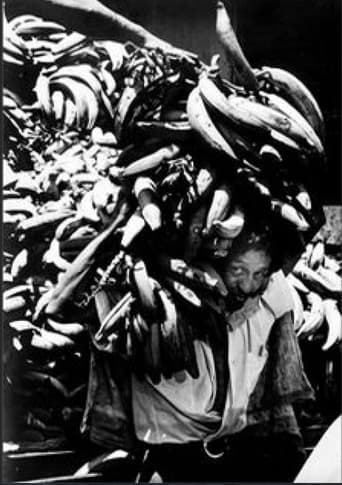
This film was originally made for the International Conference on Human Settlements (HABITAT) which was held in Vancouver, Canada. Taking as an example the production and marketing of bananas and the prevailing conditions in the world market - dominated by the virtual monopoly of three multinational companies -, it is shown how as a result of this monopolistic domination, the Costa Rican State has stopped receiving equitable taxes for what that, in the end, the housing and public services offered by the country are characterized as those of an underdeveloped society. The attempt made since 1974 by a group of banana-producing countries, aimed at improving sales prices to multinationals and raising taxes; The resulting “banana war” are examples of the enormous efforts that small banana countries have to make to achieve greater justice in the prevailing market conditions.