

True Love
Drama · Romance
Overview
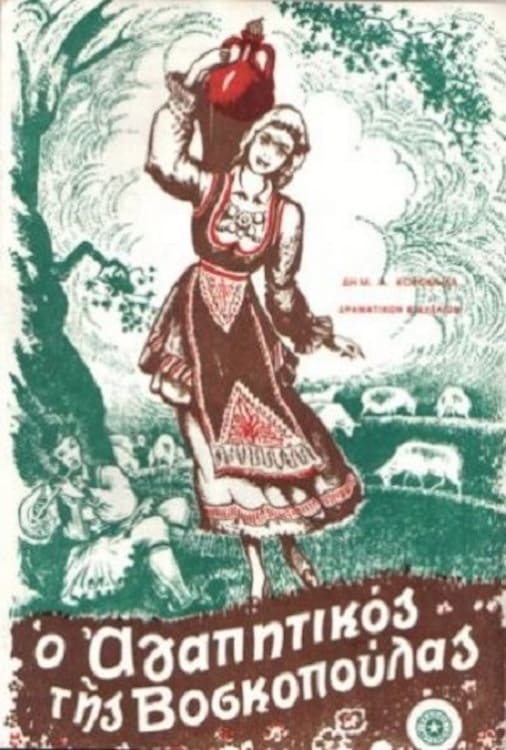
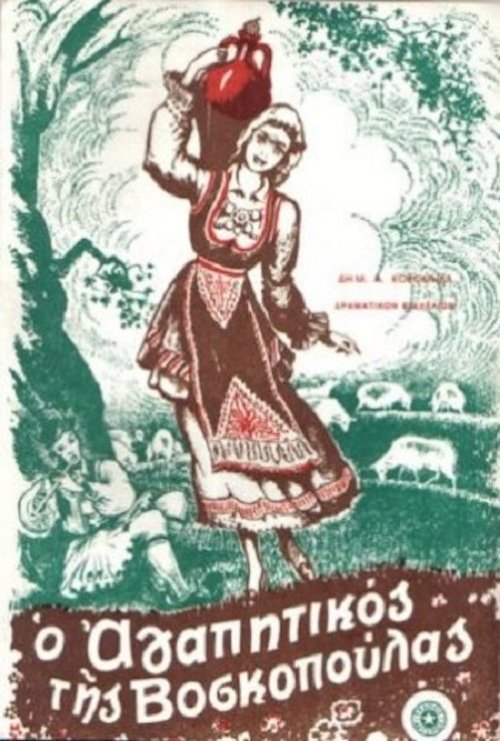
It is the third film in a row of the type that much later on was called "fustanella (Greek kilt)", following Gkolfo by Bachatoris (1914) and Astero by Gaziadis (1929). It is based on the successful theatrical play (rhyming pastoral romance) by Dimitrios Koromilas, who draws his inspiration from a poem by Giannis Zalokostas "I fell in love with a shepherdess". The setting is Greece, a rural country in the middle of the 19th century. A landlord, Mitros, gives Kroustallo a golden cross as a gift to show her his tender feelings. He doesn't know, however, that she is already in love with Liakos, a destitute young shepherd to whom Mitros owes his life - in the past he had saved him from drowning in the river. The cross around the neck of the shepherdess causes fights between the two men, while Mitros asks Kroustallo's hand from her mother, Mrs. Stathaina, who had been his childhood love.












Sofia Dorival
Sofia Dorival
Stathaina
Sofia Dorival
Stathaina
Dimitris Tsakiris
Dimitris Tsakiris
Mitros
Dimitris Tsakiris
Mitros
Nina Afentaki
Nina Afentaki
Kroustallo
Nina Afentaki
Kroustallo
Aimilia Marikou
Aimilia Marikou
Gianaina
Aimilia Marikou
Gianaina
Michalis Vlahopoulos
Michalis Vlahopoulos
Uncle Chronis
Michalis Vlahopoulos
Uncle Chronis
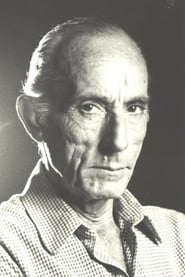
Manos Katrakis
Manos Katrakis
Liakos
Manos Katrakis
Liakos
Panagis Svoronos
Panagis Svoronos
Gkerlas
Panagis Svoronos
Gkerlas
Dimitris Kotzias
Dimitris Kotzias
Dimitris Kotzias
Meropi Rozan
Meropi Rozan
Meropi Rozan
Giorgos Batis
Giorgos Batis
Giorgos Batis
Similar Movies
Houses, now abandoned and empty, are being boarded up in Besence of the Ormányság. "Only-childism" is in fashion, due to the law that provides for the way in which landed properties are inherited. The birth of children that are "not desirable" is being prevented through illegal medical intervention, which is often responsible for the death of pregnant women. The happiness of János and Julis are also the victims of this attitude: their parents would not hear of another child.

The tranquility of a remote Armenian mountain community is disrupted when a group of shepherds affected by the pangs of an evening hunger, decide to butcher and barbecue the sheep of another's that have strayed into their herd. An official inquiry by the city police complicates matters, and questions of law, morality and community only seem to lead to further entanglements.
The bells of the Calvinist church in Garabó have been silent for years, and people prefer to go the Rumanian church. Returning from his studies in Utrecht, Simándy Pál - at his own request - gets a job here, in the alpine village. The young Hungarian minister meets Florica, the educated daughter of Todorescu, the Rumanian pope, whom he knew before. She falls in love with him.
Private inspector Hável happens to travel on the train which is attacked at Biatorbágy. His attention is drawn to a suspicious man, and in the next few days he confirms that it was indeed him who committed the crime. Yet the police accuses not the lunatic Marschalkó but the communists. Summary justice is declared.

Divorced and single bailiff Carla Schön has many problems with her pubescent daughter Eva. However, she cannot use these problems because she has to work in her everyday life. Even in her hobby, orchestral playing, she is absolutely tense. But then she meets the musician Andi Jannings and falls in love with him. He is a dry alcoholic and is in constant dispute with his ex-wife. To make matters worse, he is also a caretaker at Eva's school. Torn between her new love and daughter, Carla soon finds that her next job has to do with Andi. He has money problems and, accordingly, has not made any maintenance payments to his ex-wife.
Catherine is taken to dine at "Eau de la vie" an opulent cafe known for its unusual entertainment. Her business associates Grant and Sarah intend to initiate her into their sordid society and strip her of her innocence. Catherine must choose from a small group of performers who will entertain the diners for the evening. She selects a young attractive man unaware that the finale of the evenings entertainment will end in his dead. To save the young man she has chosen, Catherine is driven to fight for her own life but oblivious to her struggle the other diners believe it is all part of the evening's entertainment Catherine has to stand alone. They say that evil triumphs when good people do nothing. Eau de la vie is a dark tale of hedonism and individual courage.