

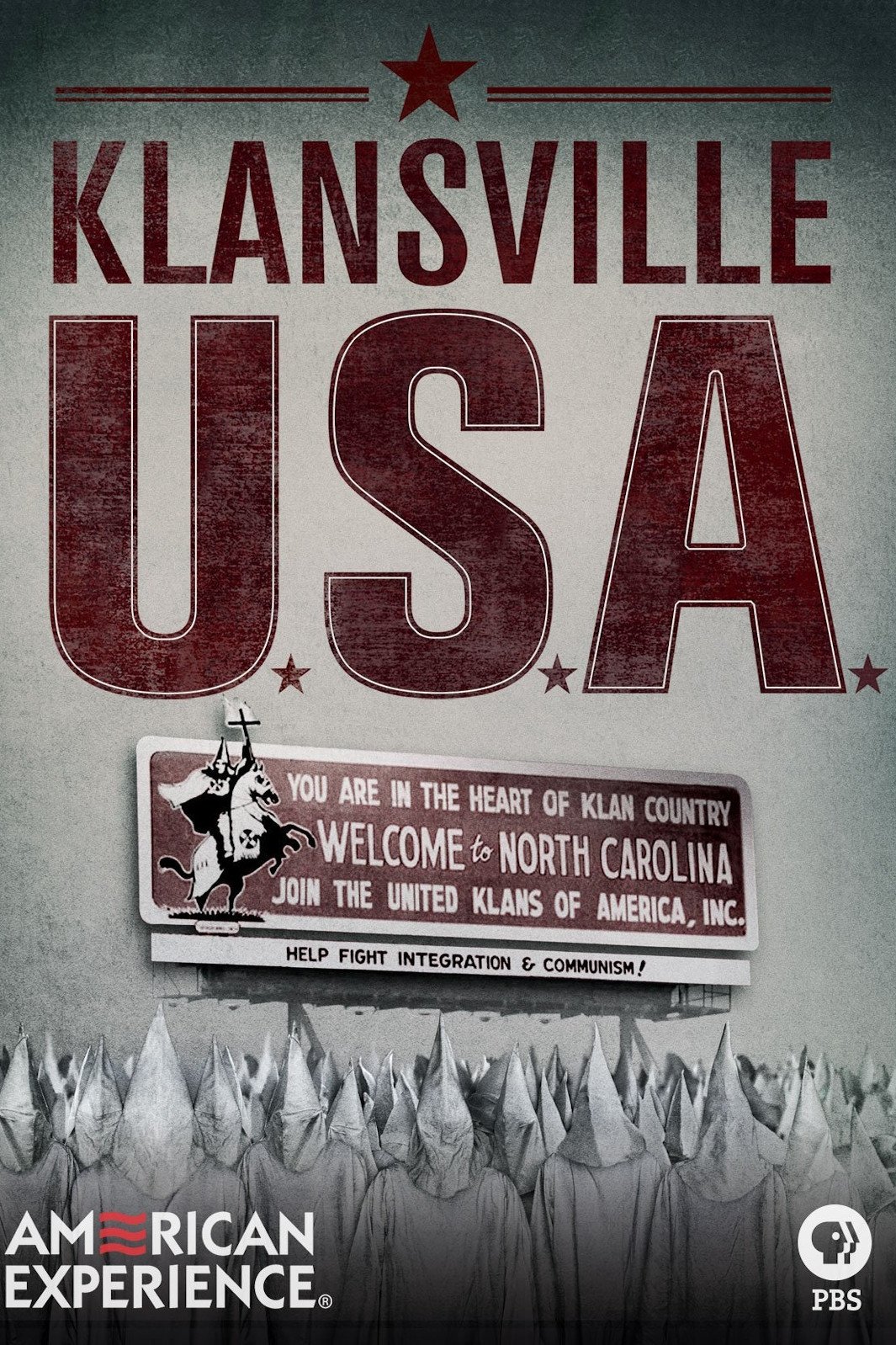
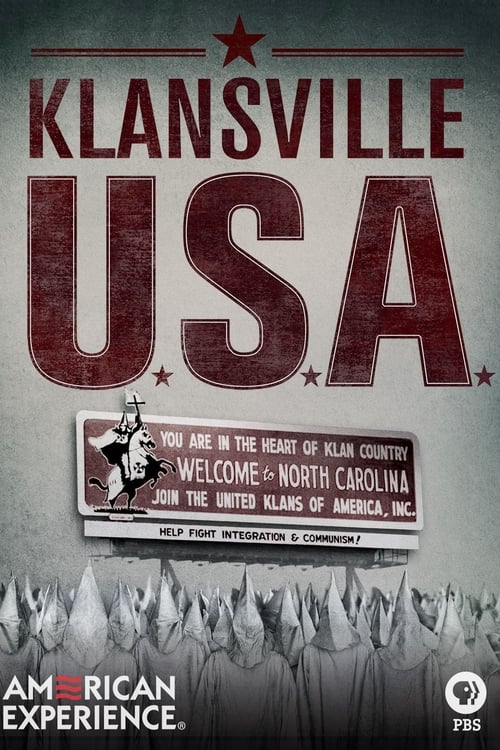
Klansville U.S.A.
Documentary
Overview
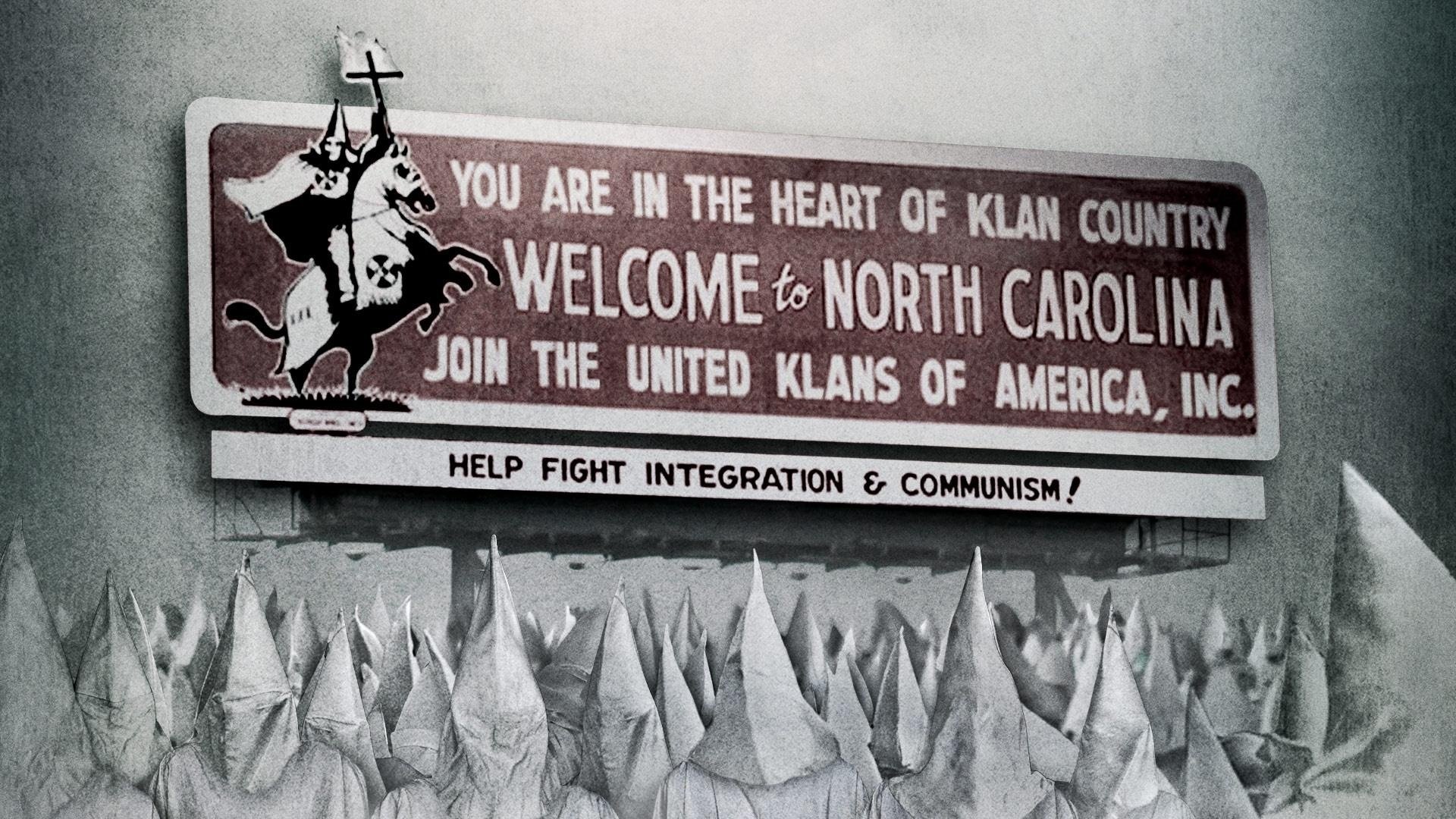
Investigates the reasons North Carolina, long seen as the most progressive state in the South, became home to the largest Klan organization in the country, with more members than all the other Southern states combined, during the 1960s.
Top Cast
Oliver Platt
Self - Narrator (voice)
David Cunningham
Self - Author of "Klansville, U.S.A."
Rob Christensen
Self - Journalist
Michael Frierson
Self
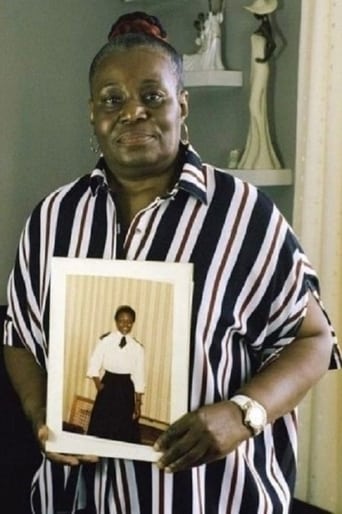
Estelle Sanders
Self - Mayor of Roper, North Carolina
Patsy Sims
Self - Author of 'The Klan'
Gary Freeze
Self - Historian
Ned Cline
Self - Journalist
Mark Potok
Self - Editor-in-Chief, Intelligence Report
George Wallace
Self (archive Footage)
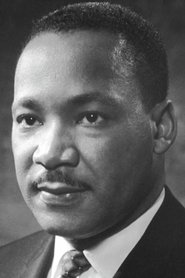
Martin Luther King Jr.
Self (archive Footage)
David S. Cecelski
Self - Historian


Oliver Platt
Oliver Platt
Self - Narrator (voice)
Oliver Platt
Self - Narrator (voice)
David Cunningham
David Cunningham
Self - Author of "Klansville, U.S.A."
David Cunningham
Self - Author of "Klansville, U.S.A."
Rob Christensen
Rob Christensen
Self - Journalist
Rob Christensen
Self - Journalist
Michael Frierson
Michael Frierson
Self
Michael Frierson
Self
Estelle Sanders
Estelle Sanders
Self - Mayor of Roper, North Carolina
Estelle Sanders
Self - Mayor of Roper, North Carolina
Patsy Sims
Patsy Sims
Self - Author of 'The Klan'
Patsy Sims
Self - Author of 'The Klan'
Gary Freeze
Gary Freeze
Self - Historian
Gary Freeze
Self - Historian
Ned Cline
Ned Cline
Self - Journalist
Ned Cline
Self - Journalist
Mark Potok
Mark Potok
Self - Editor-in-Chief, Intelligence Report
Mark Potok
Self - Editor-in-Chief, Intelligence Report
George Wallace
George Wallace
Self (archive Footage)
George Wallace
Self (archive Footage)
Similar Movies
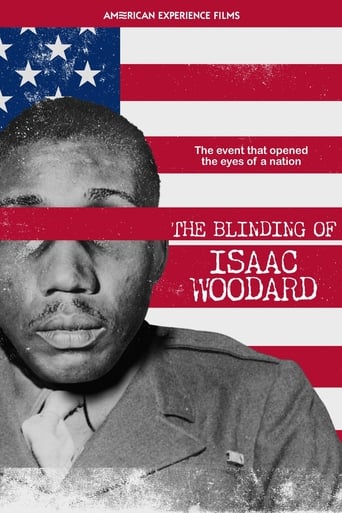
In 1946, Isaac Woodard, a Black army sergeant on his way home to South Carolina after serving in WWII, was pulled from a bus for arguing with the driver. The local chief of police savagely beat him, leaving him unconscious and permanently blind. The shocking incident made national headlines and, when the police chief was acquitted by an all-white jury, the blatant injustice would change the course of American history. Based on Richard Gergel’s book Unexampled Courage, the film details how the crime led to the racial awakening of President Harry Truman, who desegregated federal offices and the military two years later. The event also ultimately set the stage for the Supreme Court’s landmark 1954 Brown v. Board of Education decision, which finally outlawed segregation in public schools and jumpstarted the modern civil rights movement.

The life and work of New York artist Jean-Michel Basquiat have been marked by a long quest for identity, by his Haitian and Puerto Rican family origins and by a founding trip to Africa. To portray this major painter of the 20th century, who died in 1988 at only 27 years old, is also to evoke the place of black American artists in the conservative and racist America of the Reagan years.
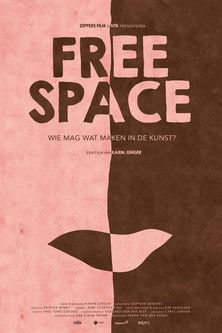
Under pressure from activist groups, art is increasingly being cancelled for ideological reasons, because of 'cultural appropriation' or because of the desire for a 'safe space'. The colour and gender of the artist seem to be all-determining in this. How do you relate to this as an artist? Is this a disturbing development or a sign of emancipation? And what does it mean for freedom of expression? Director Karin Junger investigates this with Anne-Fay Kops, Ted van Lieshout, Angel-Rose Oedit Doebé, Raymi Sambo, Boris van Berkum, Marian Markelo, Stephan Sanders and Thomas Chatterton Williams.
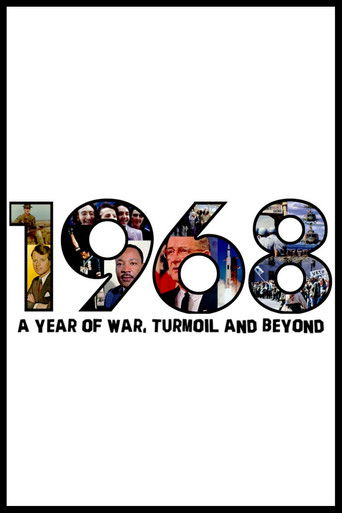
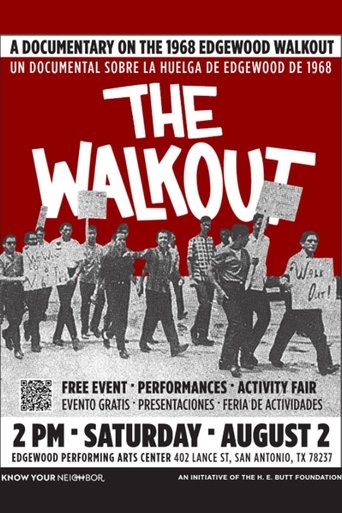
The Tet Offensive during the Vietnam War, the Civil Rights Movement, the May events in France, the assassinations of Martin Luther King and Robert F. Kennedy, the Prague Spring, the Chicago riots, the Mexico Summer Olympics, the presidential election of Richard Nixon, the Apollo 8 space mission, the hippies and the Yippies, Bullitt and the living dead. Once upon a time the year 1968.
A documentary about the life of former U.S. Secret Service agent, Clint Hill, who served under five United States presidents from Eisenhower to Ford and is known for his act of bravery on November 22, 1963 — shielding Jacqueline Kennedy and the stricken president with his body as the car raced from Dealey Plaza to Parkland Memorial Hospital.