

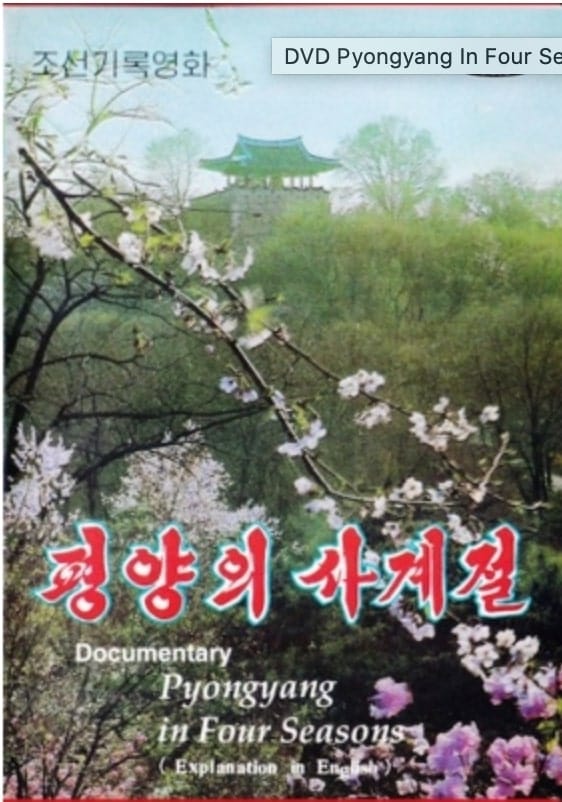
Pyongyang in Four Seasons
Documentary
Overview
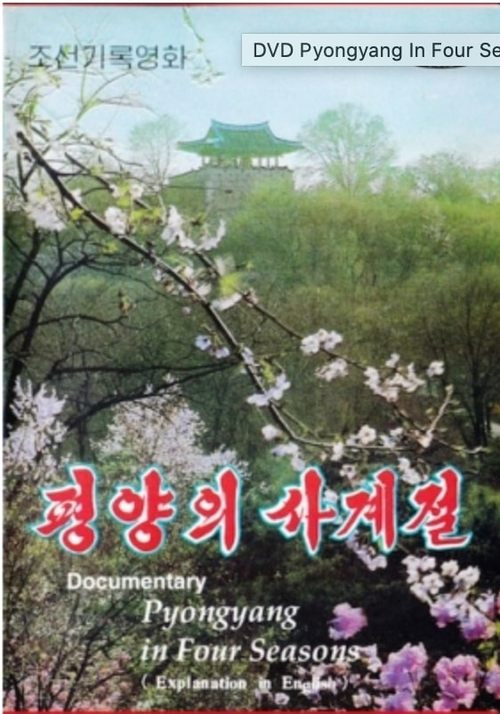
Pyongyang, a city full of happy people and flowers. A city of factories with smiling seamstresses and welders of locomotives. A city of power plants the illuminate department stores offering the fruits of the labour of its workers and peasants. Everybody spends their free time in sports palaces with synchronized swimming and white doves, or in the palace of cultures, where young pioneers play the accordion. Old men and women go on walks and young lovers rent boats by the river, above which arches a rainbow, a symbol of happiness and contentment.





No cast information.
Similar Movies
They speak the same language, share a similar culture and once belonged to a single nation. When the Korean War ended in 1953, ten million families were torn apart. By the early 90s, as the rest of the world celebrated the end of the Cold War, Koreans remain separated between North and South, fearing the threat of mutual destruction. Beginning with one man's journey to reunite with his sister in North Korea, filmmakers Takagi and Choy reveal the personal, social and political dimensions of one of the last divided nations on earth. The film was also the first US project to get permission to film in both South & North Korea.
Ryun-hee Kim, a North Korean housewife, was forced to come to South Korea and became its citizen against her will. As her seven years of struggle to go back to her family in North Korea continues, the political absurdity hinders her journey back to her loved ones. The life of her family in the North goes on in emptiness, and she fears that she might become someone, like a shadow, who exists only in the fading memory of her family.
Join National Geographic's Lisa Ling as she captures a rare look inside North Korea - something few Americans have ever been able to do. Posing as an undercover medical coordinator and closely guarded throughout her trip, Lisa moves inside the most isolated nation in the world, encountering a society completely dominated by government and dictatorship. Glimpse life inside North Korea as you've never seen before with personal accounts and powerful footage. Witness first-hand efforts by humanitarians and the challenges they face from the rogue regime.
In 1962, a U.S. soldier sent to guard the peace in South Korea deserted his unit, walked across the most heavily fortified area on earth and defected to the Cold War enemy, the communist state of North Korea. He became a star of the North Korean propaganda machine, but then disappeared from the face of the earth. Now, after 45 years, the story of James Dresnok, the last American defector in North Korea, is being told for the first time. Crossing the Line follows Dresnok as he recalls his childhood, desertion, and life in the DPRK.
"A Postcard from Pyongyang" is a journey into a deeply enigmatic and completely isolated country that keeps the world in suspense: North Korea. Friends Gregor Möller, Philip Kist and Anne Lewald visit in 2013 and 2017 and do what is strictly forbidden and for which they might have ended up in a forced labor camp: even though accompanied by state watchers, they secretly film their travels, accompanied by state watchdogs. We get an extraordinary insight into one of the most closed societies in the world and experience the 'beautiful new world' as the state propaganda machinery displays it.
Two young North Korean gymnasts prepare for an unprecedented competition in this documentary that offers a rare look into the communist society and the daily lives of North Korean families. For more than eight months, film crews follow 13-year-old Pak Hyon Sun and 11-year-old Kim Song Yun and their families as the girls train for the Mass Games, a spectacular nationalist celebration.
If the cityscapes and patriotic anthems of this film seem a far cry from the bleak landscape of Seoul Train, that's no accident. Dutch filmmaker Pieter Fleury, with the full permission and cooperation of the North Korean government, created this propaganda film that gives us a glimpse of a day in the life of one of the world's most enigmatic societies. A Day in the Life, largely dictated by the North Korean film bureau, follows a typical North Korean family through their daily duties, largely dedicated to the pride in the North Korean nation of comrades and the glory of General Kim Jong Il. The film is meant to extol the success of modern North Korea. But does it? With straight footage and a total absence of narration, viewers may interpret Fleury's film in a slightly different manner than intended
The assassination of Kim Jong-nam occurred on 13 February 2017 when two women attacked him with VX nerve agent, a lethal chemical weapon, at Kuala Lumpur International Airport in Malaysia. Kim was the eldest son of deceased North Korean leader Kim Jong-il and the half-brother of current North Korean leader Kim Jong-un. North Korean diplomats objected to any form of autopsy being conducted on Kim's body, but the autopsy proceeded as the they did not submit a formal protest. Following Malaysia's refusal to release the body immediately, North Korea's ambassador Kang Chol accused Malaysia of collaborating with the country's enemies over the assassination of Kim Jong-nam.