

Il Campanello
Comedy · Music
Overview
IL CAMPANELLO DI NOTTE, Farce in one act by Gaetano Donizetti, is set in Naples. Don Annibale Pistacchio, an old apothecary, have just married the young Serafina. Enrico, former lover of Serafina, interrupts constantly the wedding night showing on several disguises and calling at Pistacchio's drugstore by ringing the night bell, asking the unfortunate groom a preposterous list of prescriptions.
Top Cast
Carlo Torriani
Carlo Torriani
Don Annibale Pistaccio
Carlo Torriani
Don Annibale Pistaccio
Luciano Miotto
Luciano Miotto
Enrico
Luciano Miotto
Enrico
Sachika Ito
Sachika Ito
Serafina
Sachika Ito
Serafina
Michiko Dekita
Michiko Dekita
Madama Rosa
Michiko Dekita
Madama Rosa
Sebastian Garramon Ferrada
Sebastian Garramon Ferrada
Spiridione
Sebastian Garramon Ferrada
Spiridione
Similar Movies
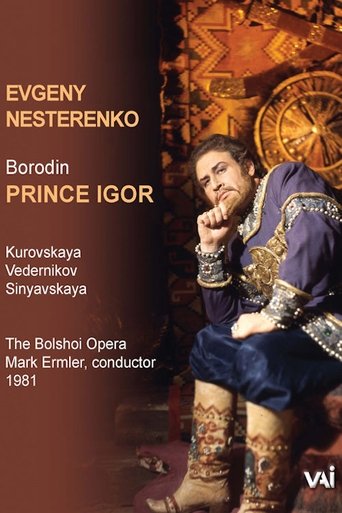
This 1981 Bolshoi production performed in the concert hall of The Kremlin is by far the best available, despite the more ‘historical’ picture and mono sound. The production itself is a very classic period production, with utterly authentic costumes and aptly dramatic sets. There are even horses on stage. The depiction of the Don Cossacks’ Khan Konchak and his tribe is colourful and historically informed in one. Needless to say, the scene of the Polovtsian Dances is spectacularly presented with great choregraphy and terrific dancing, in the league of the Spartacus of Bolshoi, no less.
Live from Munich, 2005. London, 1601: love, lust and a death sentence at the English royal court - that's just the mix for great Italian opera. Roberto Devereux - an opera for a sovereign, a work for Edita Gruberová! The prima donna assoluta of bel canto triumphs in this drama. Either an opera house can acquire the services of "la Gruberová" - or they can forget putting on this opera.

Wagner's Lohengrin is the mythical tale of the mysterious Knight of the Grail, who appears to defend the princess Elsa - wrongly accused of the murder of her brother. Highlights of Wagner's most lyrical score include the famous Wedding March, which accompanies the marriage of Lohengrin and Elsa. Superstar tenor Jonas Kaufmann ("currently the hottest tenor in opera" - The New York Times) makes his role debut in this performance from 2009 and filmed in Munich. He is joined by German soprano Anja Harteros - a former winner of the prestigious Cardiff Singer Of The World competition.
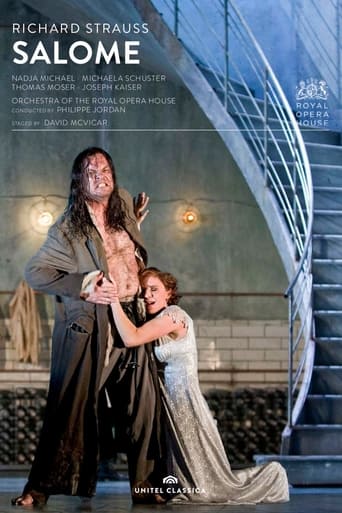
David McVicar’s powerful Royal Opera House 2008 production of Strauss's opera – based on a play by Oscar Wilde – takes the controversial and disturbing film 120 Days of Sodom as its visual reference. The action is set in a debauched palace, which has suggestions of Nazi Germany. Strauss’s ravishing and voluptuous score adds to the sexual alchemy that is conjured by an international cast led by Nadja Michael in the title role.
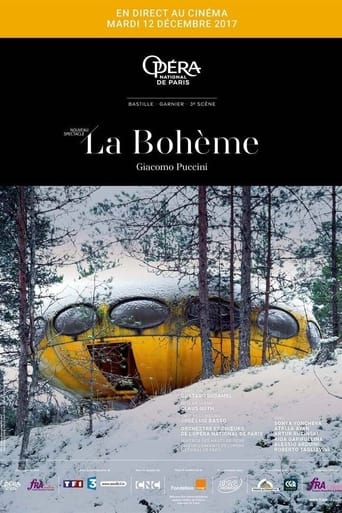
No one better described the half-starved, struggling artists than Murger in his Scènes de la Vie de Bohème: artists ready to burn a manuscript to try to keep warm yet,in an era of triumphant bourgeois materialism, dreaming of another existence. Taking up these scenes of Bohemian life, Puccini offers us a heart-breaking love story and some of the most beautiful music in the history of opera in the story of the poet Rodolfo and fragile Mimi. The staging of this new production has been entrusted to Claus Guth who sets the drama in a future devoid of hope in which love and art become the sole means of transcendence.
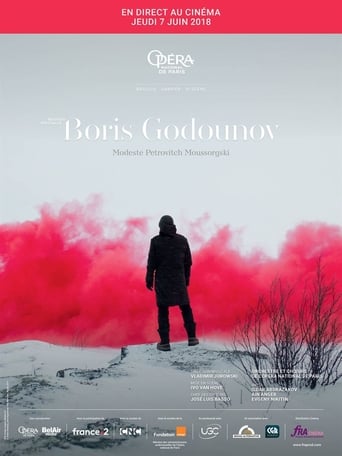
There are elements of Macbeth in this political fable, in which the ghost of the child that Boris has had killed in order to seize the throne appears as an impostor. Adapting Pushkin's epic poem, Mussorgsky composed a meditation on the solitude of power, a populist drama in which the real protagonist is the Russian people with its burden of eternal suffering. Ivo Van Hove is no stranger to grand political frescos. This is his first production for the Paris Opera.

Les Huguenots is a monumental fresco featuring various impossible loves in the context of the Saint Bartholomew Massacre. Andreas Kriegenburg places these timeless conflicts of love and religion in an immaculate setting in which the costumes appear yet more flamboyant and the victims’ blood more violently red.
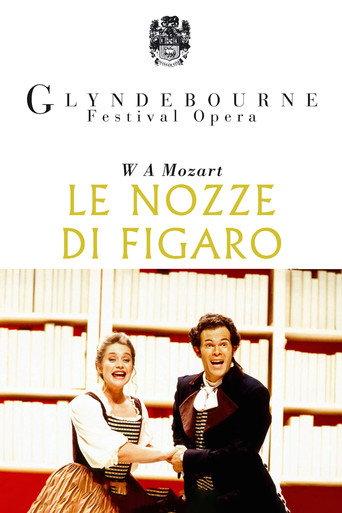
Live from Glyndebourne 1994. The first production to be filmed Live in Glyndebourne´s new opera house May 1994. The Marriage of Figaro is a continuation of the plot of The Barber of Seville several years later, and recounts a single “day of madness” in the palace of the Count Almaviva near Seville, Spain. Rosina is now the Countess; Dr. Bartolo is seeking revenge against Figaro for thwarting his plans to marry Rosina himself; and Count Almaviva has degenerated from the romantic youth of Barber into a scheming, bullying, skirt-chasing baritone. This follows the Count trying to obtain favours from Susanna, Figaro’s bride to be, under the nose of the Countess.